
Guides & Insights
EN 71 or EN ISO 25649: How Are Inflatable Water Products Classified?
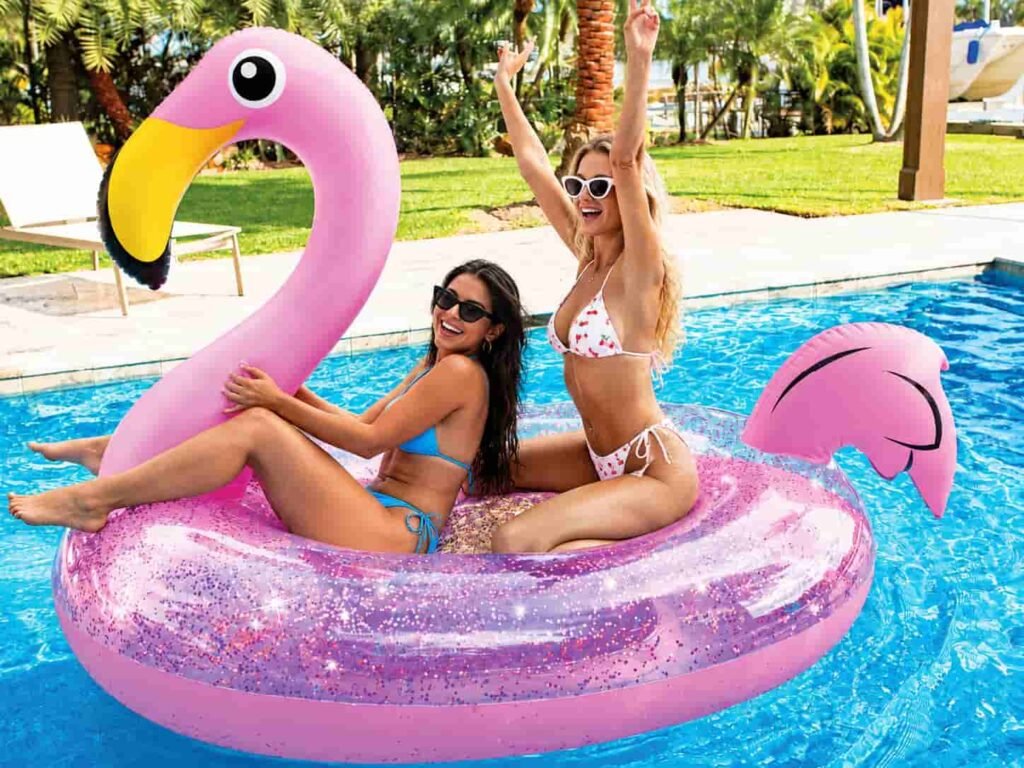
A children’s swim ring, a large animal-shaped ride-on and an adult floating lounger can all be made from flexible PVC film using similar inflation valves and high-frequency welding. Yet that does not mean they automatically follow the same European compliance and testing route.
For inflatable water products entering the European market, the first question is not: “Which standard number should we test to?” It is: “How is this product intended to be used, and who is intended to use it?”
Aquatic toys and floating leisure articles are distinct product classifications governed by different European regulatory frameworks. Intended use, target user, physical configuration and dimensions all contribute to determining the appropriate testing route.
Same Manufacturing, Different Classification
Child play in supervised water → Aquatic Toy Direction (EN 71)
Play styling with large dimensions → Closer Classification Required
Recreational relaxing on water → Floating Leisure Direction (EN ISO 25649)
Same PVC film. Similar welding lines. Different intended use. Potentially different compliance routes.
Aquatic Toy or Floating Leisure Article?
In commercial B2B product development, water inflatables typically align with one of two primary product directions:
1. Aquatic Toy Direction
A product designed or intended primarily as a plaything for children in and around water falls within the European toy-safety framework under the Toy Safety Directive 2009/48/EC. The technical testing scope generally sits within the EN 71 series:
- EN 71-1 — Mechanical and physical properties
- EN 71-2 — Flammability
- EN 71-3 — Migration of certain elements
Typical examples may include certain children’s swim rings, small water-play ride-ons and shallow-water pool games.
2. Floating Leisure Article Direction
Products intended primarily for recreational floating, lounging, sunbathing or general leisure on or in water may fall within the scope of the EN ISO 25649 framework, sitting under the European general product safety rules (Regulation (EU) 2023/988 – GPSR).
Typical examples may include certain floating loungers, multi-person floating islands, giant tubes and water-use air mattresses.
Important Qualification: These examples illustrate typical directions, not automatic classifications. The final route depends on specific product configuration, user group and verified intended use.
Start with Intended Use
Children’s water play → Aquatic Toy Assessment (EN 71 direction)
Buoyant aid / instruction → Swimming Learning Device (EN 13138 direction)
Recreational relaxing → Floating Leisure Article (EN ISO 25649 direction)
Boundary note: Products intended for swimming instruction or body-worn buoyancy (such as arm bands or baby swim seats) follow the EN 13138 framework rather than being treated simply as toys or leisure floats. See our European Compliance Guide for detailed swimming device requirements.
Why Large Inflatable Ride-Ons Need Closer Classification
A large animal-shaped inflatable (such as a giant flamingo or unicorn) is a classic example of a classification grey zone. It can look and function like a children’s plaything while also having dimensions, buoyancy capacity and open-water characteristics associated with floating leisure articles.
European market surveillance discussions (including Toy ADCO proceedings) have specifically addressed large inflatable aquatic ride-on products, particularly those exceeding 1.20 m. Because these products bridge multiple use scenarios, classification cannot be solved by visual appearance alone.
Key Buyer Takeaway: A large physical dimension can trigger additional classification questions. It does not, by itself, rewrite the product’s genuine intended use.
What Does the 1.20 m Dimension Actually Mean?
1.20 m is a real classification criterion in EN ISO 25649, but it is not a universal rule for every inflatable water product.
In technical terms, EN ISO 25649-1 uses the largest uninflated dimension exceeding 1.2 m as one specific classification criterion for applicable Class A products. However, its relevance depends on the product class, intended use and configuration. It does not act as an automatic standalone switch across all water inflatables.
❌ Do Not Use This Shortcut:
≤ 1.20 m = EN 71 | > 1.20 m = EN ISO 25649
✔️ Accurate Classification Logic:
Intended Use + User Age Group + Interaction Mode + Design Configuration + Dimensions → Comprehensive Route Assessment
Depending on the exact product and applicable requirements, the relationship between toy requirements and floating leisure requirements can require closer assessment rather than a simple binary size rule. Product purpose, intended user, design and use scenario remain decisive.
Five Factors to Define Before Testing
To establish clarity early in product development, define these five parameters before ordering test samples:
- Intended Use: Is the product primarily for play, swimming instruction or recreational floating?
- Intended User: Is it intended for children, adults or mixed users?
- Water Environment: Is it intended for supervised shallow-water play or broader leisure use on/in water?
- User Interaction: Does the user ride on it, lie on it, sit partly inside it, get towed, climb on it or travel in it?
- Design & Dimensions: What is the product’s size, shape and overall configuration?
Note: Packaging claims, warnings and instructions should remain consistent with the intended use established during product development.
EN ISO 25649 Uses Different Functional Classes
If an inflatable item follows the floating leisure route, the EN ISO 25649 series classifies products based on user position and function:
| Class | Functional Memory Aid | Typical Product Direction |
|---|---|---|
| Class A | FLOAT / RELAX ON IT | Floating loungers, floating islands, giant tubes, water-use air mattresses |
| Class B | POSITIONED PARTLY IN IT | Certain body-opening / seated floating configurations |
| Class C | TOW IT | Towable recreational inflatables |
| Class D | CLIMB / JUMP / ACTIVE USE | Active floating structures and water platforms |
| Class E | TRAVEL IN IT | Certain boat-like recreational craft |
Short note on Class B: A central opening alone does not automatically make every inflatable ring a Class B product. Exact class assignment depends on the definitions and scope of the applicable standard.
What We See in Real Product Testing
Trade names often obscure technical compliance. In COMCO OEM manufacturing practice, anonymized test records show how function dictates the testing route:
- Floating Water Hammock: A tested European retail configuration followed the EN ISO 25649 Class A route, reflecting its intended use for reclining water relaxation.
- Water-Use Air Mattress: A tested water-leisure configuration followed the EN ISO 25649 Class A route despite the commercial name “air mattress.”
Product name does not determine classification. Intended use matters.
Classification Is a Product-Development Input
Classification can affect product configuration, warnings, user instructions and the formal testing plan. For this reason, intended use and the likely compliance route should be considered before final artwork and test samples are prepared.
- Product Configuration: Structural layouts, valve specifications and handle placements align with the chosen standard’s requirements.
- Warnings & Instructions: Aquatic toy warning graphics differ significantly from the standardized symbols and residual-risk notices required under EN ISO 25649.
- Testing Plan: Coordinating the sample schedule and test protocol with the buyer’s nominated laboratory avoids scope misunderstandings.
Manufacturing Insight: Considering classification during product development and prototype sampling can help reduce rework, artwork changes and unnecessary re-testing later in the program.
Standard Editions Matter
Technical standards and EU regulatory references do not always update on the same timeline. A newer ISO or EN edition does not automatically mean that every EU regulatory reference or buyer protocol has already moved to that edition. The applicable edition should therefore be confirmed for the specific market and test program before formal testing.
For example, EU GPSR reference material in Commission Implementing Decision (EU) 2026/901 cites EN ISO 25649:2017 Parts 1–7, while ISO has also published the ISO 25649:2024 series. The applicable edition should always be verified with the buyer’s nominated testing laboratory.
Start with the Product, Not the Standard Number
Before confirming your testing route, define:
- Who will use the product?
- What is it intended to do?
- Where and how will it be used?
- How does the user interact with it?
- What are the relevant design features and dimensions?
The better starting question is not simply “EN 71 or EN ISO 25649?” It is “How is this product intended to be used?”
Frequently Asked Questions
Does every inflatable pool float require EN ISO 25649?
No. The applicable route depends on product classification. Some products can be aquatic toys, while others can fall within the floating-leisure framework. Intended use, user group, design and other classification criteria should be considered together.
Can a children’s inflatable product over 1.20 m still be a toy?
Potentially, depending on its intended use, design and classification. Large aquatic ride-on products are one area where size alone may not resolve the classification question.
Are baby swim seats covered by EN 71 or EN ISO 25649?
Products classified as swimming learning devices can follow the EN 13138 framework rather than being treated simply as aquatic toys or floating leisure articles. The specific product should be assessed according to its intended function and applicable scope.
Does product artwork affect classification?
Artwork and character graphics alone do not automatically determine classification, but they are considered alongside intended user, age grading and marketing presentation. Decorative graphics on an adult lounger do not turn it into a toy, whereas child-oriented play graphics on a small product support toy classification.
When should the test route be confirmed?
Ideally before final artwork, warnings, packaging and formal test samples are completed. Early classification helps align the product design and test plan and can reduce avoidable redesign or re-testing.
Developing an Inflatable Water Product for Europe?
Share your product concept, intended user, use scenario, target dimensions and destination market with COMCO. Our product-development and manufacturing team can review the technical requirements during development and coordinate test-sample preparation with your nominated laboratory or buyer protocol.
Resources
Related articles
Guides & Insights · October 3, 2026
EN 71-8, EN 16927 or EN 16582: Which Standard Applies to a Pool?
Understand how European pool classification affects EN 71-8, EN 16927 and EN 16582 testing routes for paddling pools, mini-pools and domestic above-ground pools.

Guides & Insights · September 29, 2026
Why Can Quotes for the Same Inflatable Product Be So Different?
Two inflatable products can look identical but have different structures, materials and market requirements. Learn what to define before comparing OEM quotations.
Guides & Insights · September 28, 2026
How to Choose an Inflatable Pool Manufacturer: A Buyer’s Guide
Learn how to evaluate an inflatable pool manufacturer based on product capability, development, materials, quality control, MOQ, sampling, capacity and quotation.