
Guides & Insights
Commercial Water Park Slide Tubes vs. Recreational Swim Rings: Why the Construction Is Different
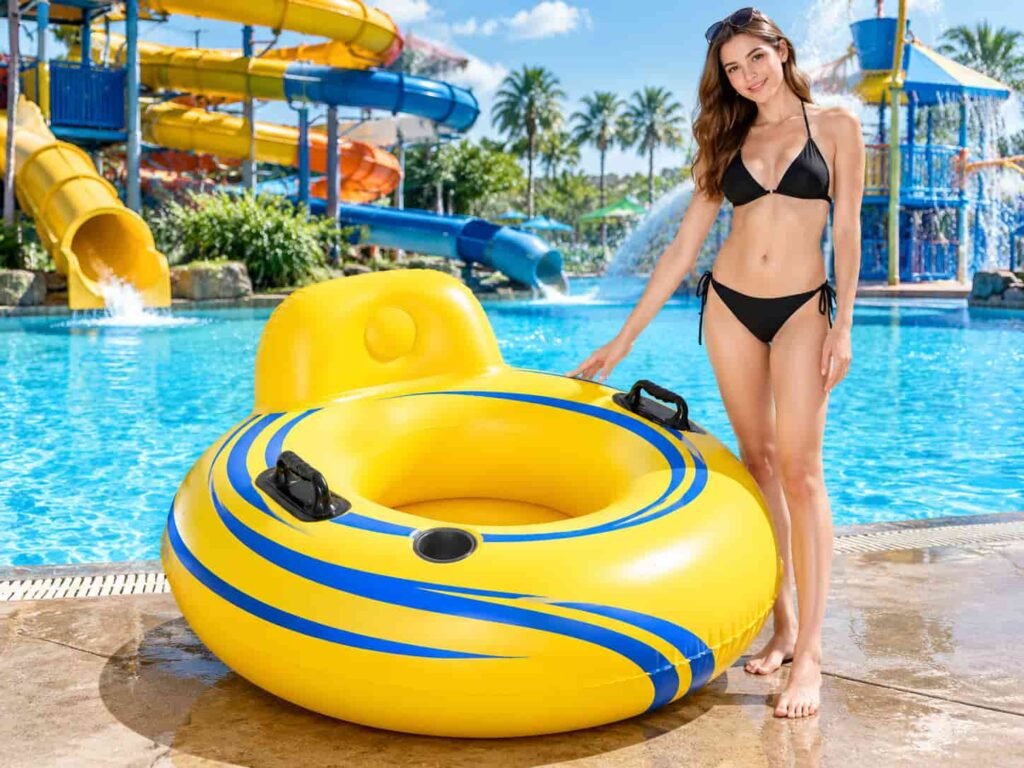
At first glance, a commercial water park slide tube and a recreational swim ring look very similar. Both are circular, air-filled products designed for use in water.
However, they cannot be manufactured to the same specification. Their operating environments are completely different, requiring distinct materials, seam constructions, and factory quality checks.
1. Direct Answer
A recreational swim ring is intended for shallow-water recreational use.
In contrast, a commercial water park slide tube travels down a water slide from height. During use, the tube can experience impact and temporary deformation as it travels down the slide.
Because the operating conditions are different, a commercial water park slide tube requires different material, seam, and inspection specifications from a recreational swim ring.
2. Material: Why 0.75 mm K80 PVC Is Different
For commercial water park slide tubes, COMCO offers 0.75 mm PVC as well as TPU options.
For the PVC version, COMCO uses K80 high-elastic PVC.
K80 is selected for its better elasticity and faster shape recovery after impact or temporary deformation compared with ordinary PVC.
This decision should not be reduced to “thicker PVC is stronger.” Material thickness and material elasticity are not the same consideration.
By comparison, ordinary recreational swim rings use thinner PVC with standard recreational-use material requirements.
3. Welding: HF vs. Hot-Air
Commercial water park slide tubes can be manufactured using either High-Frequency (HF) welding or Hot-Air welding. The basic tube structure and appearance can remain the same under either process; the key difference lies in the weld seam.
HF welding creates a fused and compressed seam. Hot-Air welding creates an overlapping seam construction.
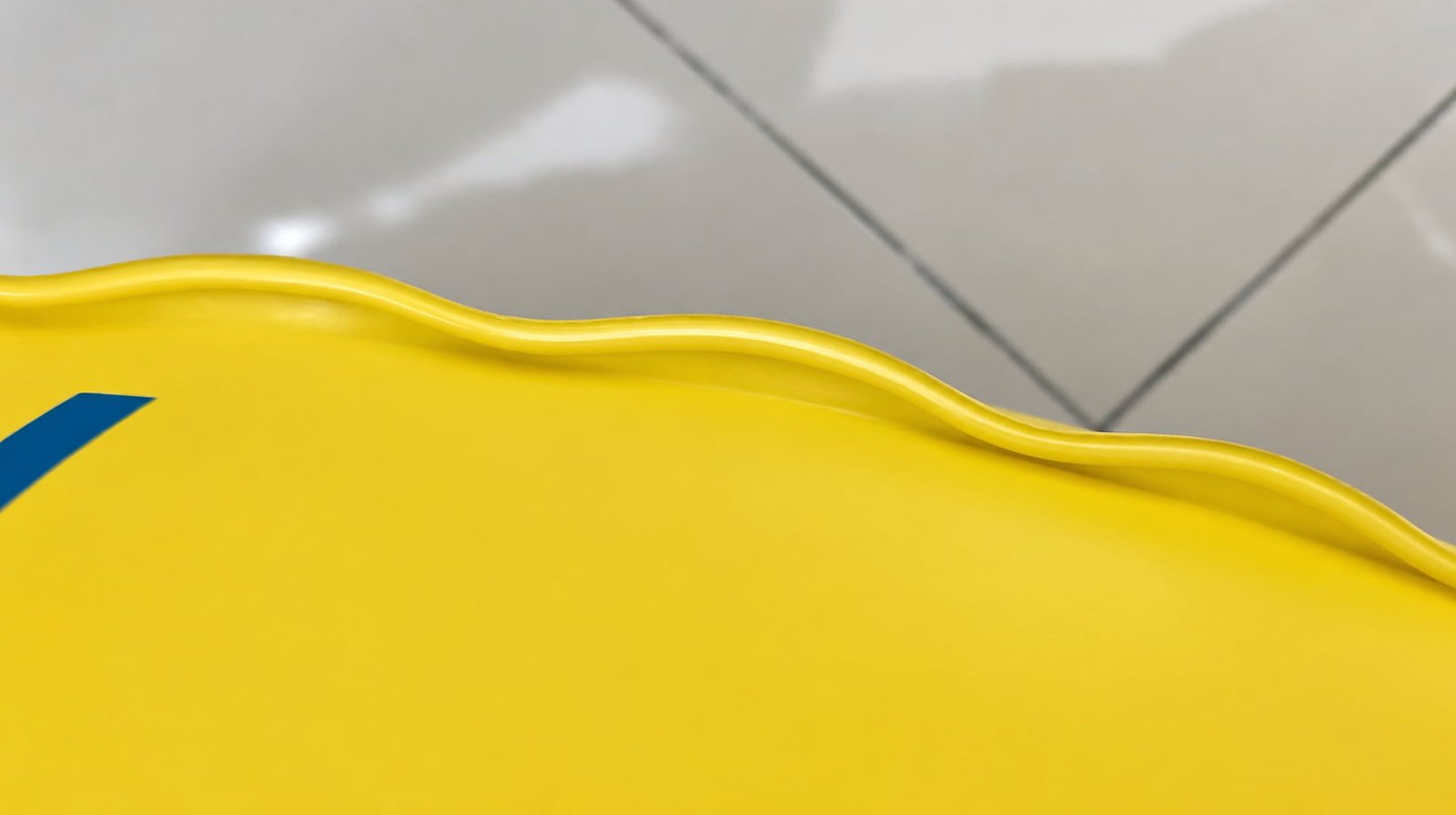
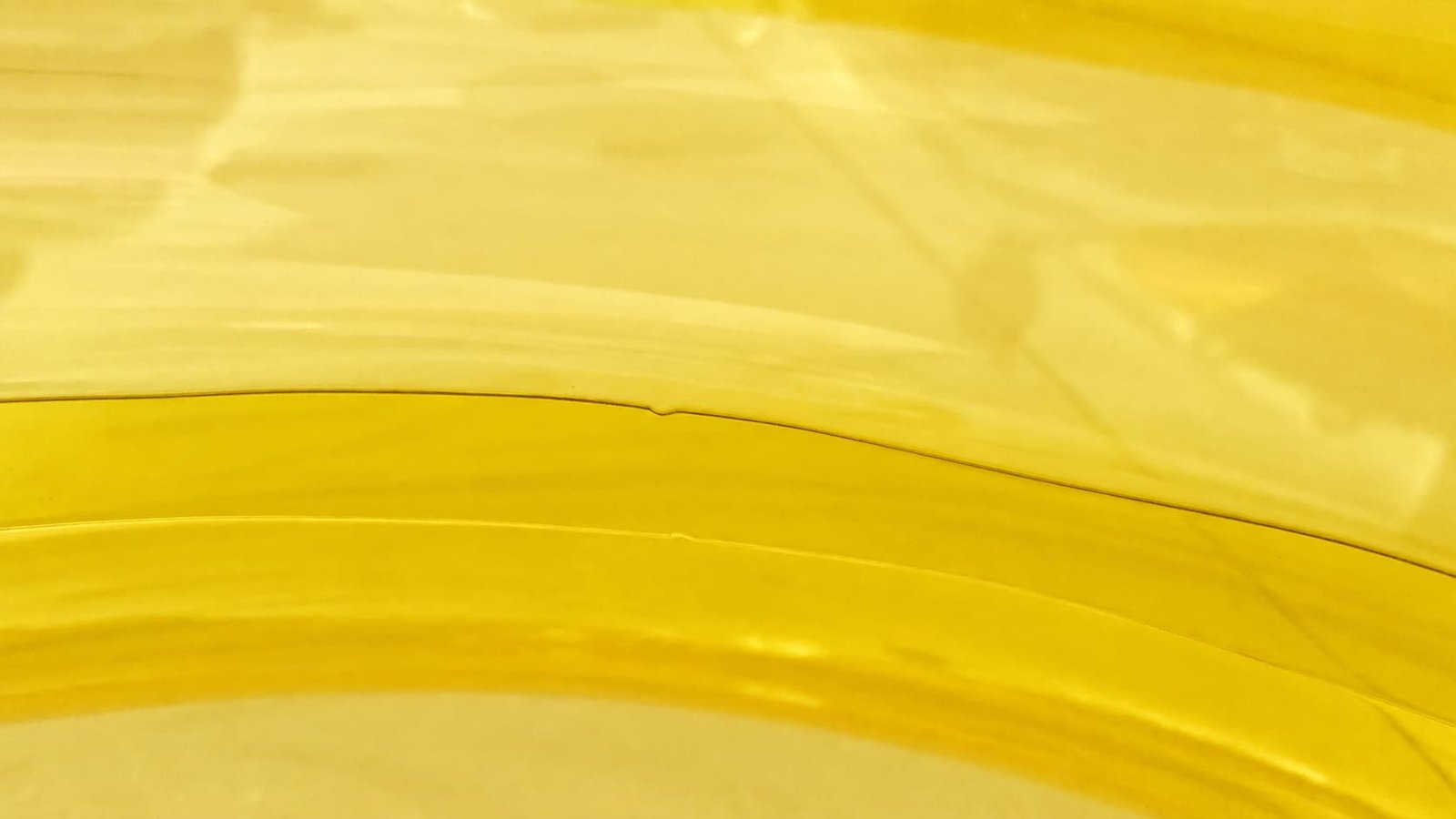
Based on COMCO’s project experience and customer feedback, Hot-Air overlap seams have shown longer service life than HF seams in some water park slide-tube applications.
This does not mean Hot-Air is universally better than HF. The appropriate welding method depends on the product and project requirements.
For a detailed comparison of seam construction, tooling, and manufacturing efficiency between these two processes, see our guide on High-Frequency vs. Hot-Air Welding for Inflatable Products.
4. COMCO Factory Testing & Inspection
COMCO applies the following testing and inspection process to water park slide tubes:
- Before production: The COMCO laboratory conducts 50 repeated inflation and deflation cycles.
- During production: The laboratory conducts another sampling test during production.
- Finished-product inspection: 100% of finished water park slide tubes undergo a 24-hour inflation inspection before packing. Only products that pass the 24-hour inflation inspection proceed to packing.
5. Buyer Comparison & Summary
| Feature / Factor | Recreational Swim Ring | Commercial Water Park Slide Tube |
|---|---|---|
| Typical Use | Shallow-water recreation | Water park slides |
| PVC | Thinner, ordinary-performance PVC | 0.75 mm K80 high-elastic PVC option |
| Alternative Material | — | TPU option |
| Impact / Deformation Requirement | Normal recreational use | Higher recovery requirement after impact/deformation |
| Welding | Standard construction according to product | HF or Hot-Air depending on specification |
| Final Inflation Inspection | — | 100% / 24 hours |
Choosing the right material and welding specification helps buyers match the tube construction to the intended water park application.
Developing a Commercial Water Park Project or Sourcing Custom Slide Tubes?
Contact COMCO to discuss materials, seam options, and manufacturing specifications for your application.
Resources
Related articles
Guides & Insights · October 6, 2026
Pool Wall Height vs. Usable Water Depth: What Pool Buyers Need to Know
Understand the difference between pool wall height and usable water depth, plus how water-level markings are applied during pool manufacturing.
Guides & Insights · October 6, 2026
PVC vs. TPU for Inflatable Products: Which Material Should You Choose?
Compare PVC and TPU for inflatable products, including material cost, performance, PVC-free requirements and how to choose the right material.
Guides & Insights · October 6, 2026
High-Frequency vs. Hot-Air Welding for Inflatable Products
Compare HF and hot-air welding for inflatable products, including seam construction, production efficiency, cost and commercial water park applications.