
Guides & Insights
Inflatable vs Frame vs Foldable Non-Inflatable Pool: What’s the Difference?
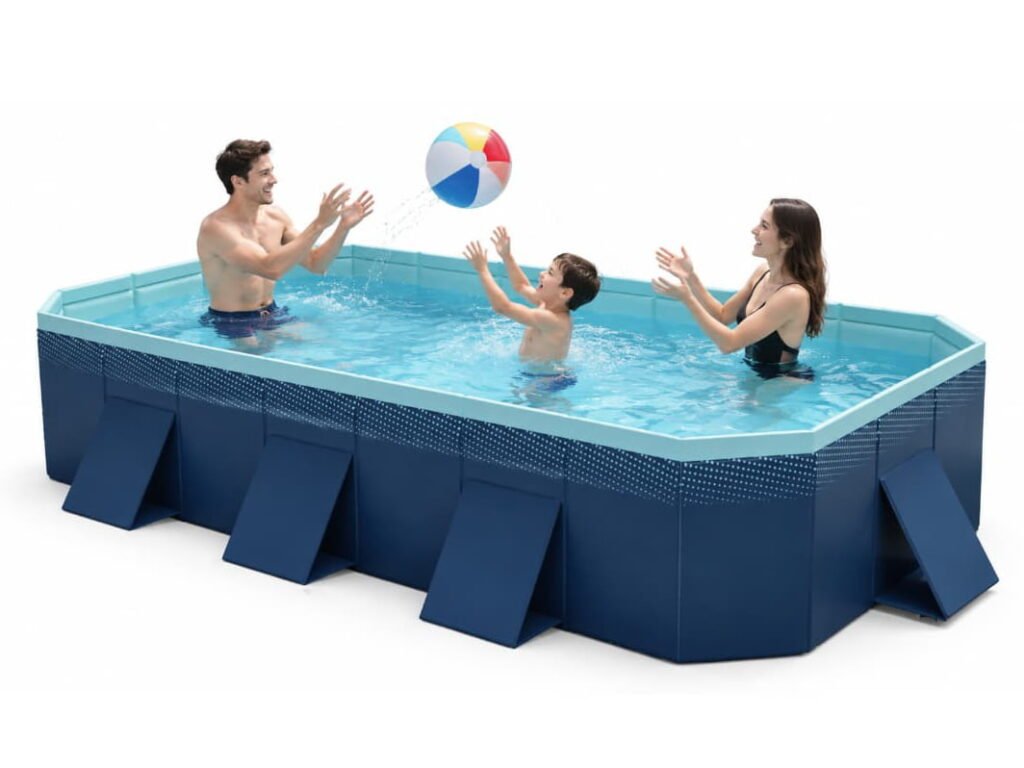
The main difference between inflatable, frame and non-inflatable pools is how the pool wall is supported. Inflatable pools rely on air-filled chambers, frame pools use an external steel structure, while foldable non-inflatable pools use rigid or reinforced wall structures without inflation.
Foldable non-inflatable pool refers to a pool that requires no inflation and can be folded for compact storage. Suppliers may list the same structure as a foldable pool or a non-inflatable pool; in this article both refer to the same construction.
For buyers, that structural choice sets the setup method, packaging volume, retail positioning, target price and product differentiation, so the practical question is which structure fits the market a programme is being sourced for.
What Is the Structural Difference?
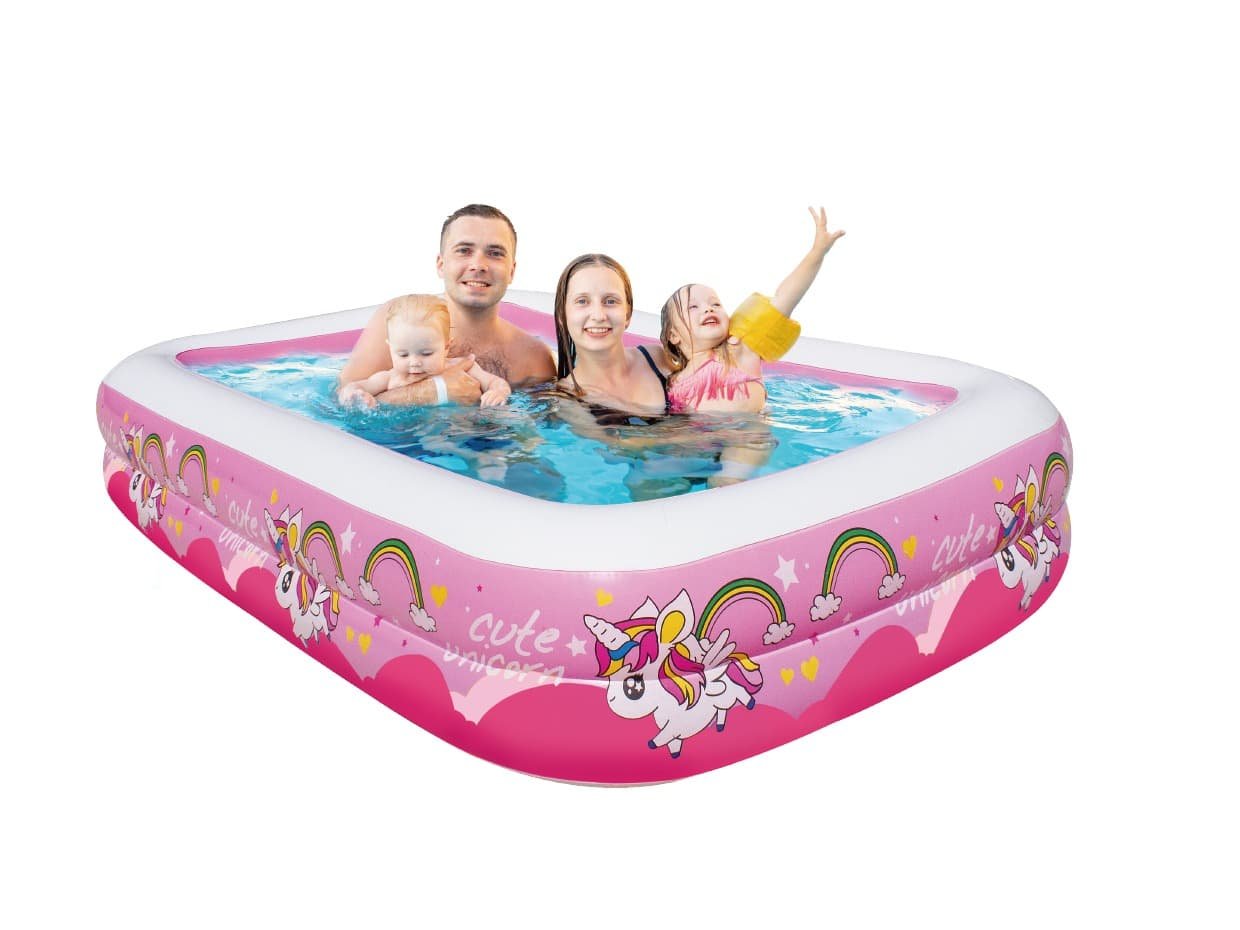
Inflatable Pool
Air provides the structure.
The pool wall or upper ring is inflated before filling. This construction allows compact packaging, flexible shapes and broad design possibilities.
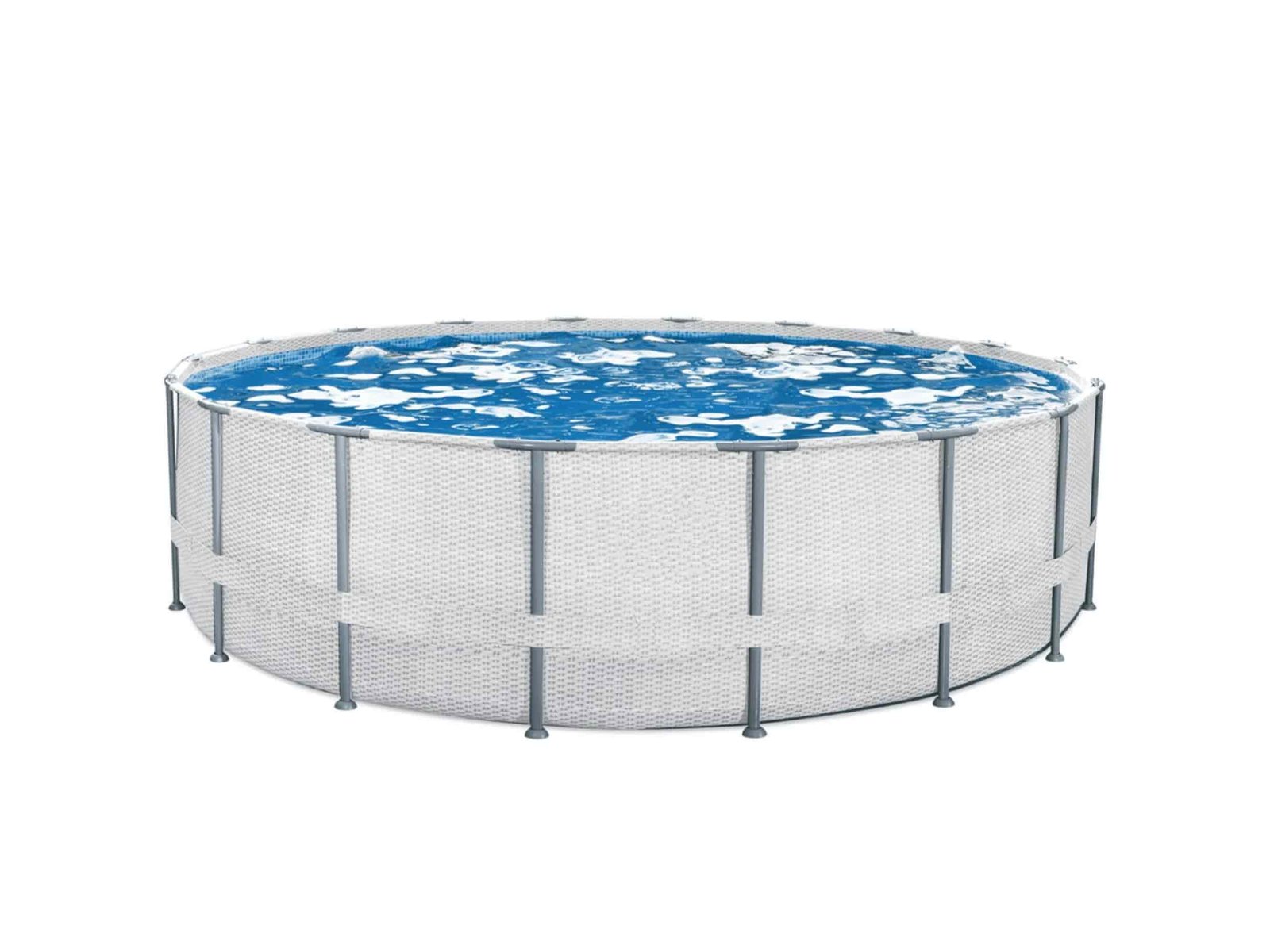
Frame Pool
A metal frame provides the structure.
The liner contains the water while the surrounding frame carries much of the structural load. This makes frame pools suitable for larger dimensions and higher water capacity.
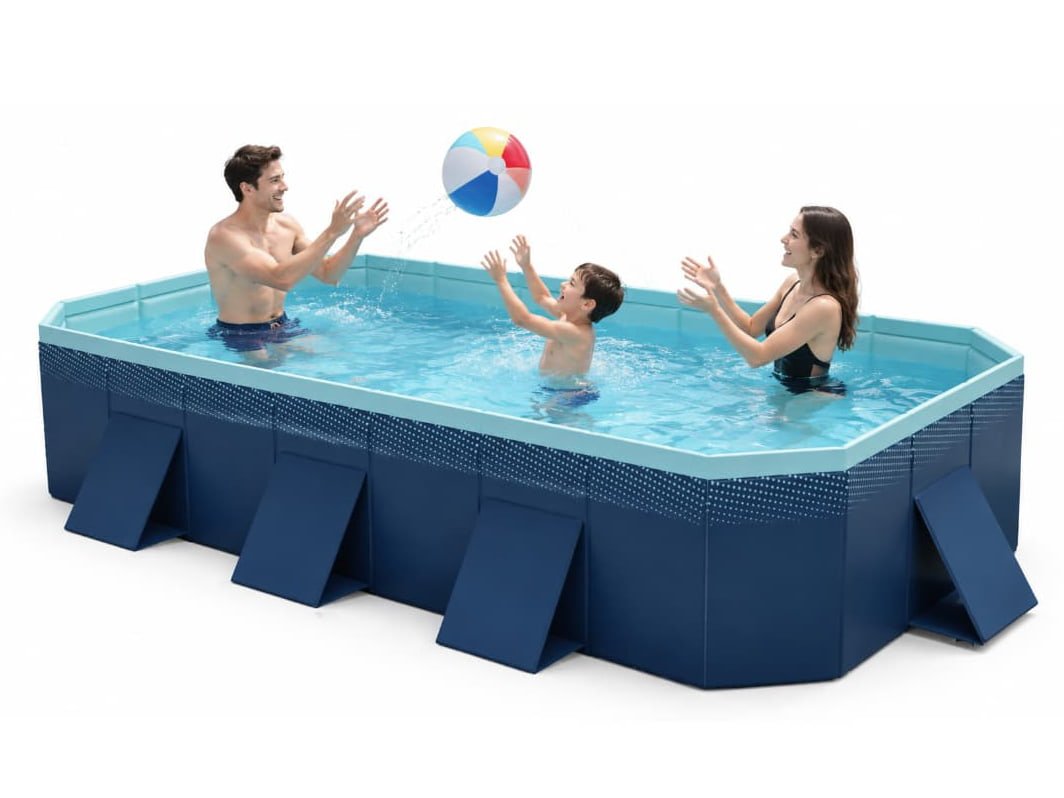
Foldable Non-Inflatable Pool
Rigid or reinforced walls provide the structure.
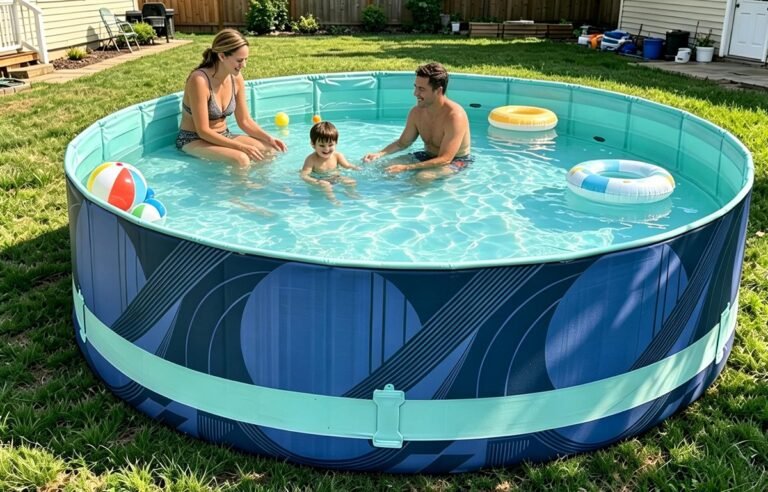
The pool stands without inflation and does not require a conventional external frame assembly. Depending on the design, the wall structure can fold for storage and transportation.
Inflatable vs Frame vs Non-Inflatable Pool Comparison
| Feature | Inflatable Pool | Frame Pool | Foldable Non-Inflatable Pool |
|---|---|---|---|
| Support structure | Air-filled chambers | External steel frame | Rigid or reinforced wall panels |
| Inflation required | Yes | No | No |
| Setup | Inflate, then fill | Assemble frame, then fill | Unfold and fill |
| Packaging | Compact, high carton density | Bulky, multiple metal parts | Flat-folding, medium density |
| Storage | Very compact once deflated | Frame disassembly required | Folds flat, no loose parts |
| Size potential | Mainly small to medium | Medium to large | Depends on wall design |
| Structural stability | Moderate, depends on air pressure | High, frame carries the load | High, wall design dependent |
| Air-leak risk | Yes, structure depends on air | No structural air chamber | No structural air chamber |
| Price positioning | Entry to mid-range | Mid to upper range | Mid to premium |
| Retail positioning | Volume and promotional programmes | Family and larger-size programmes | Differentiation-led ranges |
| Product differentiation | Shape, artwork and print | Size and capacity claims | New structure story, private-label concept |
| OEM customization | Shape, print, valve, packaging | Frame size, liner, packaging | Wall structure, panel layout, private-label design |
Which Pool Is Easier to Set Up?
Inflatable pools require inflation before filling. For smaller models this is straightforward, although larger products may benefit from an electric pump. The user unfolds the pool on a flat ground cloth, locates each air valve, and inflates the chambers until the sidewalls or top ring achieve their intended shape. Because inflation requires either manual effort, a foot pump, or a powered blower, access to an inflation device is always a necessary prerequisite. Once pressurized, the pool is immediately ready for water.
Frame pools do not require inflation, but the supporting frame must be assembled correctly before the pool is filled. Setup time therefore generally increases with pool size and frame complexity. Setting up a frame pool involves unpacking multiple metal components, including horizontal top beams, vertical legs, corner connectors, and locking pins. These parts must be threaded systematically through dedicated fabric sleeves along the liner rim and locked into place. In addition, the ground must be completely level, as minor slopes can create uneven mechanical loads across the joints during filling.
Foldable non-inflatable pools are designed around a different approach: open the pool, position the wall structure correctly and begin filling. This can reduce the number of assembly steps. The structural wall panels are already integrated directly within the fabric construction. There are no separate metal tubes to join, no corner brackets to bolt together, and no air valves to inflate. The user unfolds the sidewall panels into the target footprint, ensures the floor sheet is spread smooth, and begins filling immediately.
To learn more about how this structure operates, see How Foldable Non-Inflatable Pools Work.
Which Pool Offers Greater Size and Stability?
Frame pools are generally the strongest option when the target product requires larger dimensions and greater water capacity. Their external frame distributes structural loads and supports larger pool walls. The rigid metal skeleton forms an exterior truss network that absorbs the substantial hydrostatic pressure exerted by higher water volumes. This framework also resists dynamic lateral movement caused by active play, making frame pools well suited for larger backyard installations intended to stay filled throughout the summer season.
Inflatable pools are particularly effective for smaller and medium-sized recreational pools where portability, comfort and flexible styling are important. The flexible, air-cushioned side walls create soft boundaries that are well suited for younger children and family leisure. However, as target pool volume increases, air-filled walls must expand in thickness to retain lateral water pressure, which limits the practical maximum dimensions of inflatable models.
Non-inflatable pools sit between these categories depending on their structural design. Reinforced wall systems can provide strong sidewall support without relying on air chambers, while foldable construction keeps setup relatively simple. High-density composite boards or integrated wall panels support the side walls against outward water pressure without requiring an external metal truss network. When reviewing available sizes across any structure, buyers should also examine Pool Wall Height vs. Usable Water Depth to understand how water level relates to external wall height.
Which Pool Is Easier to Store?
Inflatable pools offer the smallest packed volume because the air chambers collapse after deflation. Once the pool is drained and the air valves are opened, the air chambers collapse entirely. The flexible material can then be folded tightly or rolled into a small footprint, fitting easily into compact retail boxes or household storage spaces during winter months.
Frame pools require the liner and frame components to be disassembled and stored separately, resulting in more components and typically a larger storage footprint. After draining the pool, every horizontal pipe, leg support, corner piece, and securing pin must be disconnected, cleaned, and dried to prevent rust or mildew while stored. The disassembled steel components and folded heavy-gauge liner require dedicated garage, basement, or shed storage.
A foldable pool does not need deflation or separate external frame components. Its walls fold together for storage, although the rigid internal structure normally means the packed product is less compact than a comparable inflatable pool. The wall panels collapse accordion-style along flexible seams, producing a flat, organized bundle that slides easily into a storage carton without loose structural parts.
What About Punctures and Air Leaks?
An inflatable pool depends on airtight chambers for part or all of its structural support. A puncture or valve leak can therefore affect the pool’s ability to maintain its intended shape. If an air chamber loses pressure, the wall loses tension, which can cause water to spill over the collapsed section until the leak is identified, patched, and reinflated.
Frame and non-inflatable pools do not depend on structural air chambers, so air leakage is not a structural concern. Because their mechanical rigidity comes from steel tubing or reinforced wall inserts, a surface scratch or minor fabric nick on the pool exterior will not cause the pool walls to lose their standing structure.
However, all three types still depend on appropriate material selection, seam construction, ground preparation and correct use. A non-inflatable structure does not make a pool damage-proof. Any pool liner can still suffer water leaks if placed on sharp objects, subjected to severe abrasion, or exposed to excessive physical stress. Proper ground cloth preparation and reinforced seam manufacturing remain essential for all constructions.
Which Pool Is Better for Retailers and Importers?
For retail and private-label programs, there is no single “best” pool construction. The appropriate choice depends on the target consumer, retail price, product size, packaging requirements and desired point of differentiation.
Choose an Inflatable Pool When
Compact packaging, flexible artwork, portability and broad price positioning are priorities.
Choose a Frame Pool When
Larger dimensions, higher water capacity and structural stability are the main product requirements.
Choose a Foldable Non-Inflatable Pool When
Fast setup, no inflation and a differentiated pool concept are important to the product range.
COMCO Pool Manufacturing
COMCO manufactures inflatable pools, frame pools and patented foldable non-inflatable pool designs for retailers, importers and private-label brands.
Because the three structures serve different market positions, pool development should start with the intended retail market, target dimensions, price positioning and packaging requirements rather than selecting a construction type in isolation. Sourcing teams can review our full manufacturing network in the COMCO Strategic Pool Hub and explore relevant product categories:
Develop Your Pool Range with COMCO
Discuss your target market, dimensions, construction and packaging requirements with our team.
FAQ
What is the main difference between an inflatable pool and a frame pool?
An inflatable pool uses air-filled chambers for structural support, while a frame pool uses a metal supporting structure around the liner.
Does a non-inflatable pool need a pump?
No. Its structure does not depend on air inflation.
Are frame pools better than inflatable pools?
Not universally. Frame pools are better suited to larger sizes and higher water capacity, while inflatable pools offer advantages in portability, packaging and design flexibility.
What is the advantage of a foldable non-inflatable pool?
It combines a non-air-supported structure with foldable storage and simplified setup.
Resources
Related articles
Guides & Insights · November 6, 2026
定制后院滑水垫设计:把创意变成夏季产品
定制后院滑水垫设计概念:平铺草坪使用的 PVC 滑水垫、主题造型、印刷、喷淋布置与 OEM 滑水垫制造,每款起订量 3,000 件。
Guides & Insights · November 6, 2026
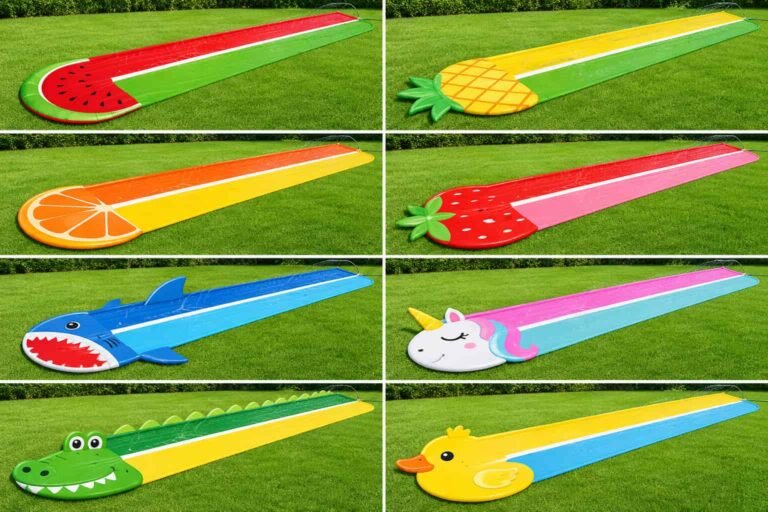
Custom Backyard Slip & Slide Designs: Turning Creative Ideas into Summer Products
Custom backyard slip and slide design concepts: flat grass-use mats, themes, printing, sprinkler layout, OEM slip and slide manufacturing, MOQ 3,000 pcs per design.
Guides & Insights · October 16, 2026
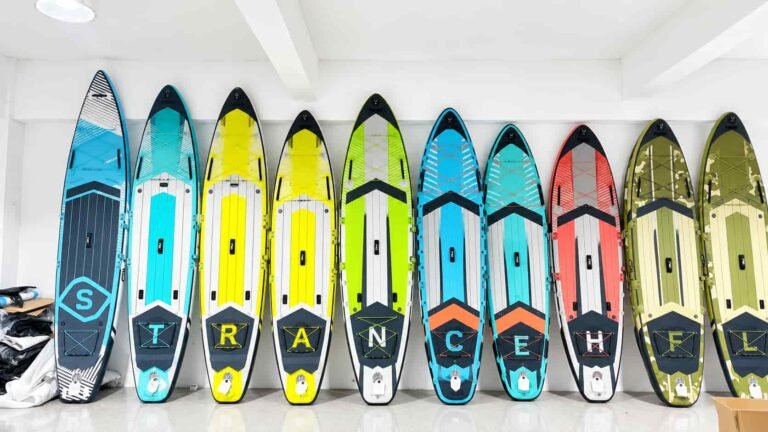
How Inflatable SUP Boards Are Made: A Buyer’s Guide to Drop-Stitch Construction
See how inflatable SUP boards are made, from drop-stitch materials and rail bonding to EVA assembly and three-stage air-retention testing.