
How to Choose an Inflatable Pool Manufacturer: A Buyer’s Guide
Choosing an inflatable pool manufacturer is not only about finding the lowest quotation or the thickest PVC.
A suitable supplier needs to be able to make the type of product you need, turn your requirements into a production-ready specification, control the manufacturing process, validate quality, and reproduce the approved product consistently at scale.
For brands, importers and retailers, the goal at the early sourcing stage is not to perform a full factory audit yourself. It is to determine whether a manufacturer appears capable of supporting your product and is worth moving forward with for an RFQ, sample or development project.
Here are the ten areas that matter most when evaluating an inflatable pool manufacturing partner.
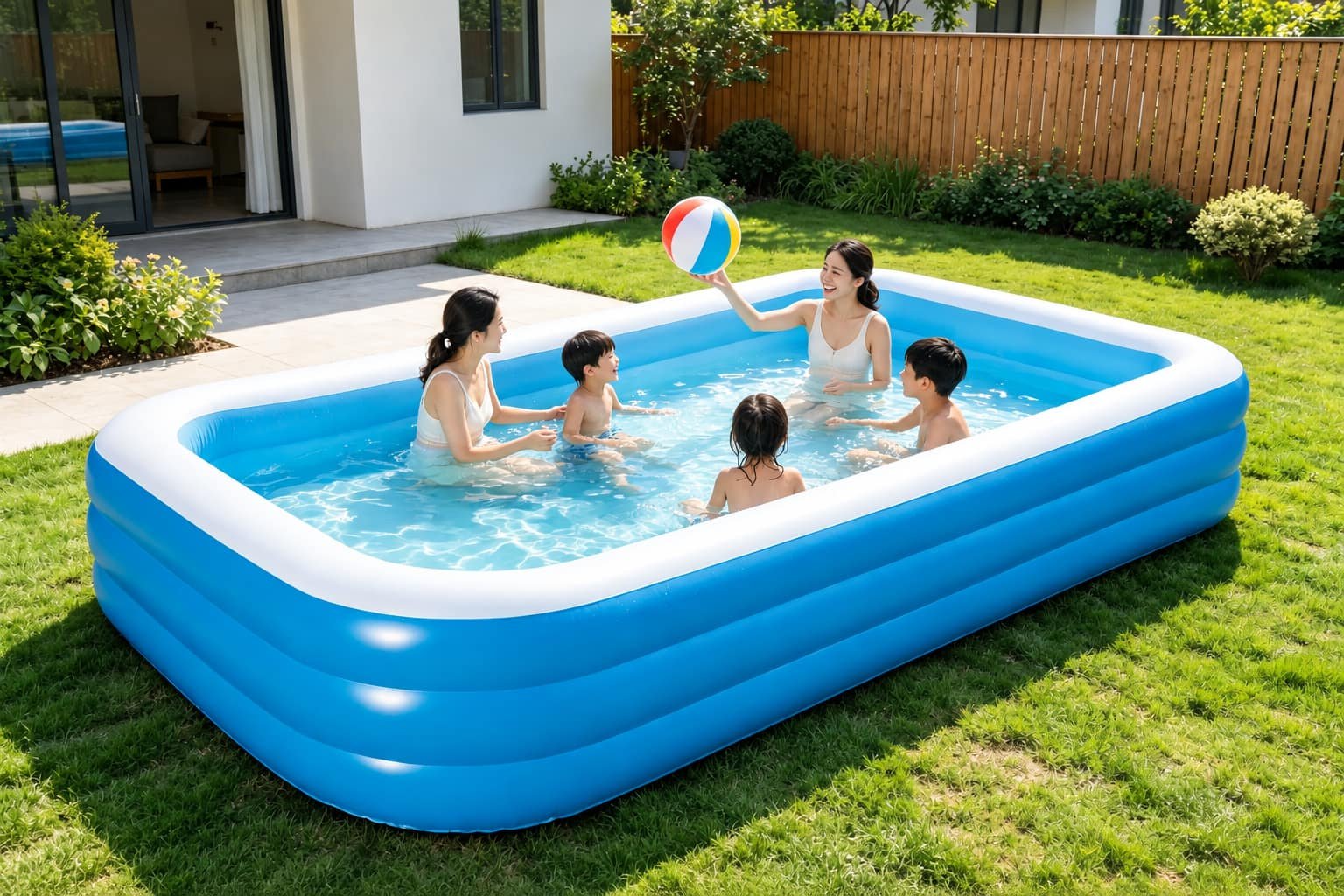
1. Start with Product Fit
The first question is simple:
“Does this manufacturer regularly make products similar to the one you want to source?”
“Inflatable products” is a broad category. A supplier that mainly makes promotional beach balls or seasonal novelties may not have the same manufacturing experience as one producing inflatable family pools, water-play centers, pool lounges or heavy-duty air mattresses.
For an inflatable pool program, relevant manufacturing experience typically includes:
- Inflatable family pools and kids paddling pools
- Water-play centers with integrated sprayers and slides
- Pool floats and swim aids
- Multi-chamber PVC closed-air structures
- Precision high-frequency (HF) welded seams
- Products engineered for major retail programs and international brand standards
Why it matters: A manufacturer already familiar with pool hydrostatic loads and chamber stresses is far more likely to understand the material, seam design, welding parameters, valve placement, printing resistance and production stability required.
At COMCO, pools and water-play products are core product groups rather than occasional projects.
2. Look Beyond “Can You Customize?”
Most OEM manufacturers will automatically answer “yes” when asked whether they can customize a product.
The more revealing test is what happens after you send a sketch, tech pack, 3D model, reference sample or defined product concept.
A capable OEM product development process should be able to transform customer input into practical production decisions, such as:
- Precise inflated vs. deflated cut dimensions
- Chamber layout, internal baffle design and seam lines
- Appropriate PVC specification and formulation
- Silk screen or roller printing methods and color fastness
- Safety valve selection and ergonomic placement
- Grip handle, drain plug and accessory integration
- Retail gift box, polybag and master carton specifications
- Manufacturing feasibility and cost optimization
For complex products, a clear concept or basic design direction is still necessary. Product development is a collaboration between the buyer’s market direction and the manufacturer’s engineering experience. To see each development phase from initial artwork to approved pre-production golden sample, explore how an OEM inflatable product is developed.
COMCO supports OEM and ODM development from sketches, drawings, reference products and defined concepts, helping turn them into production-ready specifications.
3. Understand How Material Specifications Are Decided
PVC thickness is easy to compare on a quotation sheet, but it should never be treated as an isolated quality grade.
As explained in our technical analysis on how PVC specifications should be selected, the appropriate material specification depends on multiple interrelated factors:
- Product size and inflated surface area
- Chamber architecture and internal support structure
- Intended use and user age group
- Water volume load and hydrostatic wall pressure
- Seam layout and HF welding geometry
- Quality expectations and durability targets across seasons
- Retail positioning and packaging constraints
- Target FOB cost direction
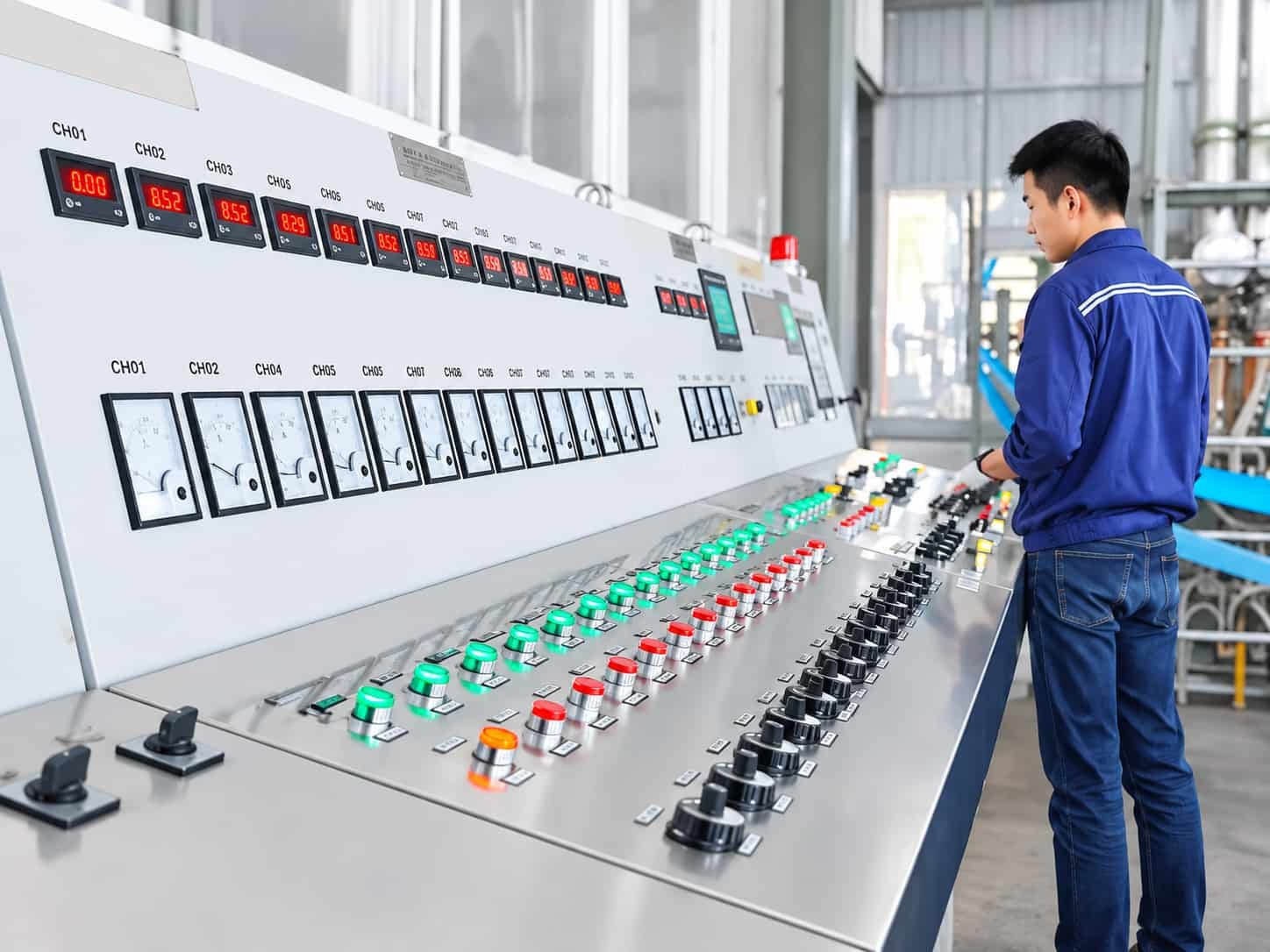
For example, a lightweight toddler paddling pool and a large rectangular family pool holding over 1,000 liters of water should never use the same material specification.
A capable manufacturer should be able to explain why a proposed PVC specification fits the product’s structure and performance needs, rather than simply marketing thicker film as generic “premium quality.”
COMCO operates in-house PVC film production, allowing material formulation and thickness calendering to be directly coordinated with downstream inflatable pool manufacturing.
4. Evaluate the Manufacturing Process, Not Just the Equipment List
Owning high-frequency welding machines does not by itself prove that a factory can consistently produce a leak-free inflatable pool.
The finished pool depends on an integrated, tightly controlled sequence. To understand every stage from polymer resin to boxed shipping containers, read our comprehensive overview of the inflatable product manufacturing process.
Depending on the product, that process includes:
PVC Film Calendering → Pattern Printing → Precision Cutting → HF Welding → Accessory Assembly → Inflation Inspection → Packing
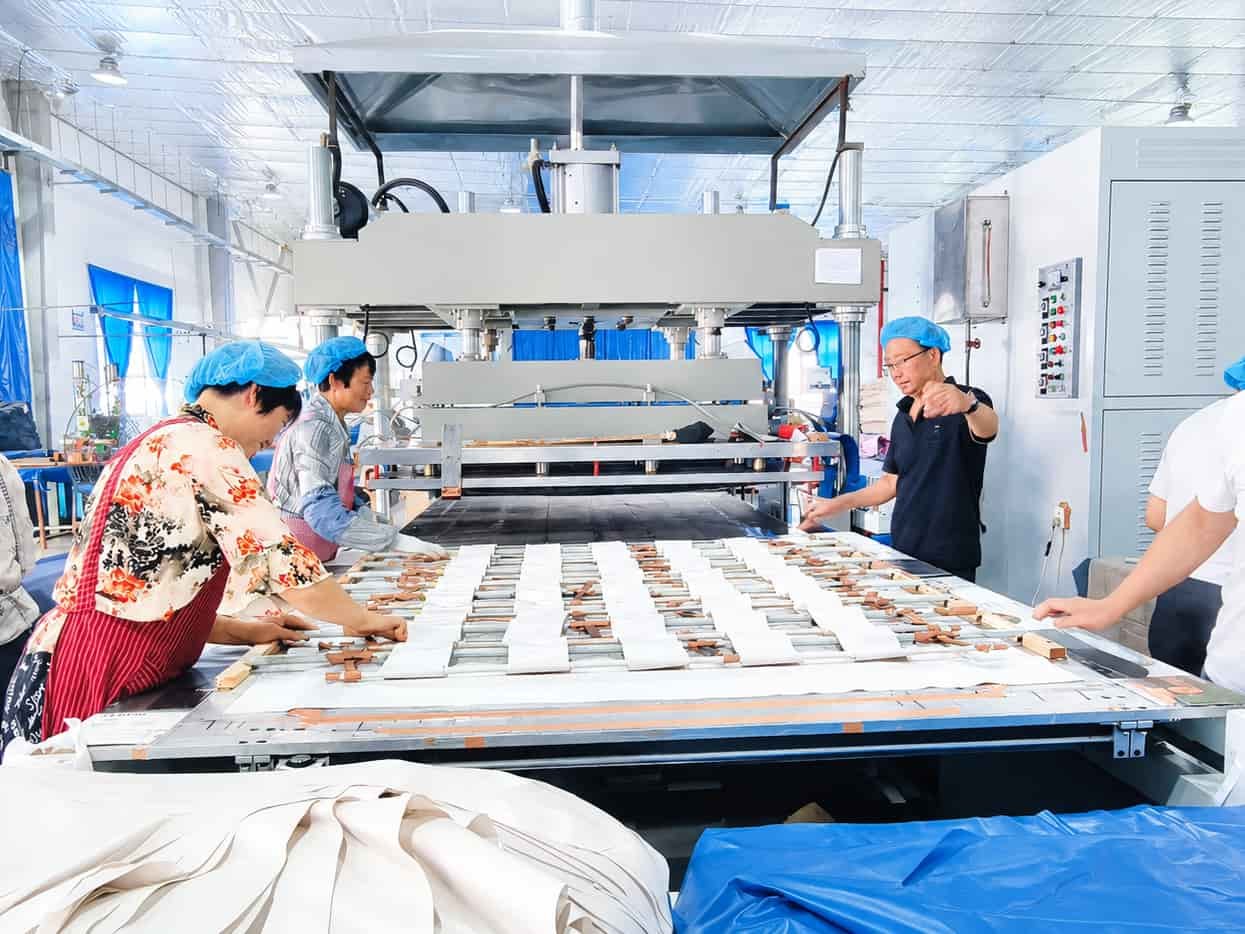
Critical manufacturing factors include:
- Raw material surface consistency and dielectric response
- Brass electrode precision and mechanical alignment
- Welding energy, pressure, temperature and cycle time calibration
- Overlap margins and corner stress relief
- Safety valve and drain plug hermetic sealing
- In-line process monitoring across operational shifts
The essential sourcing question is not whether the factory owns machinery, but whether your product will pass through a disciplined, repeatable production process.
5. Understand How Quality Is Built Before Mass Production
Final pre-shipment inspection is essential, but quality control should never begin after thousands of units have already rolled off the line.
Before mass production starts, production-intent pilot pieces should be used to validate whether the material, seam geometry, tooling alignment and assembly steps function together reliably. Learn more about COMCO’s engineering protocols for pre-production quality validation.
Depending on the pool model, validation may include:
- Dimensions, shape stability and print registration
- Seam peel strength and tensile burst testing
- Valve retention and drain plug sealing
- Repeated inflation and rapid deflation cycles
- Hydrostatic water-holding and sidewall bulge observation
- 24–48 hour air-retention observation for applicable products
As detailed in Why Inflatable Products Leak: How Factories Control Leakage Before Mass Production, slow leaks take time to detect. If an issue appears during validation, the true mark of a reliable manufacturer is its ability to identify the root cause, adjust tooling or welding parameters, and revalidate before releasing the line.
A Strong Quality Model: Validate → Identify Risk → Correct Root Cause → Re-validate → Control During Production
6. Check Experience with Your Target Market and Product Requirements
An inflatable pool distributed in North America, the European Union, Australia or Japan faces distinct safety, chemical, labeling and physical testing standards.
At the early supplier-selection stage, buyers do not need to perform a full compliance audit before initiating dialogue. What matters is whether the manufacturer has demonstrated experience in your target market and understands that regulatory requirements must be confirmed for the specific product configuration.
Useful early indicators include:
- Track record supplying products for your destination markets
- Familiarity with third-party testing protocols (e.g., EN 71, ASTM F963, ISO 25649, CPSIA, REACH phthalate restrictions)
- Experience adapting to buyer-specific quality manuals
- History supporting major retailer or brand compliance programs
- Ability to provide relevant audit or compliance documentation during formal qualification
COMCO has substantial experience manufacturing products for major international markets and collaborating with accredited third-party laboratories. Specific testing protocols and chemical limits should always be confirmed based on the product’s classification, intended age group and destination jurisdiction.
7. Check MOQ, Sampling and Customization Flexibility
A supplier may possess advanced technical capability but still prove a poor operational fit if their Minimum Order Quantity (MOQ) or development model does not match your procurement strategy.
Before investing extensive development resources, clarify:
- Standard production MOQ per style/colorway
- Whether MOQ varies between standard catalog molds and new custom tooling
- Sample development lead times for initial prototypes
- Sampling costs and refund terms against production orders
- Information required to start sampling (die-lines, 3D files, color references)
- Prototype revision process and turnaround times
For COMCO, production MOQ is commonly in the 3,000–5,000 pieces per style range, depending on pool size, material specification and project scope.
Standard pool structures with custom artwork can often be sampled rapidly, whereas completely custom geometric shapes, new chamber architectures or specialized valves require dedicated tooling preparation.
8. Consider Capacity and Lead Time Early
An inflatable pool factory may deliver an excellent sample in October, yet struggle to ship mass production volume during the seasonal manufacturing peak between January and April.
Early capacity reviews should assess:
- Total projected order quantity and SKU breakdown
- Required port delivery window and container booking deadlines
- Packaging complexity (e.g., custom printed display cartons, inserts)
- Peak-season production floor allocation
- Sample approval and artwork finalization cut-off dates
COMCO operates multiple manufacturing facilities and production lines dedicated to inflatable and outdoor leisure products. Under normal scheduling, production lead time after final sample confirmation is typically around 45–60 days, while peak-season programs require advance production planning.
Lead times should always be reconfirmed for the specific product specification and order timeframe.
9. Compare Quotations on the Same Product Specification
Two quotation sheets for what appears to be the same inflatable pool can look remarkably similar while representing completely different product realities.
Before comparing unit FOB prices, ensure that competing proposals are built on identical, transparent specifications:
- Dimensions: Inflated outer dimensions vs. flat uninflated pattern size
- PVC specification: Film thickness, resin quality and cold-crack additives
- Chamber design: Independent ring chambers vs. single-chamber walls
- Printing: Number of colors, ink coverage area and surface varnish
- Valves & plugs: Quick-deflation valves vs. basic pinch valves, drain plug presence
- Accessories: Repair patches, grab handles, warning labels
- Packaging: Corrugated carton ply, cardboard weight and color box coating
- Testing requirements: Included third-party lab test assumptions
- Commercial terms: Order volume tiers and FOB port delivery terms
A lower quotation frequently reflects a lighter material gauge, narrower seam margins, basic packaging or omitted testing costs. The productive sourcing question is never simply “Who has the lowest price?” — it is “What exact product specification is included in this price?”
10. Evaluate Communication and Problem-Solving
How a factory communicates during initial quotation and prototype development is the single best predictor of how they will manage production when challenges arise.
A true manufacturing partner contributes engineering value beyond quoting a drawing. During early interactions, observe whether the supplier:
- Quickly grasps the intended product function, user demographic and market context
- Identifies missing technical dimensions or contradictory requirements in the tech pack
- Explains material, chamber or seam recommendations with clear engineering reasoning
- Flags potential welding or air-retention risks before mold fabrication begins
- Offers practical value-engineering options to achieve a target retail price
- Maintains transparent, structured quotations and detailed revision logs
Once your product direction is clearly established, a capable manufacturer should provide practical production insight that helps you de-risk the product before mass production begins.
A Practical Early-Stage Checklist
When shortlisting inflatable pool manufacturers, the initial evaluation can stay focused and structured:
| Evaluation Area | What You Are Trying to Understand |
|---|---|
| Product Fit | Do they regularly produce inflatable pools and closed-air water-play products? |
| Development | Can they turn sketches or tech packs into production-ready patterns and tooling? |
| Material | Can they explain why the proposed PVC specification matches the pool’s structure and load? |
| Manufacturing | Is there a disciplined HF welding and assembly process behind the machinery? |
| Quality | How is the pool validated before production and inspected via air retention during production? |
| Market Experience | Do they understand the compliance and testing expectations of your destination market? |
| MOQ & Sampling | Does their minimum order volume and sampling workflow fit your commercial scale? |
| Capacity | Can they support your required peak seasonal volume within your required delivery window? |
| Quotation | Are competing quotes based on identical dimensions, materials, packaging and test scope? |
| Communication | Do they proactively solve engineering issues and keep specifications transparent? |
You do not need to perform every detailed factory audit step before deciding whether to request a quote or initiate prototyping. At this early stage, the objective is to answer one central question:
“Does this manufacturer demonstrate the technical capability, engineering process and production discipline needed to develop, produce and control our inflatable pool program?”
If the supplier demonstrates those capabilities, detailed testing protocols, factory audits and final commercial terms can follow smoothly during later qualification phases.
Frequently Asked Questions
What should I look for in an inflatable pool manufacturer?
Focus on verified product experience with pools, engineering development capabilities, PVC material knowledge, high-frequency welding discipline, pre-production quality validation, experience in your target market, realistic MOQs, seasonal capacity and quotation transparency.
Is thicker PVC always better for an inflatable pool?
No. PVC thickness must be evaluated together with pool dimensions, chamber design, water volume load, seam structure, folding flexibility and cost. A thicker material alone cannot compensate for poor seam welding or weak structural design.
Can an inflatable pool manufacturer develop a product from a sketch?
Yes, provided the sketch or concept establishes clear dimensions, general shape and functional intent. The manufacturer’s engineering team can help translate the concept into 2D cut patterns, chamber layouts, valve placements and tooling designs.
What is a typical MOQ for custom inflatable pools?
MOQ varies based on product size, custom colorway formulation and packaging complexity. At COMCO, common production MOQs are between 3,000 and 5,000 pieces per style, depending on the project.
How long does inflatable pool production take?
Standard mass production lead time after golden sample approval is typically 45 to 60 days. Peak season programs (shipping prior to summer retail windows) require advance capacity booking and earlier artwork sign-offs.
Should I choose the inflatable pool supplier with the lowest price?
Only if the quotation is verified to match the exact same material formulation, thickness, chamber construction, print coverage, packaging standards and testing scope. Lower quotes frequently hide omitted specifications or thinner film that could lead to field failures.
Looking for an Inflatable Pool Manufacturing Partner?
If you are evaluating a new inflatable pool program, developing a custom design or qualifying an additional supplier, send us your reference drawings, target dimensions, intended market, order volume and target delivery window. COMCO can review your product direction and provide manufacturing feasibility, material recommendations and a transparent quotation.
Request a Quote →Why Inflatable Products Leak: How Factories Control Leakage Before Mass Production
Air leakage in PVC inflatable products can come from several places — including the material, welded seams, valves, attachments and structural stress points. Some leaks appear immediately, while slow leaks may take much longer to become visible.
For buyers, the important point is not to become an expert in welding parameters or inspect every production step themselves.
It is to understand whether the manufacturer has a clear process to identify leakage risks early, correct the cause when a problem is found, and establish a stable process before mass production begins.
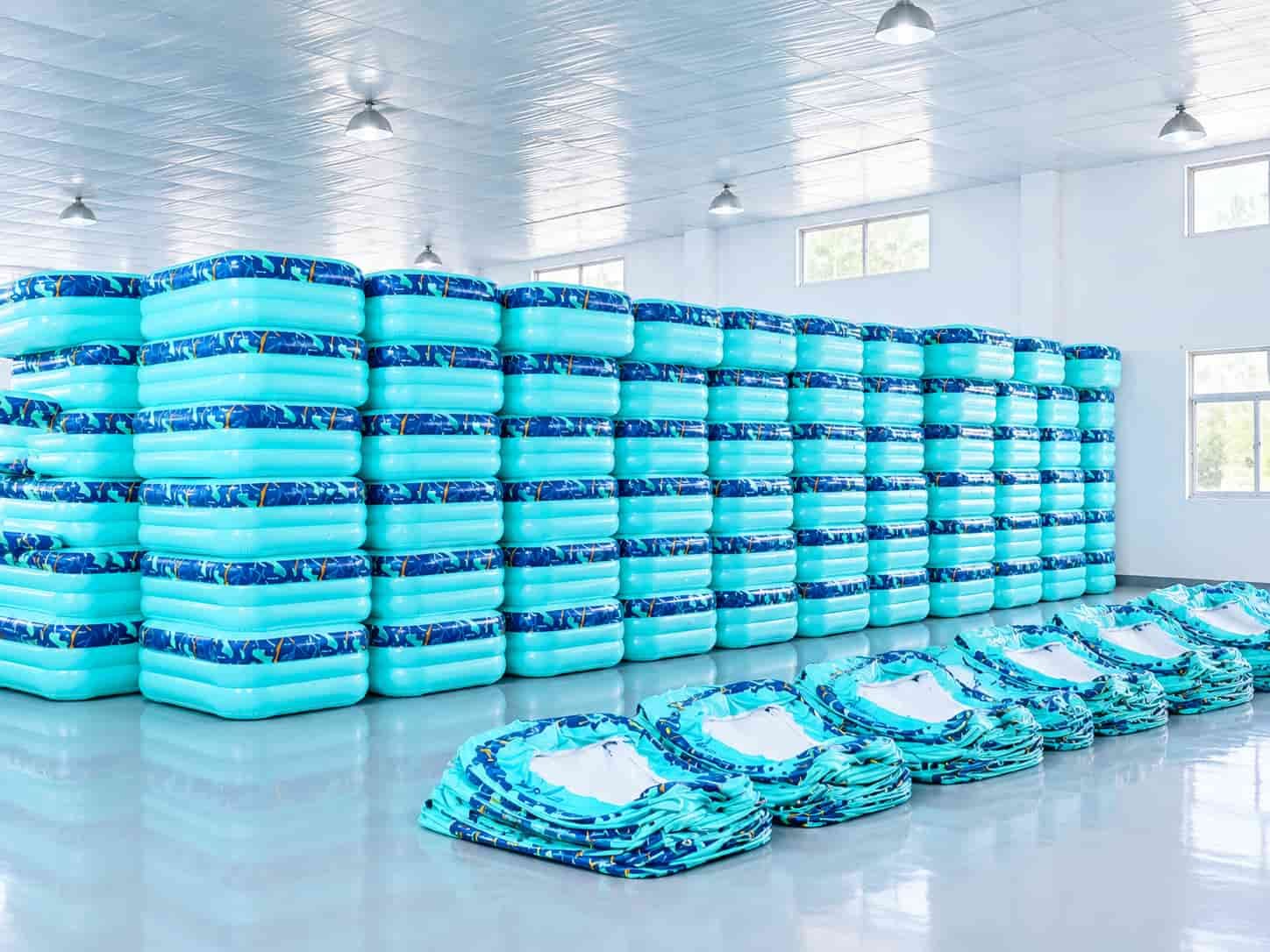
Where Does Leakage Usually Come From?
When an inflatable product loses air, the first assumption is often that the PVC has been punctured or that the material is too thin.
That can happen, but leakage is not only a material issue.
Depending on the product, possible leakage points include:
- small defects or physical damage in the material
- incomplete or unstable welded seams
- corners and chamber transitions
- valve installation and sealing
- welded accessories and attachments
- areas under concentrated load or repeated movement
- structural stress that places unexpected force on a seam
This is why simply increasing PVC thickness does not automatically solve an air-retention problem. In fact, PVC thickness alone does not determine air-retention performance.
A product can use thicker material and still leak if the weak point is a seam, valve, attachment or product structure.
Why Visual Inspection Alone Is Not Enough
Some defects are easy to see.
A badly positioned valve, visible material damage or an obvious welding problem may be identified quickly.
Slow leakage is different.
An inflatable product can look completely normal immediately after inflation while a very small sealing problem gradually reduces the internal air volume over time.
This creates an important manufacturing principle:
“Air-retention quality cannot always be judged at the moment a product leaves the welding station.”
For applicable inflatable products, the factory needs enough time and an appropriate inspection process to allow slow problems to become visible.
How Does a Factory Control Leakage Before Mass Production?
Leakage control should begin before the full production run.
The exact process varies by product, but for many closed-air PVC inflatable products, the logic can be understood as a sequence:
The objective is not simply to find one defective unit.
It is to establish whether the proposed material, structure, tooling and production parameters can work together consistently.
1. Start with the Material
Before an inflatable product is welded, the material itself needs to be suitable for the product and production process.
For PVC film, relevant checks can include characteristics such as:
- appearance
- width
- thickness
- physical properties
- color consistency or migration where applicable
Material specification also needs to match the product.
A lightweight swim ring, a family inflatable pool and an air mattress do not necessarily require the same material decision because their structures, loads and intended uses are different.
This is one reason COMCO reviews PVC film together with the product rather than treating thickness as a standalone quality grade.
2. Set Up the HF Welding Process
For many closed-air PVC inflatable products, high-frequency (HF) welding joins separate PVC panels and creates the airtight structure. To understand each connected step from raw film to packaging, see the full PVC inflatable manufacturing process.
Before mass production, the welding process needs to be set up for the actual product.
This can involve:
- checking tooling and alignment
- establishing appropriate process parameters
- reviewing seam formation
- checking corners and transitions
- producing the first pieces for validation
The important point is that welding is a process, not simply a machine operation.
Material, product geometry, tooling and process settings need to work together during initial OEM product development.
3. Validate the First Product Before Releasing the Line
Once the first production-intent pieces are made, the factory can evaluate whether the product is behaving as expected before releasing full production.
Depending on the product, validation may include checks such as:
- dimensions and appearance
- seam condition
- valve and accessory attachment
- applicable material or seam testing
- repeated inflation and deflation
- load-related testing
- water-holding or other product-specific checks
- inflation observation
Not every inflatable product requires every test. Learn more about how COMCO conducts pre-production quality validation.
The validation plan should follow the product’s construction, intended use and applicable quality requirements.
This stage is valuable because it gives the factory an opportunity to find a weak point before that weak point is repeated across a large production batch.
4. Give Slow Leaks Time to Appear
One of the most important differences between an obvious leak and a slow leak is time.
A product with a major sealing problem may lose air quickly.
A small pinhole, minor seam issue or sealing problem may take much longer to become noticeable.
For applicable inflatable products, COMCO may use a 24–48 hour inflation observation period, depending on the product, process and quality-control procedure.
The purpose is straightforward:
“Give slow air-retention problems enough time to become visible before the product moves forward.”
This should not be interpreted as one universal test that applies identically to every inflatable product.
The appropriate inspection and observation method depends on the product.
5. If a Product Fails, Find the Cause — Not Just the Defective Piece
Finding one leaking product is useful.
Understanding why it leaked is more important.
If a problem appears during validation, the next step is to investigate the likely source.
Depending on the failure, this may involve reviewing:
- the PVC film
- seam position or geometry
- welding parameters
- tooling alignment
- valve installation
- attachment construction
- product structure
- assembly process
The factory can then make an adjustment and validate the product again.
The logic is:
Detect → Identify Cause → Correct → Re-test → Release
rather than:
Detect → Remove One Defective Piece → Continue Production
This is how pre-production quality control helps prevent a problem from becoming a batch-level issue.
What Happens After Mass Production Starts?
Passing pre-production validation does not mean quality control stops.
A buyer is purchasing hundreds or thousands of products, not one approved sample.
Once production begins, the factory still needs to maintain the established product and process requirements across the batch.
Depending on the product and production stage, this may involve:
- first-piece and in-process checks
- dimensions and appearance control
- welding and assembly monitoring
- inflation inspection for applicable products
- air-retention observation according to the product and procedure
- packing and final inspection
The goal is to make mass production repeat the approved product consistently through rigorous quality control and testing.
How COMCO Approaches Air-Retention Control
At COMCO, leakage control is treated as part of the product-development and manufacturing process rather than only as a final inspection step.
For applicable PVC inflatable products, the process can involve:
PVC Film Check → HF Welding Setup → First-Product Validation → Applicable Physical Testing → Inflation Observation → Root-Cause Correction → Mass Production
COMCO operates in-house PVC film production, allowing closer coordination between PVC film production and downstream inflatable-product manufacturing.
During pre-production validation, applicable products may undergo physical tests based on their construction and intended use. These can include seam-related testing, repeated inflation and deflation, load-related tests or other product-specific checks.
For applicable inflatable products, a 24–48 hour inflation observation period may be used according to the product and quality-control procedure to help identify slow air-retention problems before packing.
The specific control plan varies by product because a swim ring, inflatable pool, pool float and air mattress do not have identical structures or use conditions.
What Does This Mean for Buyers?
Buyers do not need to inspect every welding parameter themselves.
What matters is understanding whether the manufacturer has a systematic way to:
- identify likely leakage risks,
- validate the product before mass production,
- give slow leakage enough time to become visible where applicable,
- investigate the cause when a problem is found,
- correct and revalidate the process, and
- maintain the approved process during mass production.
That tells a buyer much more than a simple statement such as:
“Yes, we do leak testing.”
For an OEM program, the stronger question is:
“How do you control air-retention risk before and during mass production?”
Frequently Asked Questions
Why does an inflatable product lose air when there is no visible hole?
Air loss can come from very small material defects, welded seams, valves, attachments or other sealing points. Some leakage is too slow to identify immediately and may require inflation observation or targeted inspection.
Does thicker PVC prevent leakage?
Not necessarily. PVC thickness is only one part of the product. Seam quality, valves, structure, welding conditions and production consistency can also affect air retention.
Why are some inflatable products observed for 24–48 hours?
Slow air-retention problems may not appear immediately after inflation. For applicable products, extended observation gives small leakage or sealing problems more time to become visible. The appropriate duration depends on the product and quality-control procedure.
How does HF welding affect leakage?
HF welding is commonly used to create airtight structures in PVC inflatable products. Seam performance depends on the material, product design, tooling, alignment, process parameters and production consistency rather than the welding method alone.
What happens if the first production product leaks?
The useful response is to investigate the cause before releasing mass production. Depending on the failure, the factory may need to review material, structure, welding parameters, tooling, valve installation or another process, make an adjustment and validate the product again.
Can an approved sample still develop leakage problems during mass production?
Yes. Sample approval confirms an agreed product direction, but mass production also requires process consistency. Material, welding, valves, assembly and other production conditions need to remain controlled across the production run.
Developing a PVC Inflatable Product?
If you are developing a new inflatable product or reviewing an existing product with air-retention concerns, send us your product reference, drawing or defined concept, target dimensions, intended use and market, expected order quantity, existing material specification (if available), and known leakage or quality issue.
COMCO can review the product structure and manufacturing direction before sampling or mass production.
Request a Quote →Does Thicker PVC Mean a Better Inflatable Product?
For buyers sourcing inflatable pools, pool floats, air mattresses or other PVC inflatable products, material thickness is an important specification — but thicker does not automatically mean better.
The right PVC thickness depends on the product’s size, structure, intended use, air pressure, load, seam design, manufacturing process, target market and cost position.
A better sourcing perspective is not simply:
“What is the thickest PVC you can use?”
It is understanding:
“What material specification is appropriate for this product, and why?”
Why Buyers Often Compare PVC Thickness First
PVC thickness is easy to put on a quotation sheet.
When two suppliers quote what appears to be the same inflatable product, buyers may see different material specifications and naturally assume that the thicker option is the higher-quality one.
But an inflatable product is an engineered system. Its performance is influenced by far more than the PVC film alone. Depending on the product, critical factors include:
- PVC formulation, plasticizer balance and consistency
- Product dimensions and geometry
- Number and shape of independent air chambers
- Seam design and overlap margins
- HF welding parameters and tooling precision
- Valve construction and welded position
- Internal structure (I-beam, coil beam, baffle systems)
- Load, dynamic stress and intended recreational or commercial use
- Printing and surface treatment
- Manufacturing consistency across production batches
- Finished-product inspection and air-retention observation
This is why comparing two quotations only by PVC thickness can be misleading.
So, Does Thicker PVC Improve Durability?
In some situations, yes. But not by itself.
Increasing material thickness provides more physical gauge at the product surface, which can improve resistance to certain types of abrasive wear or minor puncture risks.
At the same time, thicker PVC directly affects several technical and commercial parameters:
- Raw material cost and overall project budget
- Total product weight
- Packing volume, carton dimensions and pallet density
- Folding characteristics, flexibility and crease behavior
- HF welding setup, cycle time and heat transfer requirements
- Handling and maneuverability on the assembly floor
- Container loadability and international freight cost
More importantly, increasing thickness does not compensate for an unsuitable product structure, narrow seam margins, mismatched welding parameters or an unreliable valve.
As explored in why inflatable products leak, a product made with thicker material can still leak or fail if the weak point is in the seams, corner transitions or internal joints.
For B2B sourcing, material thickness should therefore be evaluated as one integrated part of the product specification, not as an isolated quality rating.
Different Products Need Different Material Decisions
There is no single PVC thickness that is “best” across all inflatable categories.
A lightweight pool float and a large family inflatable pool do not share the same structural requirements. An air mattress repeatedly supporting adult body weight has entirely different stress points from a beach ball. A multi-chamber water play center with printed towers and slide attachments creates completely different manufacturing considerations from a simple swim ring.
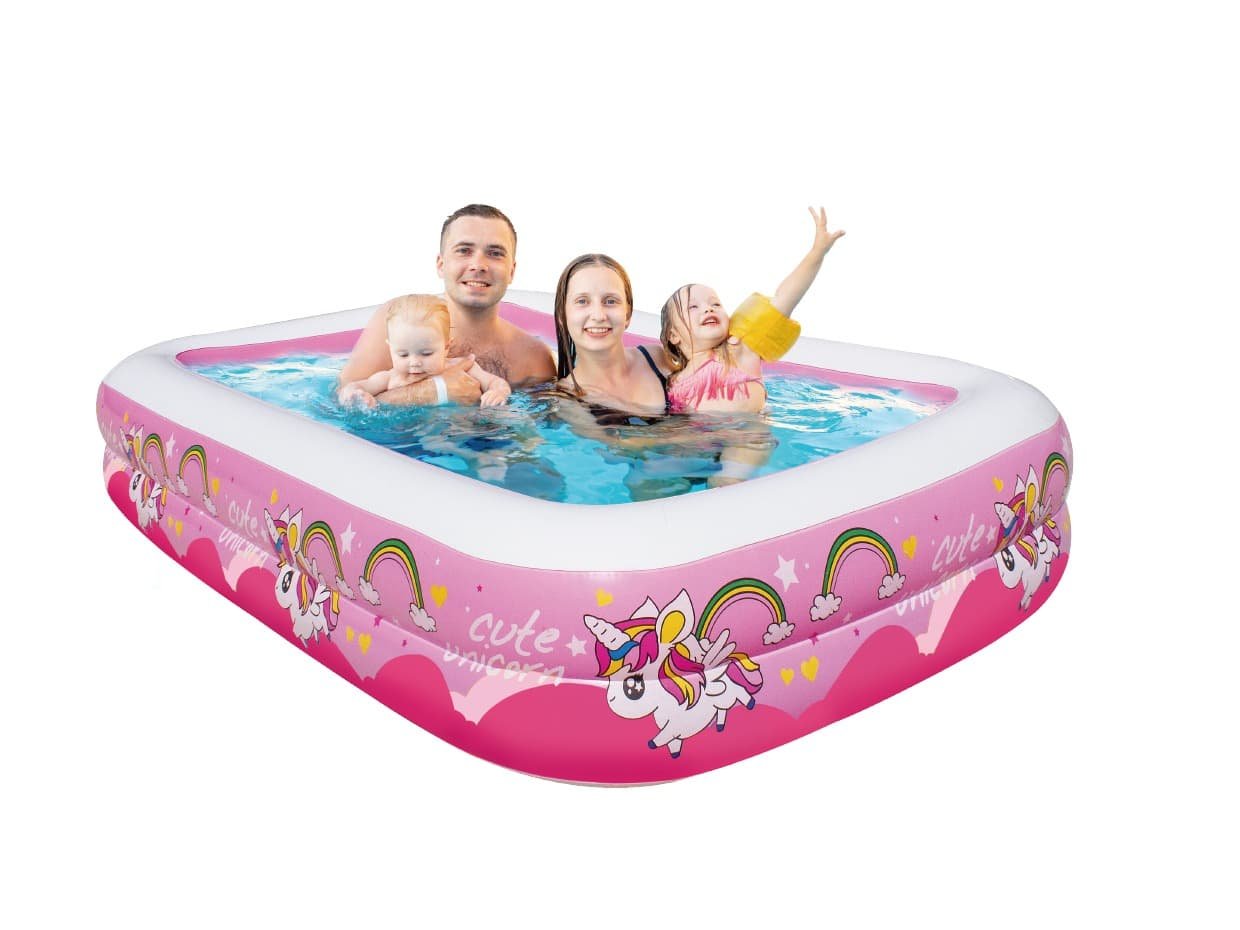
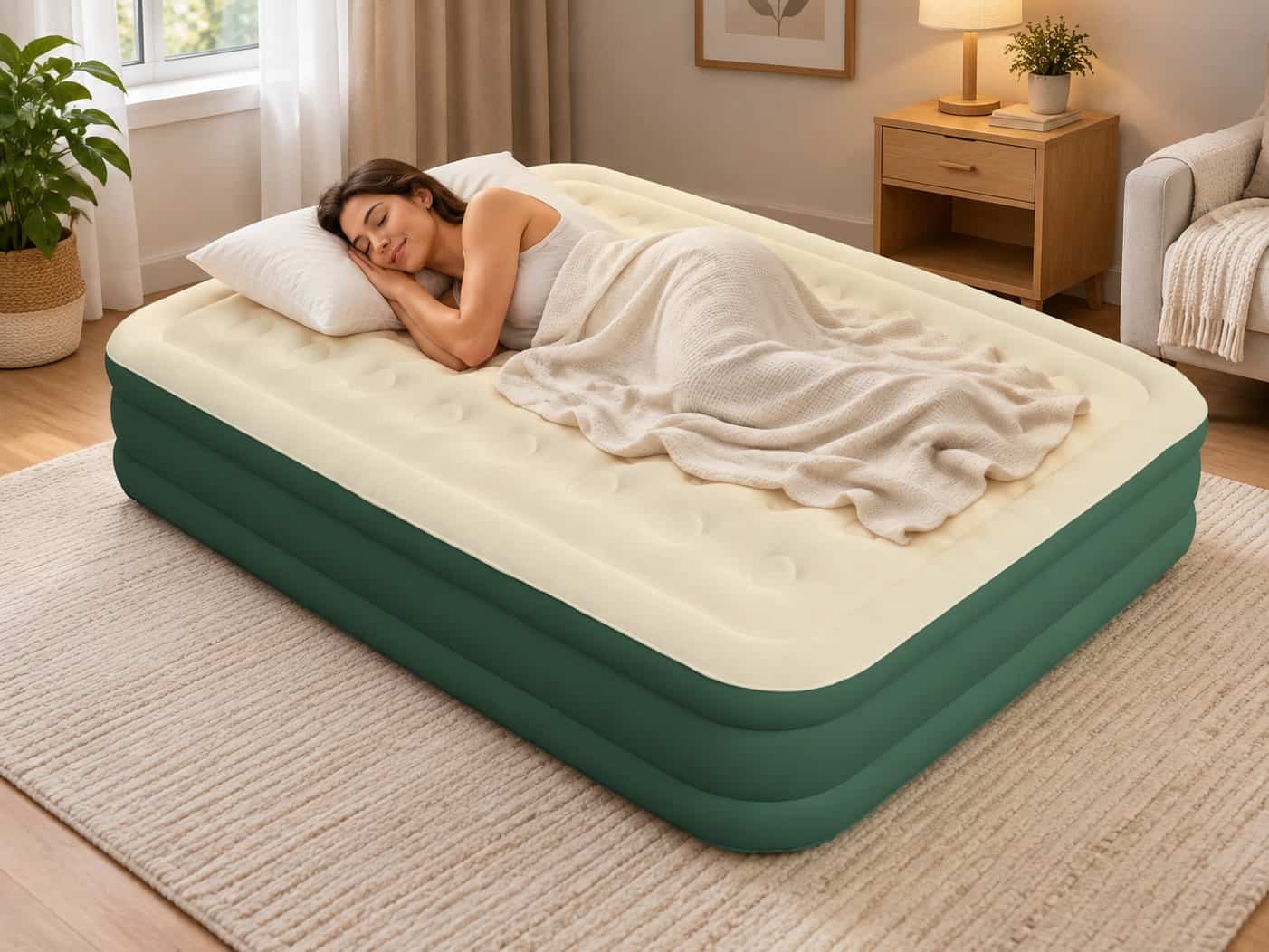
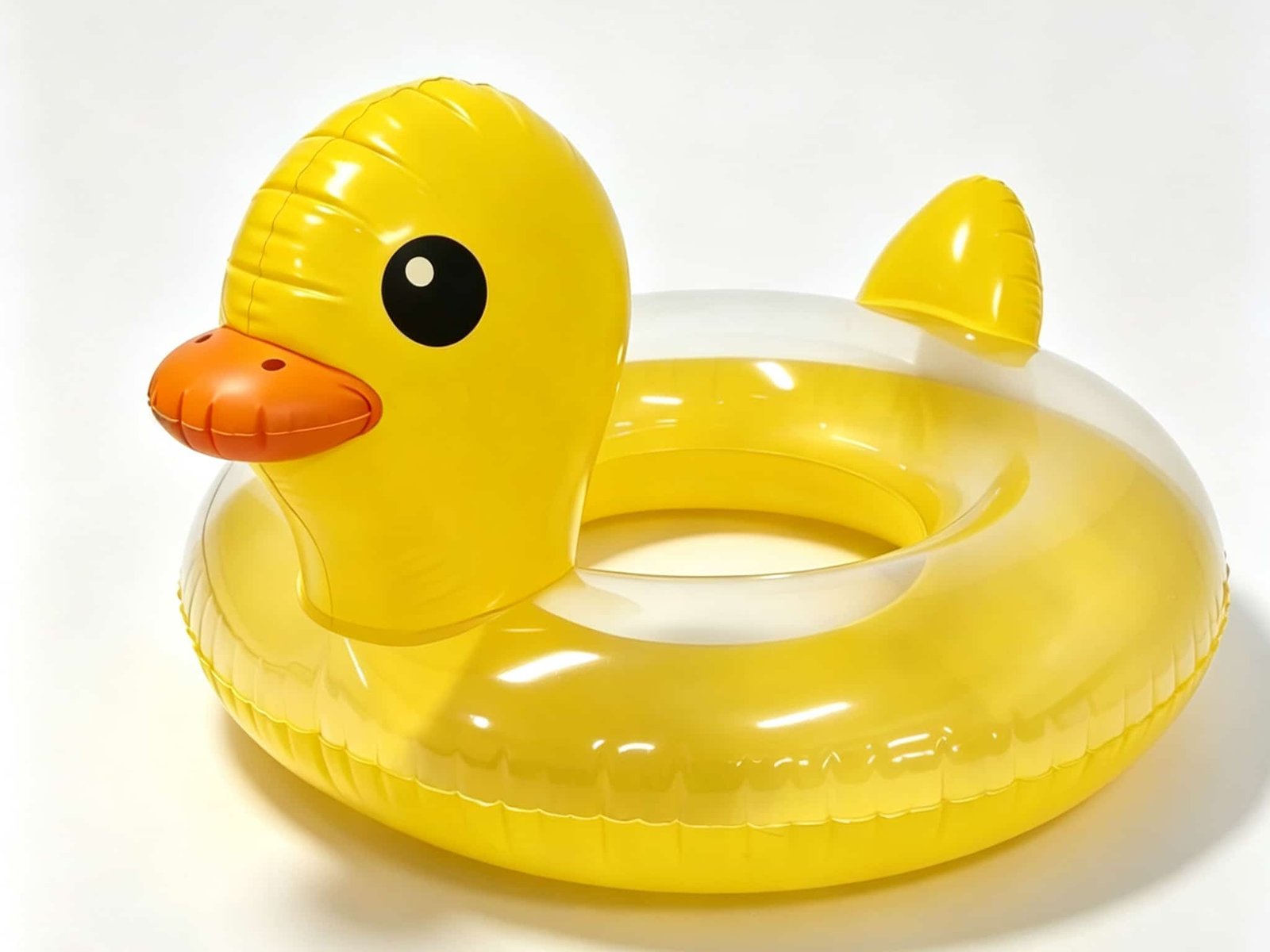
When determining the appropriate material specification, a professional manufacturer evaluates key factors including:
1. What the product is used for
Whether the product is a lightweight recreational float, a load-bearing air bed, an inflatable pool holding substantial water volume, or a seasonal water play center dictates its required tensile strength, puncture resistance and flexibility.
2. Where the primary stress points sit
Handles, internal beams, perimeter corners, valves, welded attachments and chamber transitions experience concentrated forces that differ substantially from the main body panels.
3. How the product is constructed
The material specification must align with the chamber layout, seam orientation and the manufacturing equipment used to produce it.
4. What market position the product targets
An entry-level promotional item, a mainstream retail product and a higher-positioned brand line require deliberate alignment among material grade, construction, packaging and testing.
The correct specification is always product-specific — never a generic one-size-fits-all number.
Why Seam Quality Matters Alongside PVC Thickness
For a closed-air PVC inflatable, the film must do more than resist external abrasion — separate panels of material must fuse reliably into airtight structural bonds.
In quality inflatable manufacturing, high-frequency (HF) welding fuses PVC components at the molecular level. To understand how each production step connects from raw film to boxed goods, see how inflatable products are made.
The integrity of a welded seam is determined by:
- Material formulation, resin purity and dielectric response
- Tooling alignment and precision-machined brass electrodes
- Welding energy, pressure, temperature and dwell cycle time
- Seam width, overlap margins and edge geometry
- Chamber intersection design and stress dispersion
- Production stability and calibration across shifts
For buyers, what matters is understanding that a millimeter measurement alone does not indicate whether a product will hold air over time. The critical evaluation is whether the manufacturer has properly designed the seam geometry, matched the HF welding parameters to the PVC formulation, and validated air retention under real conditions.
Can a Factory Simply Use Thinner PVC to Reduce Cost?
Material consumption is certainly a factor in product costing. However, reducing PVC thickness should never be treated as an automatic, isolated lever for price reduction.
Before any material adjustment is considered, a manufacturer’s engineering team must review how the change affects:
- Product structural integrity and pressurized shape retention
- Welding stability, burst pressure and seam tensile strength
- Surface appearance, hand feel and fold crease resistance
- Safe user load capacity under actual operating conditions
- Expected product lifespan across seasons
- Compliance with destination market safety and physical testing standards
- Deflation behavior, carton packing integrity and transit stability
In some situations, a modest material optimization may be technically sound. In many others, cost targets are far more effectively met through dimension refinement, artwork and screen printing optimization, accessory redesign, carton packaging engineering, structural simplification or production line automation.
When working toward a target price point, the professional path is collaborative value engineering — balancing all product parameters together rather than arbitrarily shaving film thickness.
How Should PVC Thickness Be Decided for an Inflatable Product?
When reviewing an OEM inflatable product, buyers should expect the material specification to have a clear technical and commercial rationale behind it.
The manufacturer should be able to explain how the proposed material fits the product’s structure, intended use, manufacturing process, quality expectations and commercial target. In professional manufacturing, this decision follows a structured assessment:
1. Start with the product type and intended use
A simple swim ring, an adult pool lounge, a family inflatable pool holding thousands of liters of water, an air mattress supporting body weight overnight, and a multi-activity water play center serve completely distinct purposes. Intended load, dynamic water pressure, frequency of use and safety criticality set the baseline for material strength requirements.
2. Review product size, chamber geometry and structural stress
Larger surface areas experience greater total tensile load under inflation. The number and layout of air chambers, the location of welded handles, valve positions, internal coil or I-beam supports, and perimeter seam paths dictate where stress concentrates. High-stress zones may require reinforced construction or higher-gauge film, whereas low-stress decorative elements can remain lighter.
3. Consider the manufacturing and HF welding process
The PVC specification must work harmoniously with high-frequency welding tooling and seam layouts. Different material thicknesses and formulations require tailored electrode profiles, pressure distribution and welding energy. A professional factory ensures that material specification, tooling design and cycle parameters are developed as a coordinated system rather than separate decisions.
4. Consider quality expectations and market positioning
An entry-level promotional item, a mainstream mass-retail seasonal product, and a premium branded outdoor inflatable operate under different commercial and brand expectations. Material selection must reflect whether the product prioritizes ultra-compact packaging for seasonal retail shelves or heavy-duty durability for multi-season consumer satisfaction.
5. Balance technical performance and commercial cost
Professional cost engineering is not about simply thinning the PVC film to hit a target. If a buyer has a defined budget, the manufacturer should holistically evaluate dimensions, structural pattern efficiency, printing plate coverage, accessory specifications, packaging configuration, material utilization and production throughput.
“The right PVC specification is not the thickest material available. It is the material specification that fits the product’s structure, intended use, manufacturing process, quality expectations and commercial target.”
How COMCO Approaches Material Selection
At COMCO, material specification is reviewed together with the product rather than treated as an isolated number.
For an OEM or ODM project, the engineering evaluation brings together product type, dimensions, internal chamber structure, intended use, target market, expected order volume, price positioning and applicable testing standards. Read more about this collaborative process in OEM inflatable product development.
COMCO operates in-house PVC film production, enabling direct coordination between resin formulation, plasticizer balance, calendering thickness control and downstream inflatable product manufacturing.
Before mass production, applicable products undergo product-specific validation, including raw material physical checks, seam tensile testing, repeated inflation and deflation cycles, static weight load testing, and systematic air-retention observation. To see how these steps protect production batches, explore what happens before mass production.
The objective is not to use the thickest PVC possible. It is to define a production-ready specification that balances product structure, manufacturing reliability, quality requirements and commercial viability.
The Buyer Takeaway: Comparing Quotations Accurately
Buyers do not need to become PVC chemical engineers to make sound sourcing decisions.
What buyers do need to recognize is that PVC thickness alone does not define product quality or overall value.
When comparing quotations from different suppliers, do not compare PVC thickness in isolation. It is critical to confirm whether the competing proposals are based on identical or truly comparable specifications across the entire bill of materials:
- Product dimensions: Exact inflated vs. deflated cut dimensions
- Product structure: Chamber divisions, internal baffles, I-beam or coil-beam layout
- Material specification: Film gauge, resin formulation, embossing texture and cold-crack properties
- Printing: Number of colors, ink coverage area and surface treatment
- Accessories: Valve types, handles, rope attachments and repair patches
- Packaging: Gift box thickness, polybag specifications and master carton ratings
- Testing requirements: Applicable destination market standards (EN 71, ASTM F963, ISO 25649, etc.)
- Quality expectations: Air-retention observation standards and inspection criteria
A thicker PVC number or a lower unit price does not necessarily mean the buyer is comparing the same product. A well-engineered inflatable product is always the result of material, structure, welding, testing and manufacturing discipline working together.
PVC Thickness + Product Type + Product Size + Product Structure + Intended Use + Load / Stress + HF Welding / Manufacturing + Quality Requirement + Target Positioning + Cost
When these elements are aligned, the result is an inflatable product that performs reliably in the market while achieving the commercial goals of the project.
Frequently Asked Questions
What PVC thickness is best for an inflatable pool?
There is no universal thickness that fits every inflatable pool. The appropriate specification depends on pool dimensions, wall height, water volume and hydrostatic load, chamber architecture, target user age, seam geometry and retail positioning. A professional manufacturer evaluates these structural factors to recommend a material gauge that ensures safety and shape retention without unnecessary weight or cost.
Is thicker PVC always more puncture-resistant?
Additional film thickness provides more material mass at the surface, which can increase resistance to certain minor abrasions. However, overall puncture and tear resistance also depends heavily on the PVC resin formulation, plasticizer ratios, surface texture and the specific nature of external contact.
Does thicker PVC prevent air leakage?
Not necessarily. Air retention is primarily determined by welded seam integrity, valve sealing, corner stress points and manufacturing consistency. As detailed in our guide on why inflatable products leak, a product using thicker PVC can still lose air if seam parameters or valve welds are compromised.
Does PVC thickness affect the price of an inflatable product?
Yes. Material weight directly impacts raw material consumption and shipping freight. However, final FOB pricing is also shaped by product dimensions, chamber complexity, printing coverage, accessory specifications, packaging configuration, labor efficiency and production run size.
Can I specify PVC thickness when requesting an OEM quotation?
Yes. If your brand already has an established tech pack or required material specification, include it in your RFQ. If you are developing a new concept, providing product dimensions, intended use, target retail price and destination markets allows the manufacturer to recommend and review an appropriate material specification with you.
Should two supplier quotations be compared only by PVC thickness?
No. When comparing quotations, verify that both proposals are built on comparable dimensions, chamber structures, material specifications, printing methods, accessories, packaging and testing requirements. A thicker PVC number or a lower unit price does not necessarily mean the buyer is comparing the same product.
Planning a Custom Inflatable Product?
If you are developing a new inflatable product or reviewing an existing specification, send us your product type, target dimensions, intended market and use, expected order quantity, existing material specification (if available), and target positioning or cost direction. COMCO can review the material direction together with the product structure before sampling.
Request a Quote →From Sketch to Sample: How an OEM Inflatable Product Is Developed
What happens between your first product concept and an approved sample?
A product does not need to arrive as a finished technical drawing.
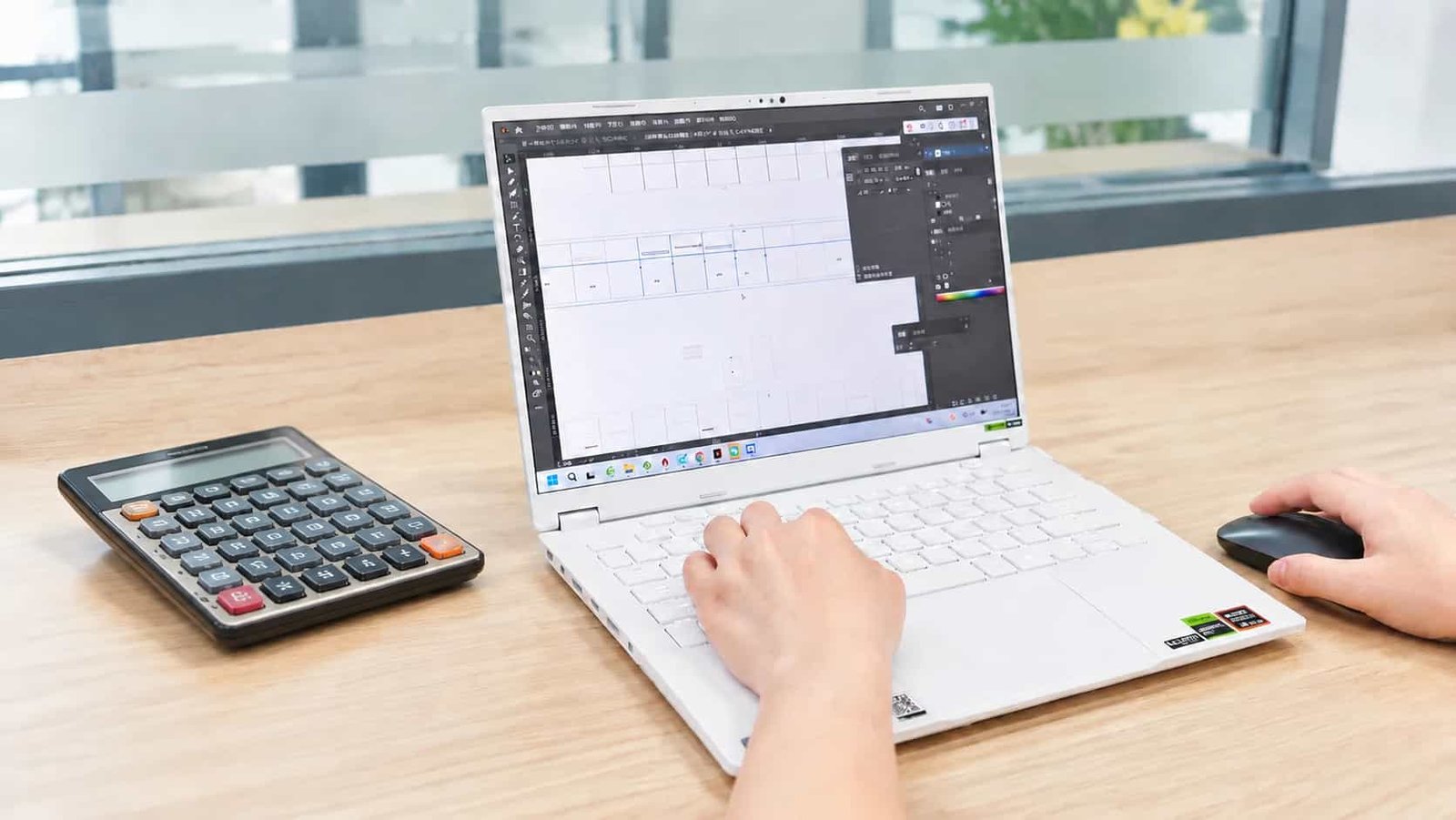
A sketch, drawing, reference product, rendering or clearly defined concept can provide a practical starting point. From there, the product needs to be refined into a structure that can actually be sampled, tested and manufactured.
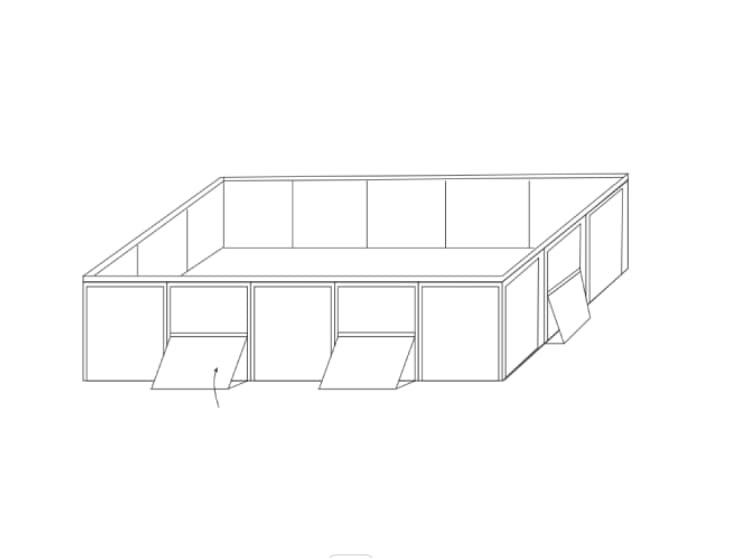
01. Start with a Clear Direction
The clearer the intended product direction, the more efficiently development can move forward.
Useful starting information may include:
Target size · Intended use · Reference image or sample · Target market · Expected quantity
For more complex products, a rough sketch or basic structural direction is especially helpful.
02. Turn the Concept into a Buildable Structure
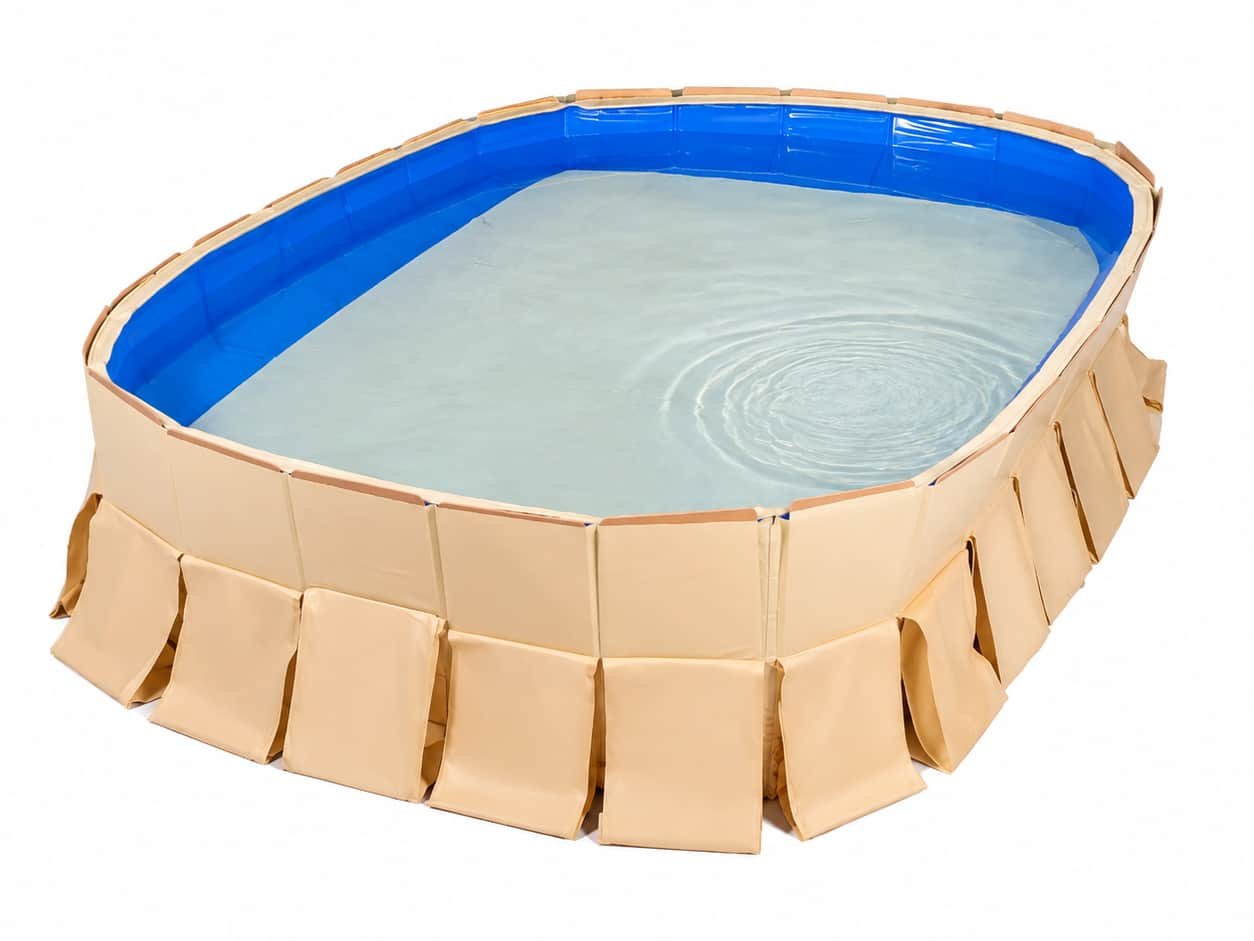
Before sampling, the concept needs to work as a physical product.
Depending on the project, the development team may review and refine:
Dimensions · PVC thickness · Inflatable structure · Seam position · Valve position · Printing · Accessories · Manufacturing method
The goal is not only to make the product look right.
A good product concept also needs to be practical to manufacture repeatedly. Learn more about our technical engineering support on the COMCO Product Development page.
03. Build the First Sample
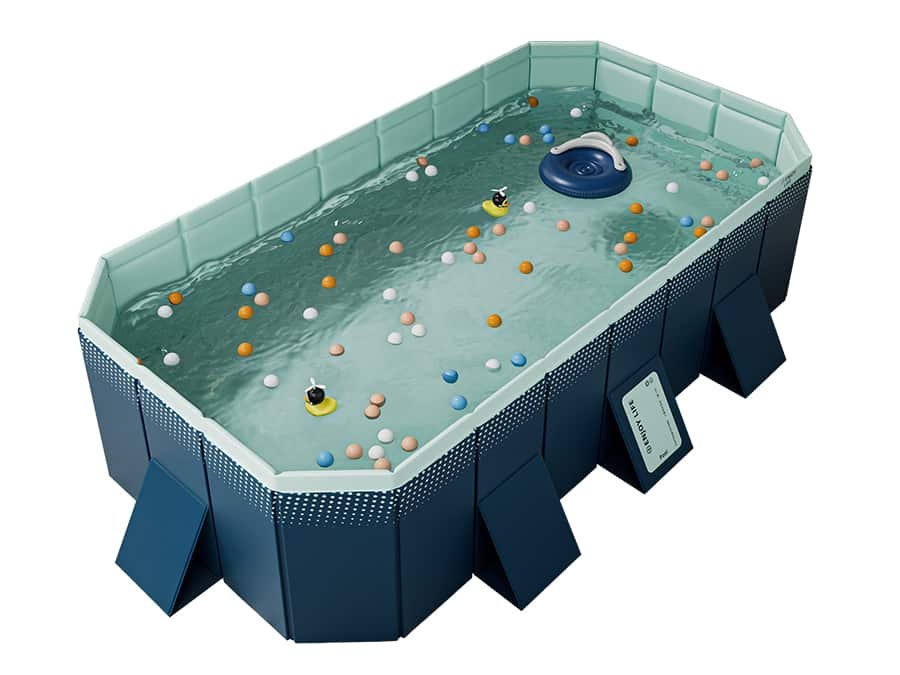
Once the structure and key specifications are defined, the project moves into sampling.
COMCO combines design support with experienced hand sampling to turn the agreed direction into a physical prototype.
Simple inflatable samples can often be completed quickly, while more complex structures may require additional time for tooling, construction and adjustment.
*Timing depends on product complexity, artwork, tooling and material readiness.
04. Review, Adjust, Repeat
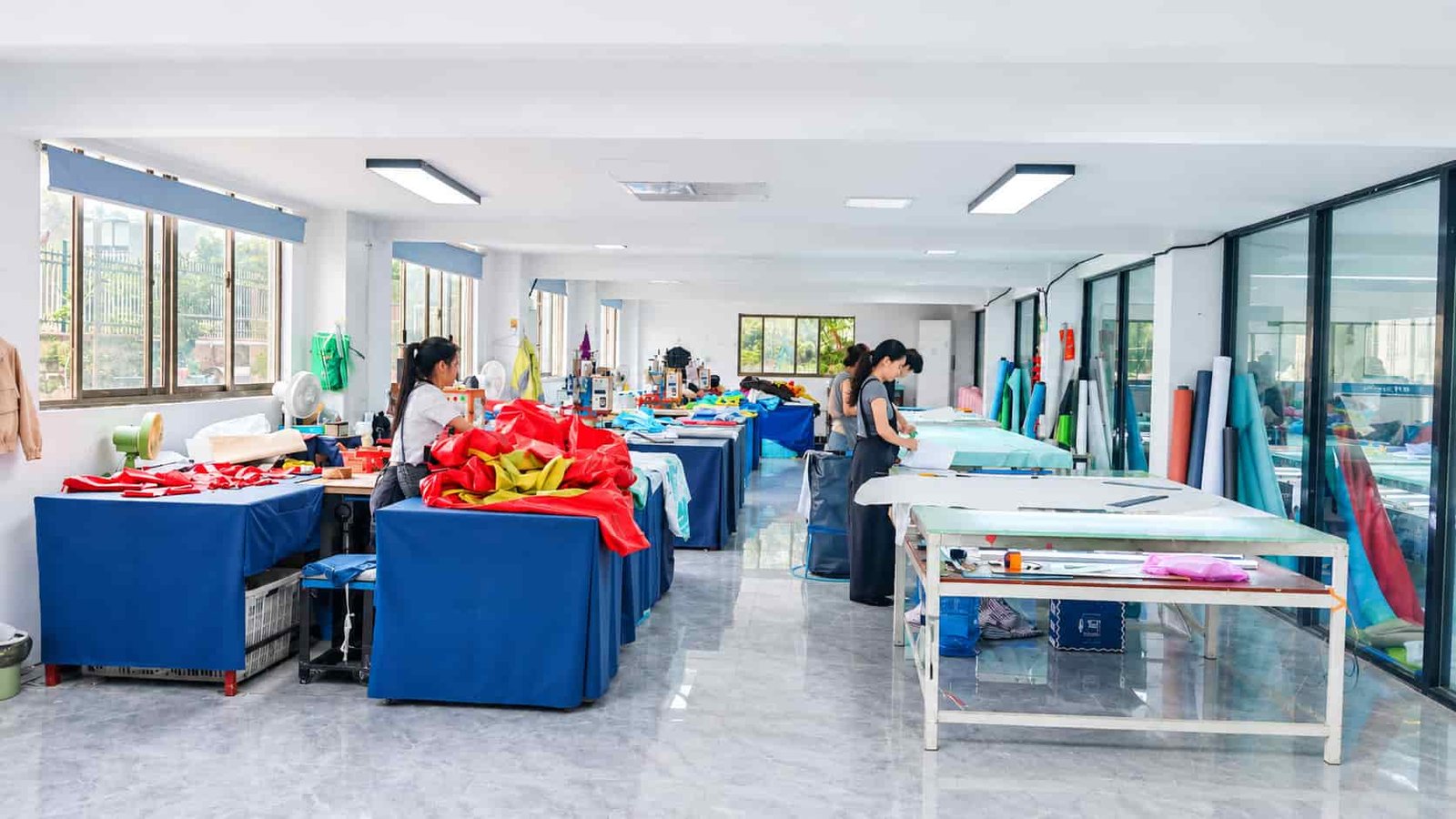
The first sample is not always the final sample.
Once the prototype can be seen, touched and used, details that were difficult to judge on a drawing become much clearer.
The development cycle may include:
Check → Feedback → Adjust → Re-sample → Confirm
Changes may involve size, shape, structure, artwork, accessories or user experience.
This iteration is a normal part of turning a concept into a production-ready product.
See a Real Development Story →
05. From Approved Sample to Production
Once the sample, specification and key requirements are confirmed, the project can move into pre-production validation and production planning.
At this stage, the focus shifts from “Can we make the product?” to “Can we produce it repeatedly and consistently?”
The next steps depend on the product, market and customer requirements.
Have a Product You Want to Develop?
Send us your sketch, reference product, drawing or defined product concept. Our team can review the product direction and discuss the next development steps.
Discuss Your Product Development Project →How Inflatable Products Are Made: From PVC Film to Finished Product
A look inside the manufacturing process behind PVC inflatable products.
An inflatable product may look simple when finished, but reliable mass production depends on a sequence of connected processes.
From the PVC film itself to printing, welding, assembly and inspection, each step can influence the appearance, air retention, durability and consistency of the finished product.
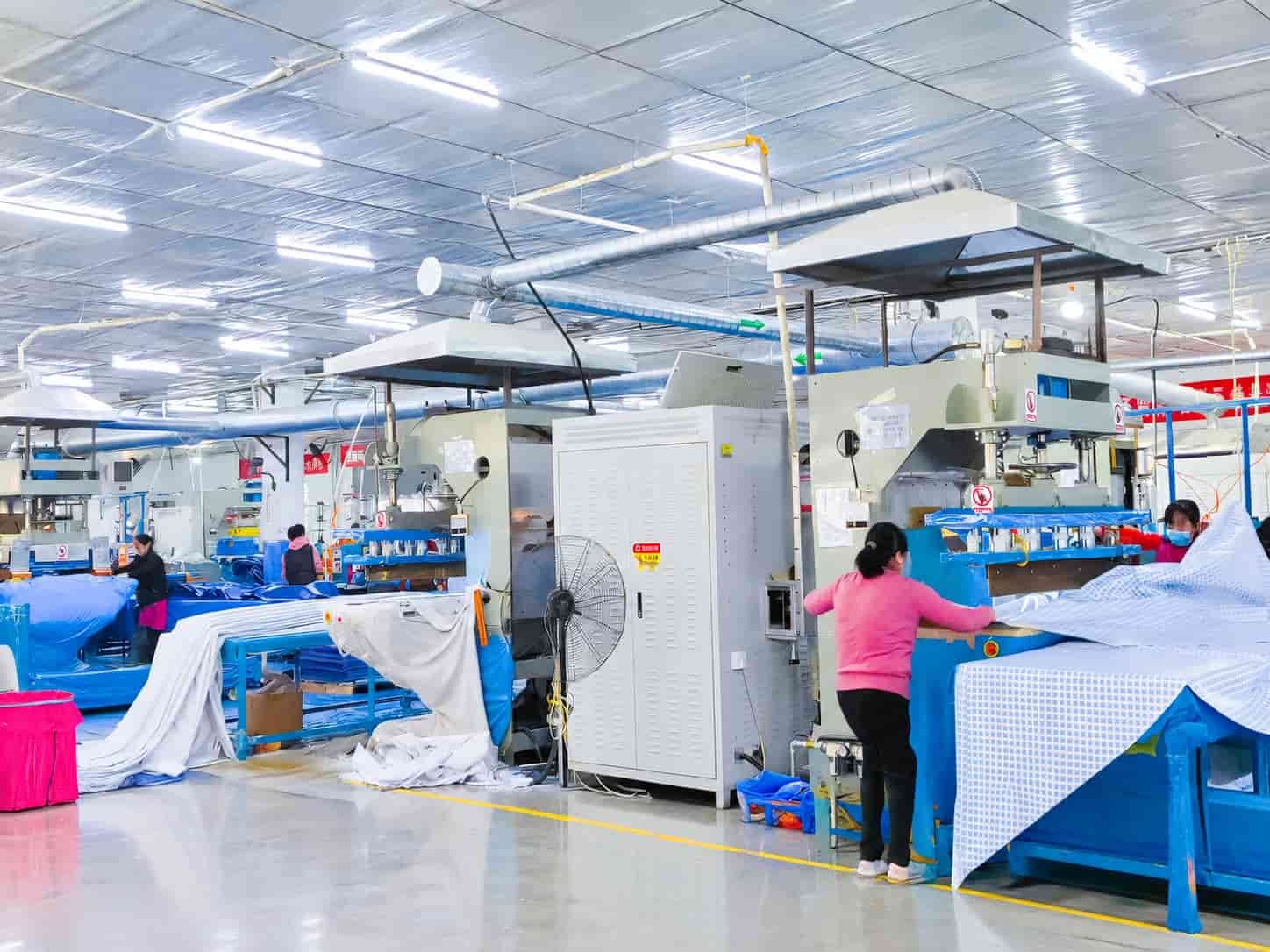
01. It Starts with PVC Film
PVC film is the starting material for many inflatable products.
Film thickness, formulation, color and physical properties can influence welding performance, durability and the finished appearance.
COMCO operates in-house PVC film production, giving the manufacturing team closer visibility into this critical starting material before it moves into downstream production.
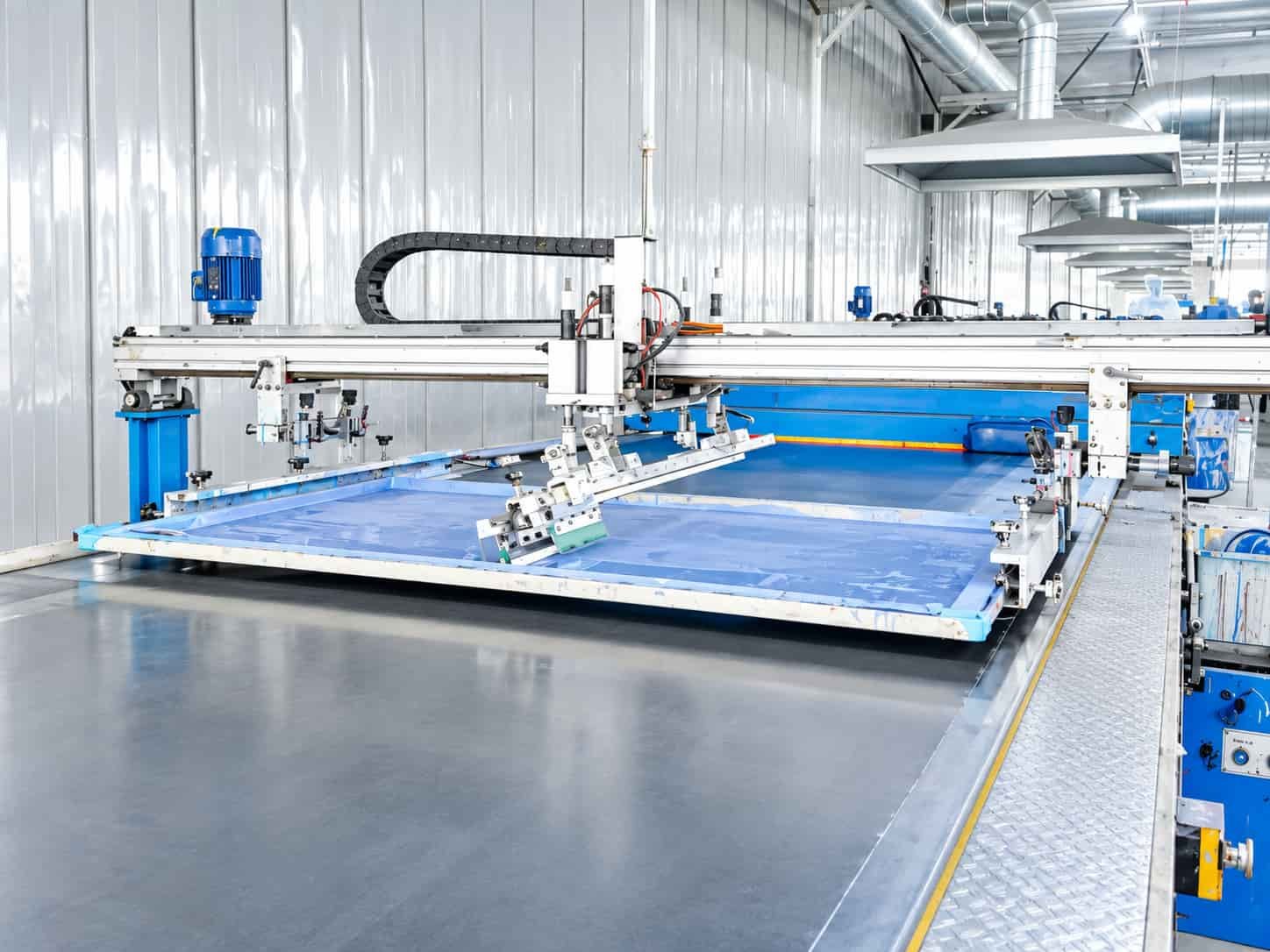
02. Printing Brings the Product to Life
Once the material is prepared, artwork and graphics are applied according to the product design.
Different products and artwork requirements may use different printing methods. The goal is not only visual accuracy, but also consistency when the design moves from sample development into repeat production.
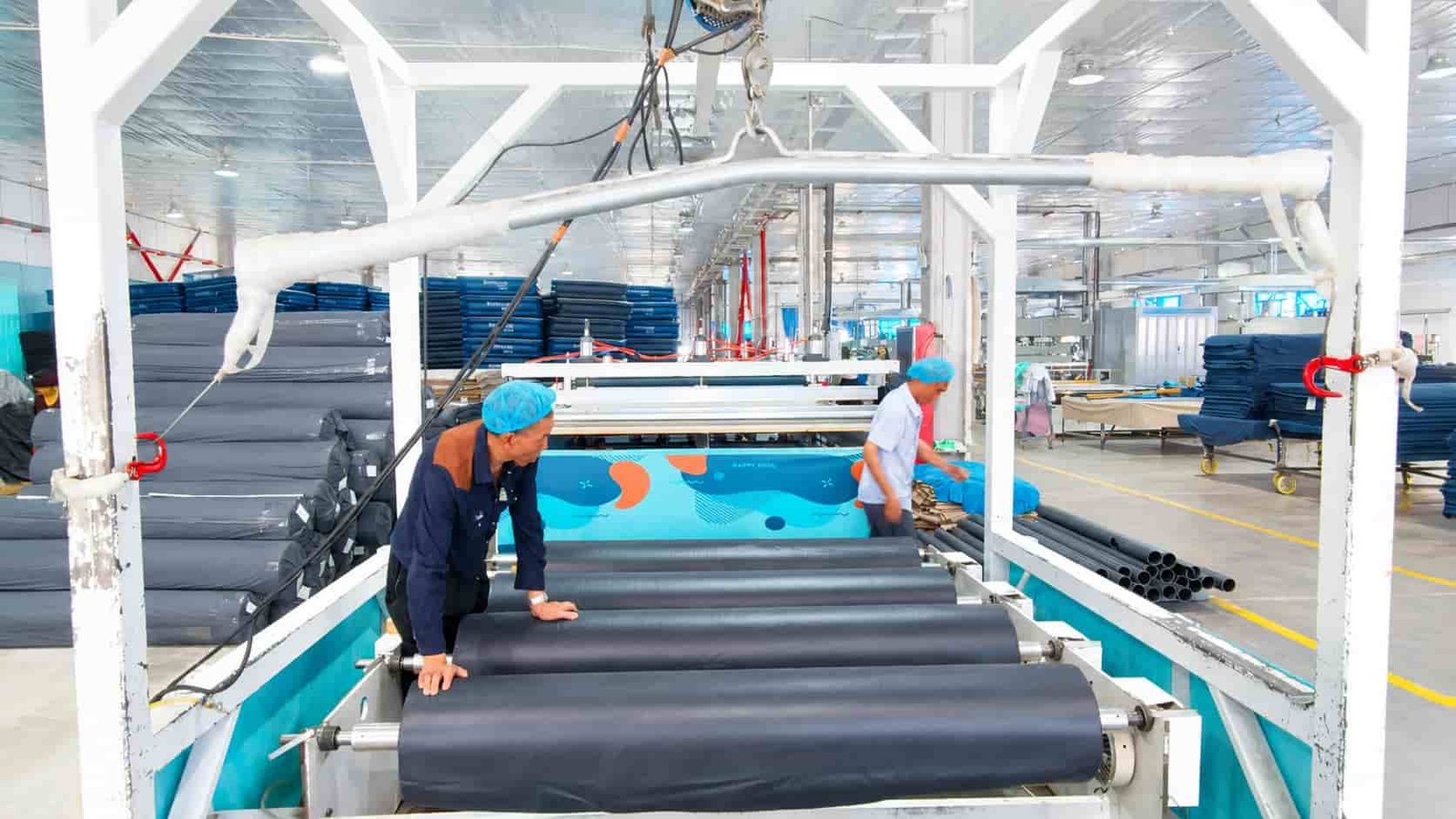
03. Cutting and Preparation
Printed or solid-color PVC film is prepared and cut into the components required by the product structure.
Accuracy at this stage matters because the individual pieces must align correctly during welding and assembly.
A small difference in component dimensions can affect the final shape, appearance or fit of the product.
04. HF Welding Creates the Inflatable Structure
For many closed-air PVC inflatable products, high-frequency welding joins PVC components together to create sealed chambers and structural seams.
Tooling alignment, welding parameters and material compatibility all matter. If the process is not properly controlled, seam strength, appearance or air retention can be affected.
Before mass production, the process is adjusted and validated for the specific product.
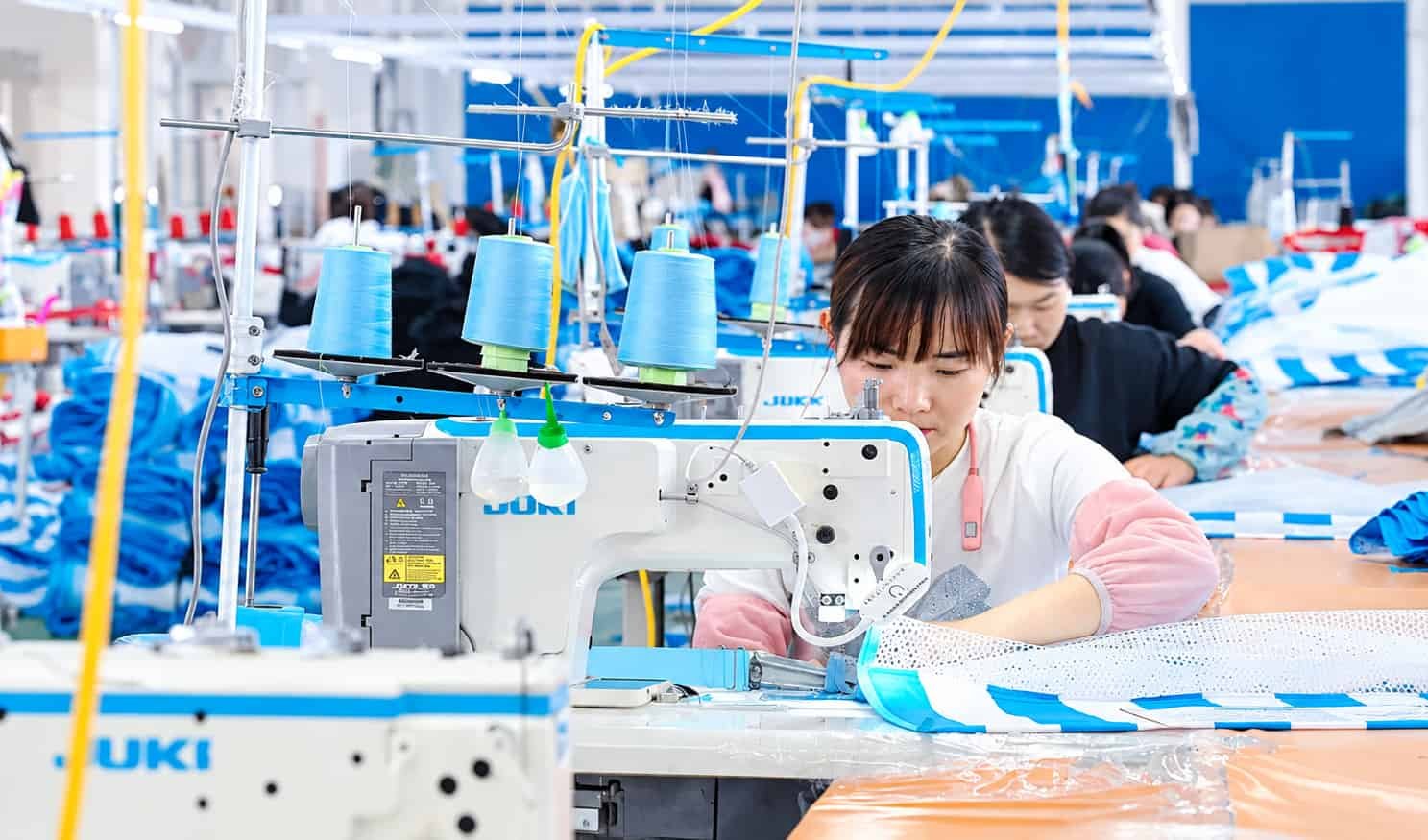
05. Sewing and Assembly Where Required
Not every product is made by HF welding alone.
Fabric-covered inflatables and other multi-material products may combine welded PVC components with sewing, covers, accessories or externally sourced components.
COMCO has its own sewing capability to support products that require these combined constructions.
06. Inflation, Inspection and Packing
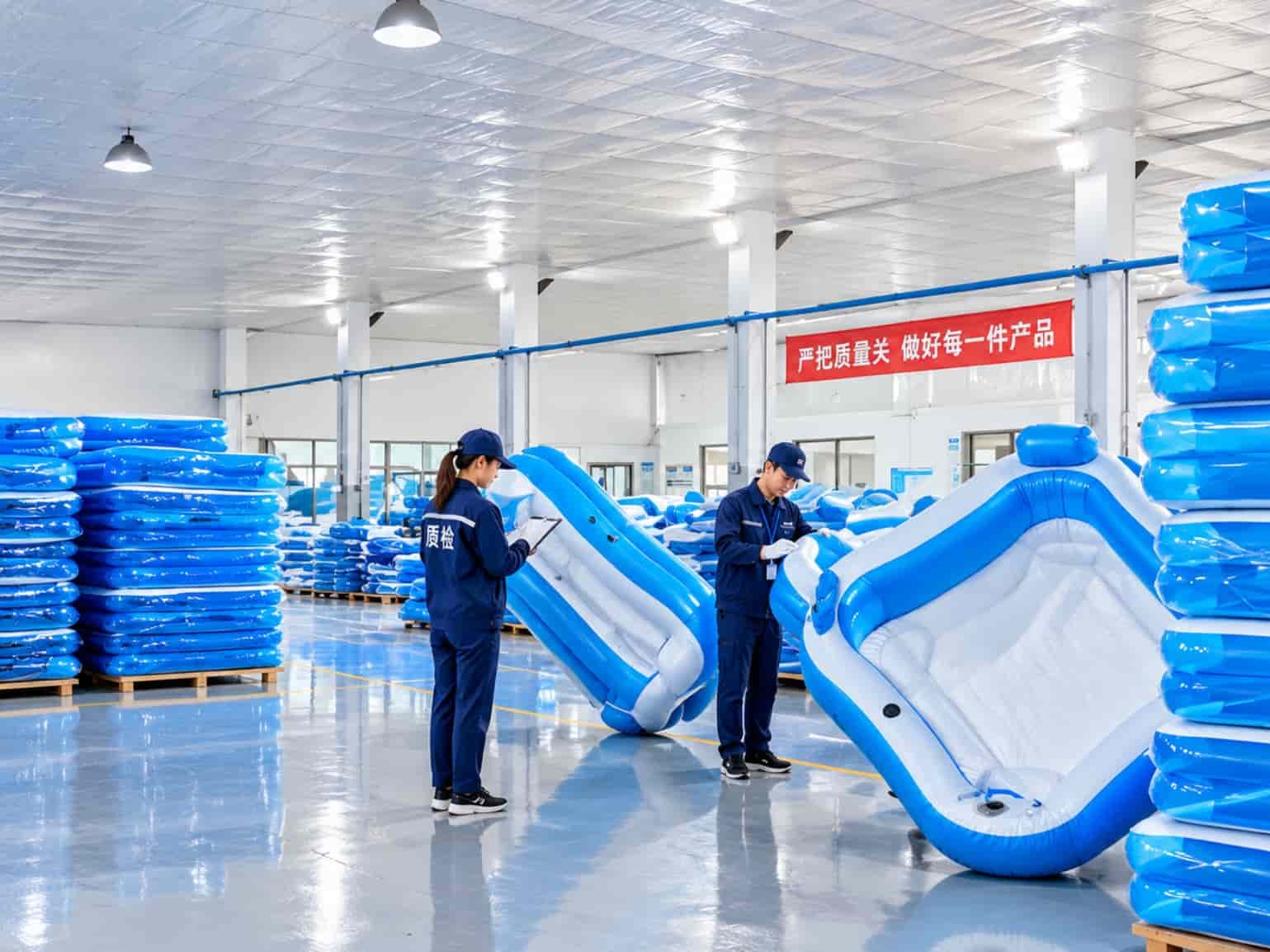
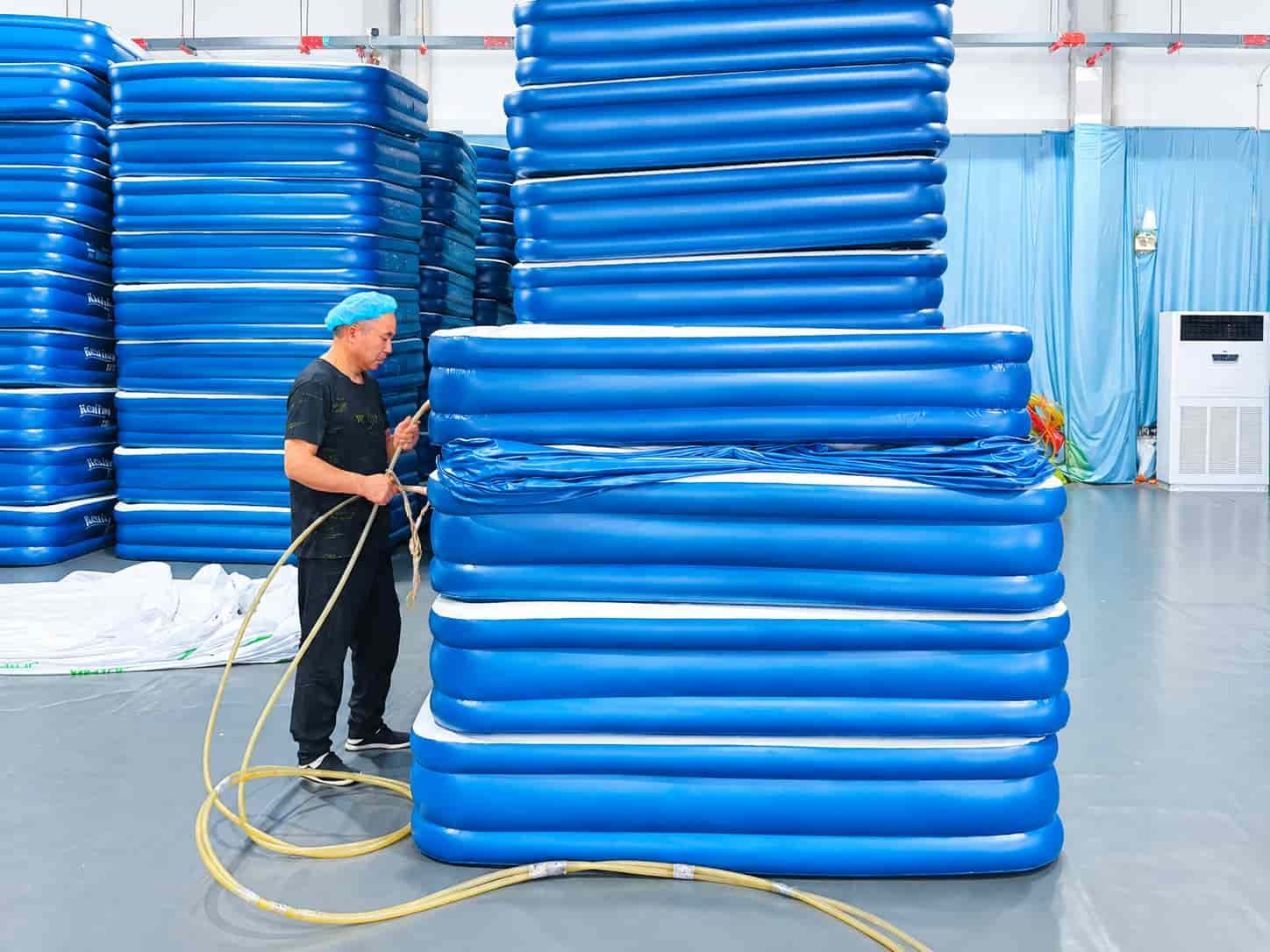
After assembly, applicable inflatable products are inflated and inspected.
This allows the production and quality teams to check appearance, structure, function and air retention before packing. Depending on the product and applicable SOP, inflation observation may continue for 24–48 hours.
Once the required checks are completed, products move into packing and final inspection.
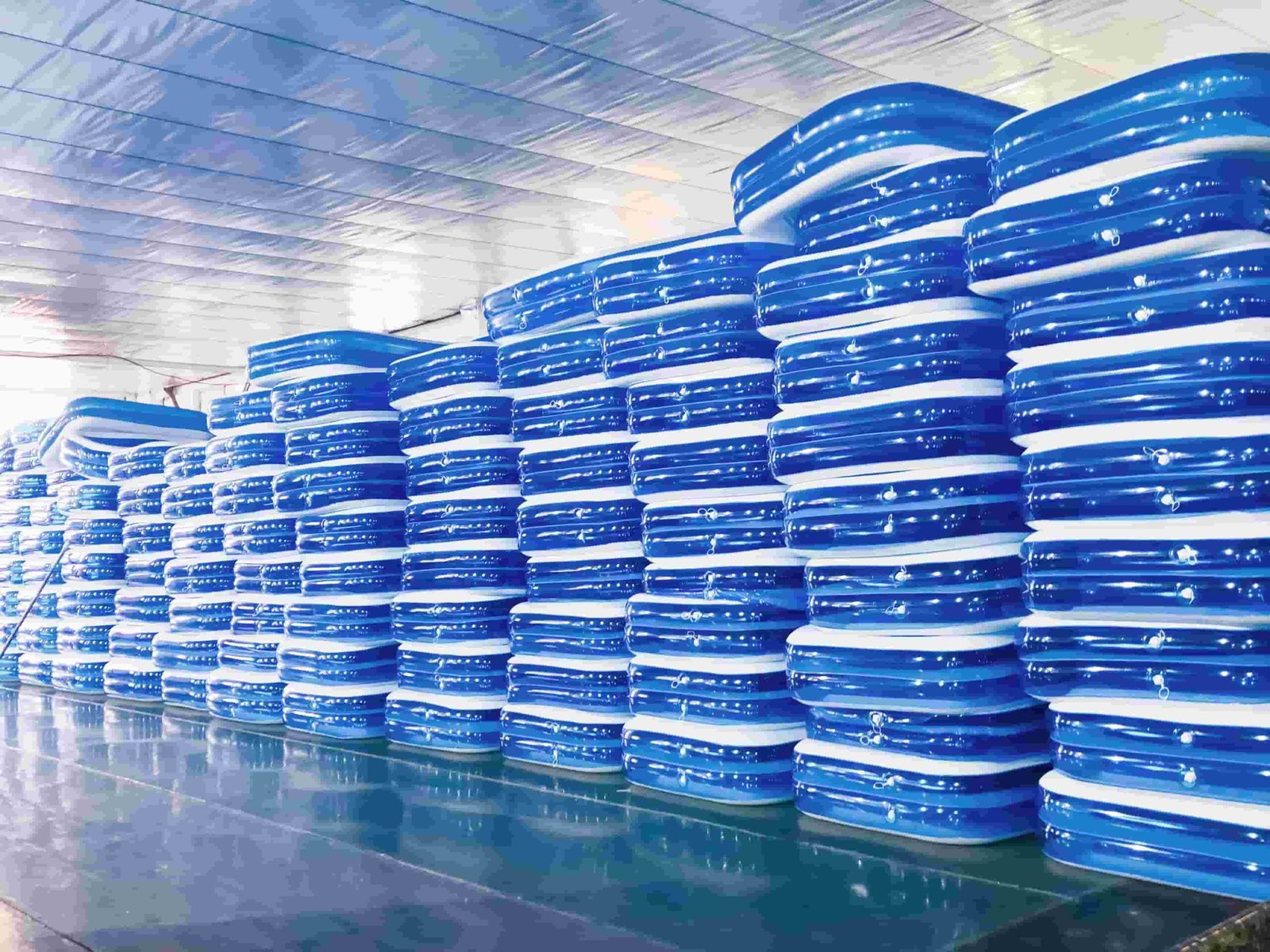
Manufacturing Is a Connected Process
The quality of an inflatable product does not come from one machine or one final inspection.
It depends on how material, printing, component preparation, welding, assembly and quality control work together throughout production.
For OEM and ODM projects, the manufacturing process may also change according to product construction, materials, accessories, target market and customer requirements.
Discuss Your Product
Whether you need a dedicated production line, customized PVC specifications, or a multi-material manufacturing solution, our engineering team is ready to evaluate your design.
Discuss Your Product →What Happens Before Mass Production?
How COMCO tests and validates inflatable products before they move to the production line.
A good sample is not automatically a production-ready product.
Before mass production begins, the product needs to be checked under conditions relevant to its construction and intended use. At COMCO, this process helps identify potential weaknesses early — before they become repeated problems on the production line.
01. Start with the First Production Sample
Before mass production, trial products are made using the intended tooling and production process.
The team checks key details such as product dimensions, appearance, construction and critical functional areas.
For high-frequency welded products, tooling alignment and welding parameters are also checked and adjusted before the process is released for production.
02. Test What Matters for the Product
Not every inflatable product needs the same test.
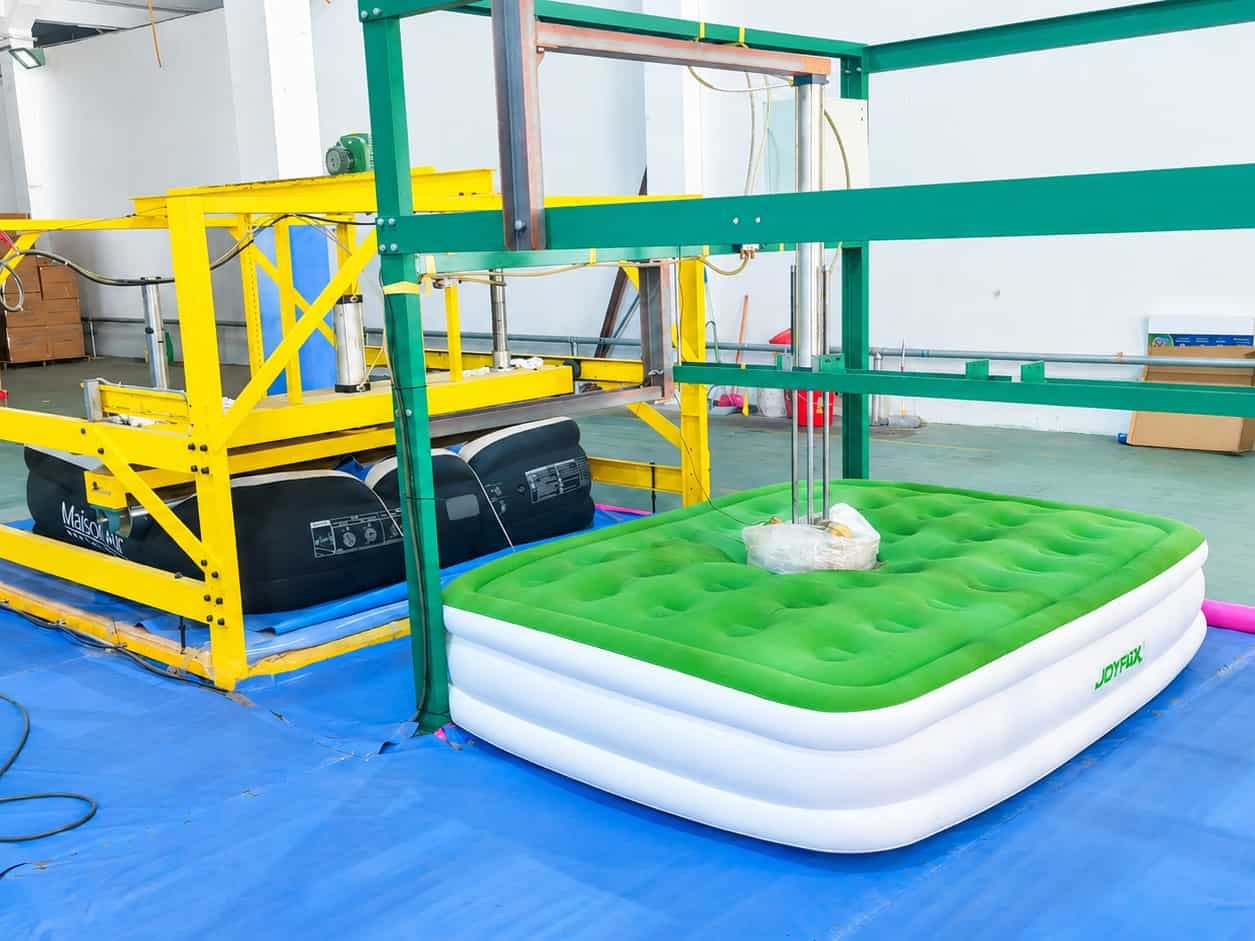
Depending on the product structure and intended use, validation may include:
Seam tensile testing · Accessory tensile testing · Static loading · Repeated inflation and deflation · Rolling tests · Impact tests
For example, an air mattress and a pool float face very different stresses in real use, so their validation should not be identical.

03. Give Slow Leaks Time to Show
Some air-retention problems are immediately visible. Others are not.
For applicable inflatable products, inflation inspection is followed by a holding and observation period according to the product and SOP.
This may extend to 24–48 hours, helping the team identify slow leakage or other air-retention issues that may not appear during a short inspection.
04. If Something Fails, Go Back to the Cause
Testing is not only about deciding whether a sample passes or fails.
When an issue is identified, the team reviews the relevant variables — such as material, structure, welding parameters or production process — and makes adjustments before moving forward.
The product is then rechecked as needed.
Quality Is Built Before Scale
The purpose of pre-production testing is simple:
Find problems while they are still small enough to fix.
Once the product and production process are validated, the project can move into mass production with clearer standards for production and inspection.
Different products, markets and customer requirements may require different testing methods and third-party compliance procedures.
Explore COMCO Quality Control →
Discuss Your Product
Whether you are developing a new model or evaluating manufacturing feasibility, our engineering and quality teams can review your technical specifications and validation requirements.
Discuss Your Product →Inflatable vs Frame vs Foldable Non-Inflatable Pool: What’s the Difference?
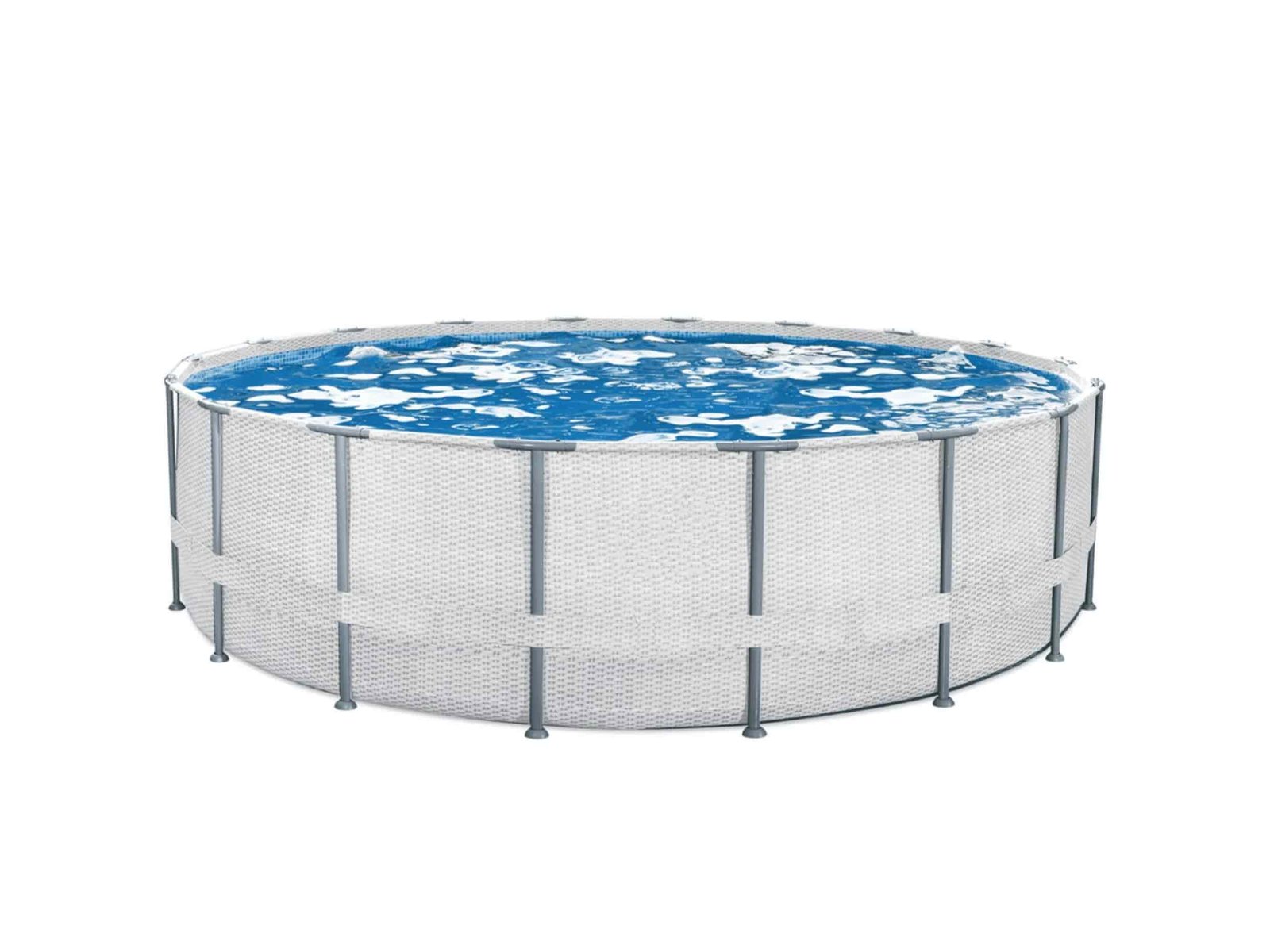
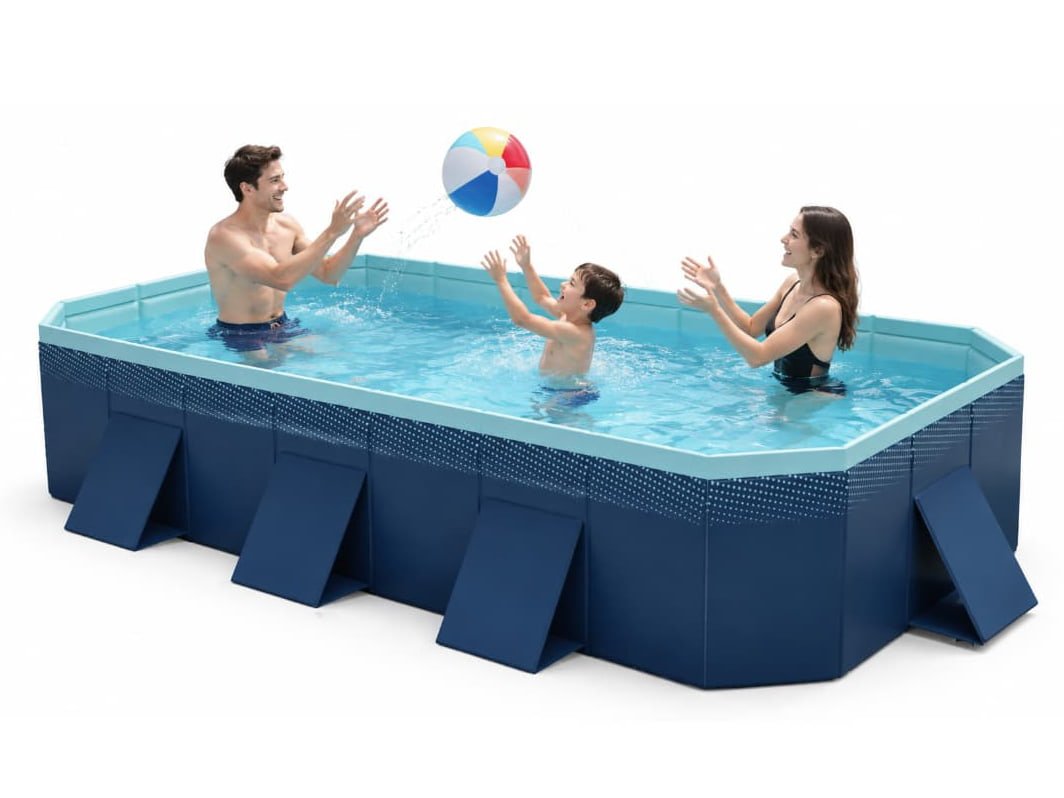
The main difference between inflatable, frame and non-inflatable pools is how the pool wall is supported. Inflatable pools rely on air-filled chambers, frame pools use an external steel structure, while foldable non-inflatable pools use rigid or reinforced wall structures without inflation.
Foldable non-inflatable pool refers to a pool that requires no inflation and can be folded for compact storage. Suppliers may list the same structure as a foldable pool or a non-inflatable pool; in this article both refer to the same construction.
For buyers, that structural choice sets the setup method, packaging volume, retail positioning, target price and product differentiation, so the practical question is which structure fits the market a programme is being sourced for.
What Is the Structural Difference?
Inflatable Pool
Air provides the structure.
The pool wall or upper ring is inflated before filling. This construction allows compact packaging, flexible shapes and broad design possibilities.
Frame Pool
A metal frame provides the structure.
The liner contains the water while the surrounding frame carries much of the structural load. This makes frame pools suitable for larger dimensions and higher water capacity.
Foldable Non-Inflatable Pool
Rigid or reinforced walls provide the structure.
The pool stands without inflation and does not require a conventional external frame assembly. Depending on the design, the wall structure can fold for storage and transportation.
Inflatable vs Frame vs Non-Inflatable Pool Comparison
| Feature | Inflatable Pool | Frame Pool | Foldable Non-Inflatable Pool |
|---|---|---|---|
| Support structure | Air-filled chambers | External steel frame | Rigid or reinforced wall panels |
| Inflation required | Yes | No | No |
| Setup | Inflate, then fill | Assemble frame, then fill | Unfold and fill |
| Packaging | Compact, high carton density | Bulky, multiple metal parts | Flat-folding, medium density |
| Storage | Very compact once deflated | Frame disassembly required | Folds flat, no loose parts |
| Size potential | Mainly small to medium | Medium to large | Depends on wall design |
| Structural stability | Moderate, depends on air pressure | High, frame carries the load | High, wall design dependent |
| Air-leak risk | Yes, structure depends on air | No structural air chamber | No structural air chamber |
| Price positioning | Entry to mid-range | Mid to upper range | Mid to premium |
| Retail positioning | Volume and promotional programmes | Family and larger-size programmes | Differentiation-led ranges |
| Product differentiation | Shape, artwork and print | Size and capacity claims | New structure story, private-label concept |
| OEM customization | Shape, print, valve, packaging | Frame size, liner, packaging | Wall structure, panel layout, private-label design |
Which Pool Is Easier to Set Up?
Inflatable pools require inflation before filling. For smaller models this is straightforward, although larger products may benefit from an electric pump. The user unfolds the pool on a flat ground cloth, locates each air valve, and inflates the chambers until the sidewalls or top ring achieve their intended shape. Because inflation requires either manual effort, a foot pump, or a powered blower, access to an inflation device is always a necessary prerequisite. Once pressurized, the pool is immediately ready for water.
Frame pools do not require inflation, but the supporting frame must be assembled correctly before the pool is filled. Setup time therefore generally increases with pool size and frame complexity. Setting up a frame pool involves unpacking multiple metal components, including horizontal top beams, vertical legs, corner connectors, and locking pins. These parts must be threaded systematically through dedicated fabric sleeves along the liner rim and locked into place. In addition, the ground must be completely level, as minor slopes can create uneven mechanical loads across the joints during filling.
Foldable non-inflatable pools are designed around a different approach: open the pool, position the wall structure correctly and begin filling. This can reduce the number of assembly steps. The structural wall panels are already integrated directly within the fabric construction. There are no separate metal tubes to join, no corner brackets to bolt together, and no air valves to inflate. The user unfolds the sidewall panels into the target footprint, ensures the floor sheet is spread smooth, and begins filling immediately.
To learn more about how this structure operates, see How Foldable Non-Inflatable Pools Work.
Which Pool Offers Greater Size and Stability?
Frame pools are generally the strongest option when the target product requires larger dimensions and greater water capacity. Their external frame distributes structural loads and supports larger pool walls. The rigid metal skeleton forms an exterior truss network that absorbs the substantial hydrostatic pressure exerted by higher water volumes. This framework also resists dynamic lateral movement caused by active play, making frame pools well suited for larger backyard installations intended to stay filled throughout the summer season.
Inflatable pools are particularly effective for smaller and medium-sized recreational pools where portability, comfort and flexible styling are important. The flexible, air-cushioned side walls create soft boundaries that are well suited for younger children and family leisure. However, as target pool volume increases, air-filled walls must expand in thickness to retain lateral water pressure, which limits the practical maximum dimensions of inflatable models.
Non-inflatable pools sit between these categories depending on their structural design. Reinforced wall systems can provide strong sidewall support without relying on air chambers, while foldable construction keeps setup relatively simple. High-density composite boards or integrated wall panels support the side walls against outward water pressure without requiring an external metal truss network. When reviewing available sizes across any structure, buyers should also examine Pool Wall Height vs. Usable Water Depth to understand how water level relates to external wall height.
Which Pool Is Easier to Store?
Inflatable pools offer the smallest packed volume because the air chambers collapse after deflation. Once the pool is drained and the air valves are opened, the air chambers collapse entirely. The flexible material can then be folded tightly or rolled into a small footprint, fitting easily into compact retail boxes or household storage spaces during winter months.
Frame pools require the liner and frame components to be disassembled and stored separately, resulting in more components and typically a larger storage footprint. After draining the pool, every horizontal pipe, leg support, corner piece, and securing pin must be disconnected, cleaned, and dried to prevent rust or mildew while stored. The disassembled steel components and folded heavy-gauge liner require dedicated garage, basement, or shed storage.
A foldable pool does not need deflation or separate external frame components. Its walls fold together for storage, although the rigid internal structure normally means the packed product is less compact than a comparable inflatable pool. The wall panels collapse accordion-style along flexible seams, producing a flat, organized bundle that slides easily into a storage carton without loose structural parts.
What About Punctures and Air Leaks?
An inflatable pool depends on airtight chambers for part or all of its structural support. A puncture or valve leak can therefore affect the pool’s ability to maintain its intended shape. If an air chamber loses pressure, the wall loses tension, which can cause water to spill over the collapsed section until the leak is identified, patched, and reinflated.
Frame and non-inflatable pools do not depend on structural air chambers, so air leakage is not a structural concern. Because their mechanical rigidity comes from steel tubing or reinforced wall inserts, a surface scratch or minor fabric nick on the pool exterior will not cause the pool walls to lose their standing structure.
However, all three types still depend on appropriate material selection, seam construction, ground preparation and correct use. A non-inflatable structure does not make a pool damage-proof. Any pool liner can still suffer water leaks if placed on sharp objects, subjected to severe abrasion, or exposed to excessive physical stress. Proper ground cloth preparation and reinforced seam manufacturing remain essential for all constructions.
Which Pool Is Better for Retailers and Importers?
For retail and private-label programs, there is no single “best” pool construction. The appropriate choice depends on the target consumer, retail price, product size, packaging requirements and desired point of differentiation.
Choose an Inflatable Pool When
Compact packaging, flexible artwork, portability and broad price positioning are priorities.
Choose a Frame Pool When
Larger dimensions, higher water capacity and structural stability are the main product requirements.
Choose a Foldable Non-Inflatable Pool When
Fast setup, no inflation and a differentiated pool concept are important to the product range.
COMCO Pool Manufacturing
COMCO manufactures inflatable pools, frame pools and patented foldable non-inflatable pool designs for retailers, importers and private-label brands.
Because the three structures serve different market positions, pool development should start with the intended retail market, target dimensions, price positioning and packaging requirements rather than selecting a construction type in isolation. Sourcing teams can review our full manufacturing network in the COMCO Strategic Pool Hub and explore relevant product categories:
Develop Your Pool Range with COMCO
Discuss your target market, dimensions, construction and packaging requirements with our team.
Request a Quote →FAQ
What is the main difference between an inflatable pool and a frame pool?
An inflatable pool uses air-filled chambers for structural support, while a frame pool uses a metal supporting structure around the liner.
Does a non-inflatable pool need a pump?
No. Its structure does not depend on air inflation.
Are frame pools better than inflatable pools?
Not universally. Frame pools are better suited to larger sizes and higher water capacity, while inflatable pools offer advantages in portability, packaging and design flexibility.
What is the advantage of a foldable non-inflatable pool?
It combines a non-air-supported structure with foldable storage and simplified setup.
Non-Inflatable Pool Development: From No Inflation to No Assembly
In 2020, we asked a simple question: could a pool work without inflation? Three generations later—high-density panel, external galvanized-steel supports, integrated galvanized-steel frame—that question has carried the product to pool heights up to 120 cm without conventional frame assembly.
This page tells the development story: the two years and 20–30 prototypes behind the first generation, the engineering constraint that shaped the second, and the integrated frame that defines the third.