采购指南与行业洞察
Does Thicker PVC Mean a Better Inflatable Product?
For buyers sourcing inflatable pools, pool floats, air mattresses or other PVC inflatable products, material thickness is an important specification — but thicker does not automatically mean better.
The right PVC thickness depends on the product’s size, structure, intended use, air pressure, load, seam design, manufacturing process, target market and cost position.
A better sourcing perspective is not simply:
“What is the thickest PVC you can use?”
It is understanding:
“What material specification is appropriate for this product, and why?”
Why Buyers Often Compare PVC Thickness First
PVC thickness is easy to put on a quotation sheet.
When two suppliers quote what appears to be the same inflatable product, buyers may see different material specifications and naturally assume that the thicker option is the higher-quality one.
But an inflatable product is an engineered system. Its performance is influenced by far more than the PVC film alone. Depending on the product, critical factors include:
- PVC formulation, plasticizer balance and consistency
- Product dimensions and geometry
- Number and shape of independent air chambers
- Seam design and overlap margins
- HF welding parameters and tooling precision
- Valve construction and welded position
- Internal structure (I-beam, coil beam, baffle systems)
- Load, dynamic stress and intended recreational or commercial use
- Printing and surface treatment
- Manufacturing consistency across production batches
- Finished-product inspection and air-retention observation
This is why comparing two quotations only by PVC thickness can be misleading.
So, Does Thicker PVC Improve Durability?
In some situations, yes. But not by itself.
Increasing material thickness provides more physical gauge at the product surface, which can improve resistance to certain types of abrasive wear or minor puncture risks.
At the same time, thicker PVC directly affects several technical and commercial parameters:
- Raw material cost and overall project budget
- Total product weight
- Packing volume, carton dimensions and pallet density
- Folding characteristics, flexibility and crease behavior
- HF welding setup, cycle time and heat transfer requirements
- Handling and maneuverability on the assembly floor
- Container loadability and international freight cost
More importantly, increasing thickness does not compensate for an unsuitable product structure, narrow seam margins, mismatched welding parameters or an unreliable valve.
As explored in why inflatable products leak, a product made with thicker material can still leak or fail if the weak point is in the seams, corner transitions or internal joints.
For B2B sourcing, material thickness should therefore be evaluated as one integrated part of the product specification, not as an isolated quality rating.
Different Products Need Different Material Decisions
There is no single PVC thickness that is “best” across all inflatable categories.
A lightweight pool float and a large family inflatable pool do not share the same structural requirements. An air mattress repeatedly supporting adult body weight has entirely different stress points from a beach ball. A multi-chamber water play center with printed towers and slide attachments creates completely different manufacturing considerations from a simple swim ring.
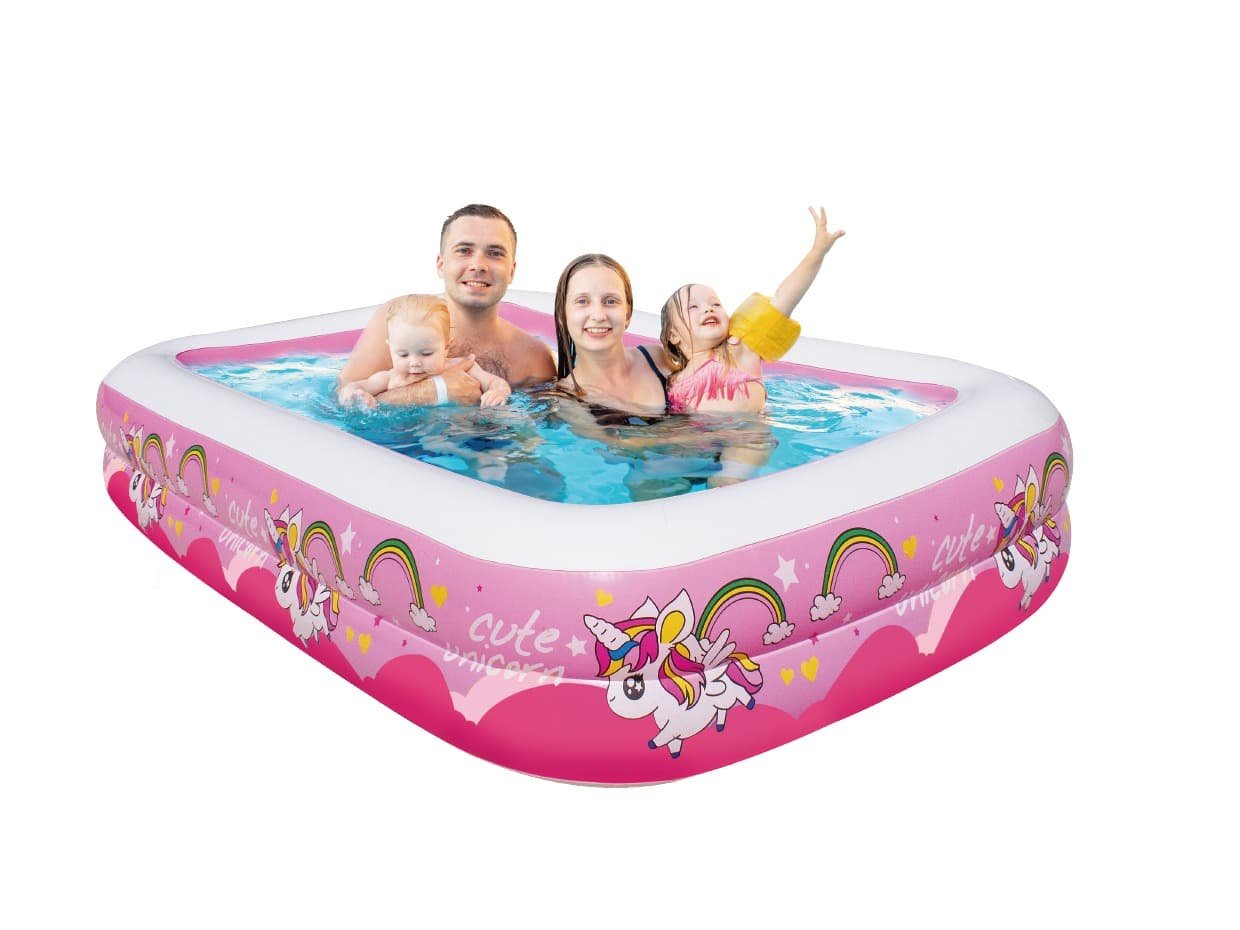
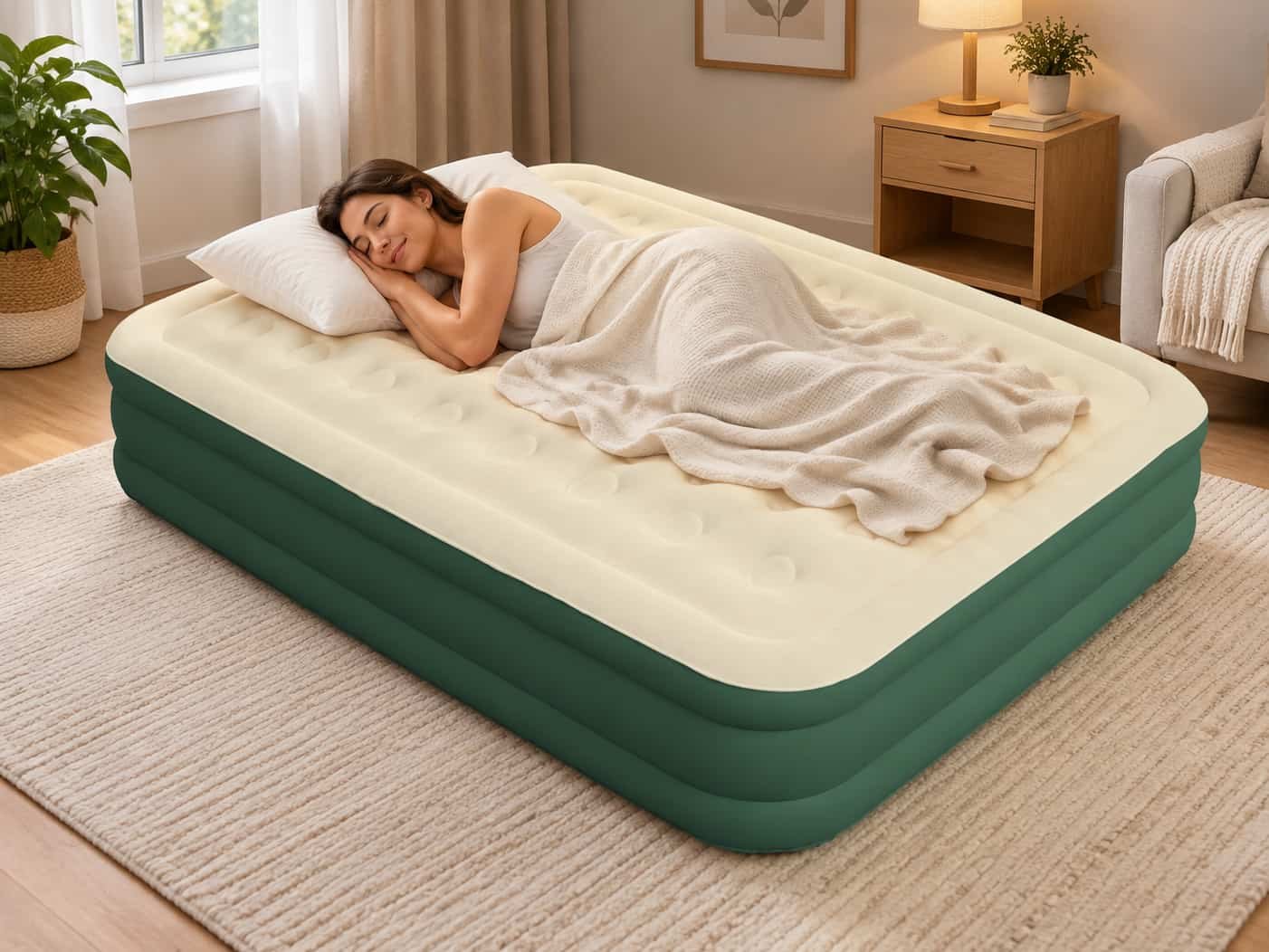
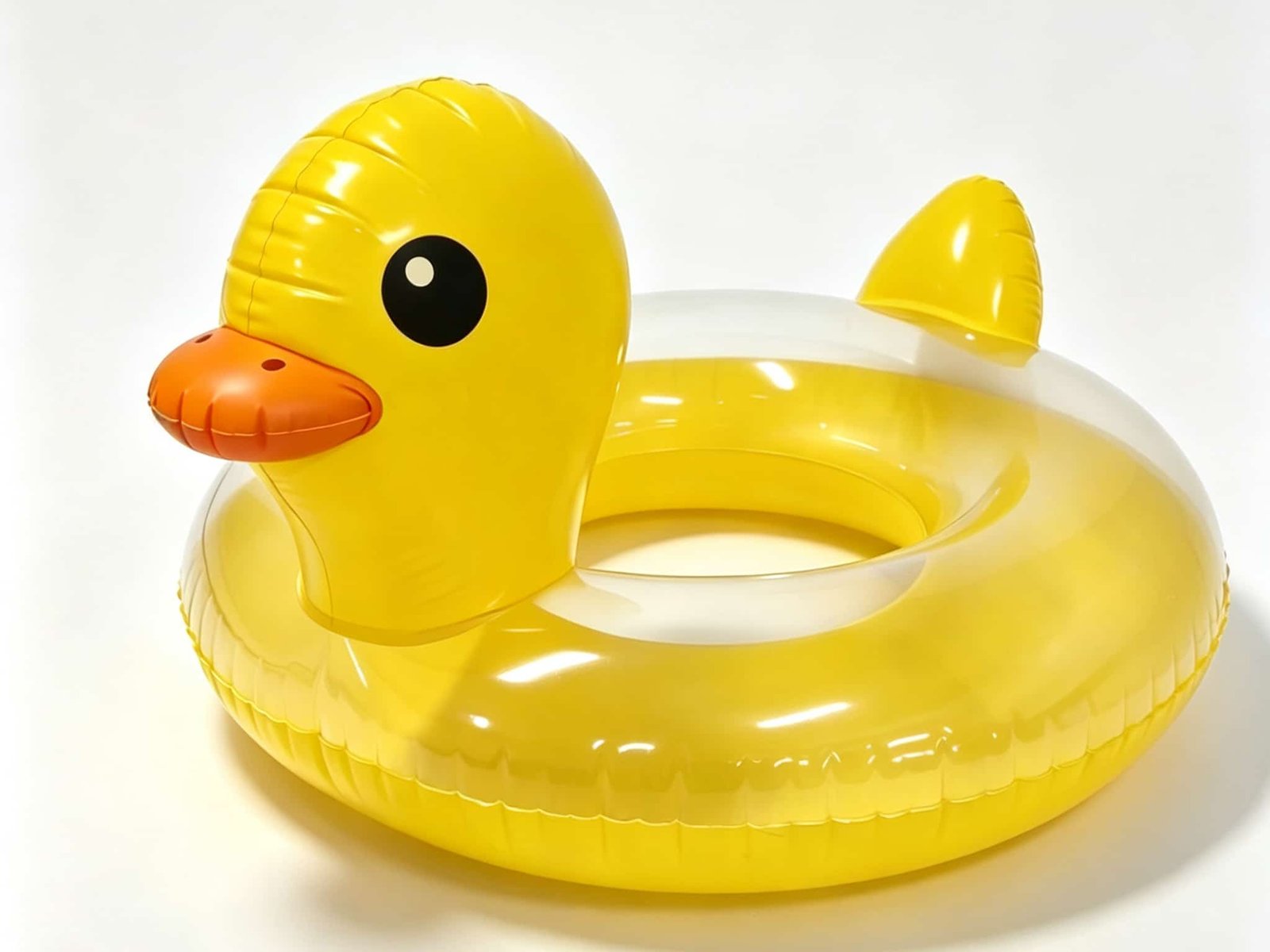
When determining the appropriate material specification, a professional manufacturer evaluates key factors including:
1. What the product is used for
Whether the product is a lightweight recreational float, a load-bearing air bed, an inflatable pool holding substantial water volume, or a seasonal water play center dictates its required tensile strength, puncture resistance and flexibility.
2. Where the primary stress points sit
Handles, internal beams, perimeter corners, valves, welded attachments and chamber transitions experience concentrated forces that differ substantially from the main body panels.
3. How the product is constructed
The material specification must align with the chamber layout, seam orientation and the manufacturing equipment used to produce it.
4. What market position the product targets
An entry-level promotional item, a mainstream retail product and a higher-positioned brand line require deliberate alignment among material grade, construction, packaging and testing.
The correct specification is always product-specific — never a generic one-size-fits-all number.
Why Seam Quality Matters Alongside PVC Thickness
For a closed-air PVC inflatable, the film must do more than resist external abrasion — separate panels of material must fuse reliably into airtight structural bonds.
In quality inflatable manufacturing, high-frequency (HF) welding fuses PVC components at the molecular level. To understand how each production step connects from raw film to boxed goods, see how inflatable products are made.
The integrity of a welded seam is determined by:
- Material formulation, resin purity and dielectric response
- Tooling alignment and precision-machined brass electrodes
- Welding energy, pressure, temperature and dwell cycle time
- Seam width, overlap margins and edge geometry
- Chamber intersection design and stress dispersion
- Production stability and calibration across shifts
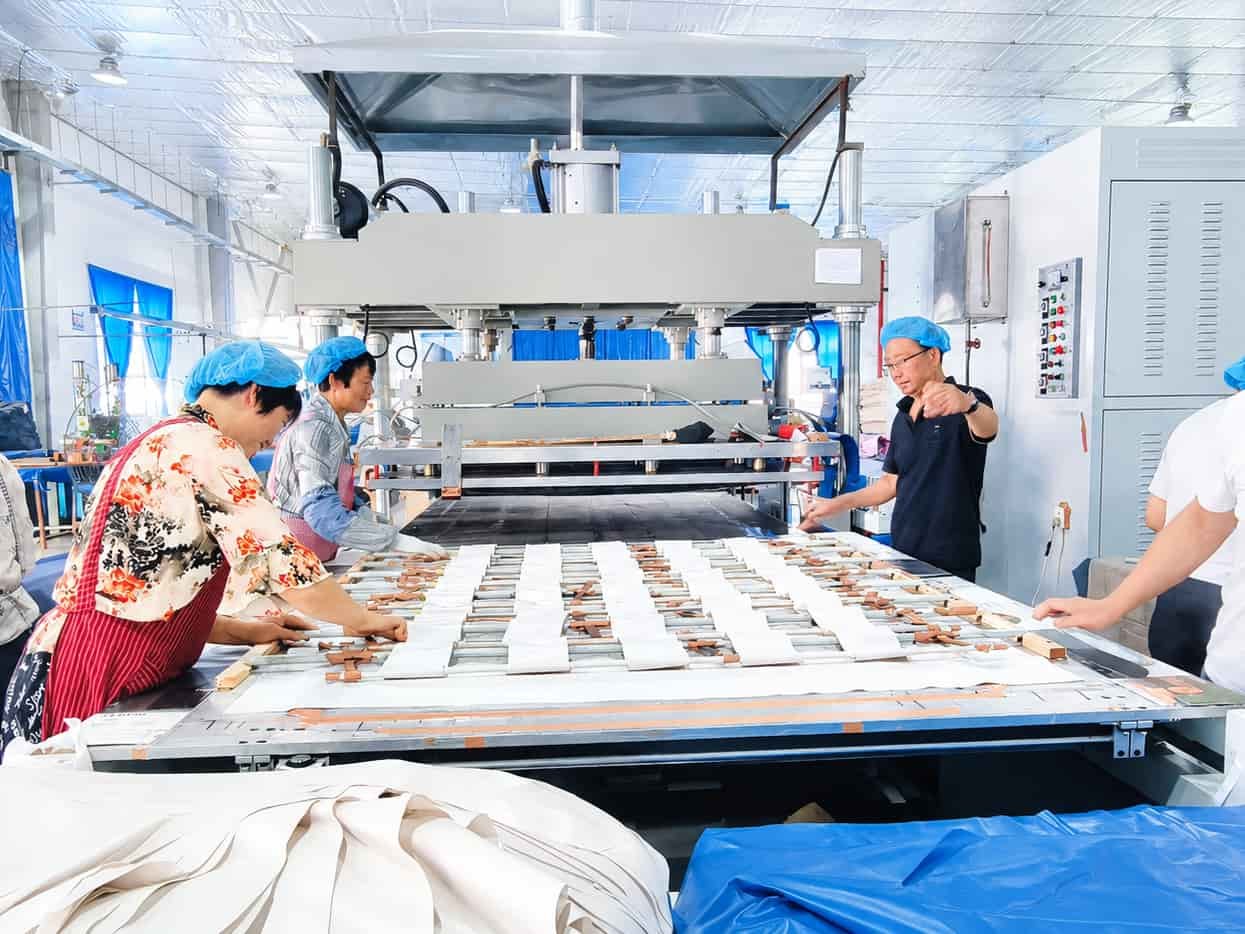
For buyers, what matters is understanding that a millimeter measurement alone does not indicate whether a product will hold air over time. The critical evaluation is whether the manufacturer has properly designed the seam geometry, matched the HF welding parameters to the PVC formulation, and validated air retention under real conditions.
Can a Factory Simply Use Thinner PVC to Reduce Cost?
Material consumption is certainly a factor in product costing. However, reducing PVC thickness should never be treated as an automatic, isolated lever for price reduction.
Before any material adjustment is considered, a manufacturer’s engineering team must review how the change affects:
- Product structural integrity and pressurized shape retention
- Welding stability, burst pressure and seam tensile strength
- Surface appearance, hand feel and fold crease resistance
- Safe user load capacity under actual operating conditions
- Expected product lifespan across seasons
- Compliance with destination market safety and physical testing standards
- Deflation behavior, carton packing integrity and transit stability
In some situations, a modest material optimization may be technically sound. In many others, cost targets are far more effectively met through dimension refinement, artwork and screen printing optimization, accessory redesign, carton packaging engineering, structural simplification or production line automation.
When working toward a target price point, the professional path is collaborative value engineering — balancing all product parameters together rather than arbitrarily shaving film thickness.
How Should PVC Thickness Be Decided for an Inflatable Product?
When reviewing an OEM inflatable product, buyers should expect the material specification to have a clear technical and commercial rationale behind it.
The manufacturer should be able to explain how the proposed material fits the product’s structure, intended use, manufacturing process, quality expectations and commercial target. In professional manufacturing, this decision follows a structured assessment:
1. Start with the product type and intended use
A simple swim ring, an adult pool lounge, a family inflatable pool holding thousands of liters of water, an air mattress supporting body weight overnight, and a multi-activity water play center serve completely distinct purposes. Intended load, dynamic water pressure, frequency of use and safety criticality set the baseline for material strength requirements.
2. Review product size, chamber geometry and structural stress
Larger surface areas experience greater total tensile load under inflation. The number and layout of air chambers, the location of welded handles, valve positions, internal coil or I-beam supports, and perimeter seam paths dictate where stress concentrates. High-stress zones may require reinforced construction or higher-gauge film, whereas low-stress decorative elements can remain lighter.
3. Consider the manufacturing and HF welding process
The PVC specification must work harmoniously with high-frequency welding tooling and seam layouts. Different material thicknesses and formulations require tailored electrode profiles, pressure distribution and welding energy. A professional factory ensures that material specification, tooling design and cycle parameters are developed as a coordinated system rather than separate decisions.
4. Consider quality expectations and market positioning
An entry-level promotional item, a mainstream mass-retail seasonal product, and a premium branded outdoor inflatable operate under different commercial and brand expectations. Material selection must reflect whether the product prioritizes ultra-compact packaging for seasonal retail shelves or heavy-duty durability for multi-season consumer satisfaction.
5. Balance technical performance and commercial cost
Professional cost engineering is not about simply thinning the PVC film to hit a target. If a buyer has a defined budget, the manufacturer should holistically evaluate dimensions, structural pattern efficiency, printing plate coverage, accessory specifications, packaging configuration, material utilization and production throughput.
“The right PVC specification is not the thickest material available. It is the material specification that fits the product’s structure, intended use, manufacturing process, quality expectations and commercial target.”
How COMCO Approaches Material Selection
At COMCO, material specification is reviewed together with the product rather than treated as an isolated number.
For an OEM or ODM project, the engineering evaluation brings together product type, dimensions, internal chamber structure, intended use, target market, expected order volume, price positioning and applicable testing standards. Read more about this collaborative process in OEM inflatable product development.
COMCO operates in-house PVC film production, enabling direct coordination between resin formulation, plasticizer balance, calendering thickness control and downstream inflatable product manufacturing.
Before mass production, applicable products undergo product-specific validation, including raw material physical checks, seam tensile testing, repeated inflation and deflation cycles, static weight load testing, and systematic air-retention observation. To see how these steps protect production batches, explore what happens before mass production.
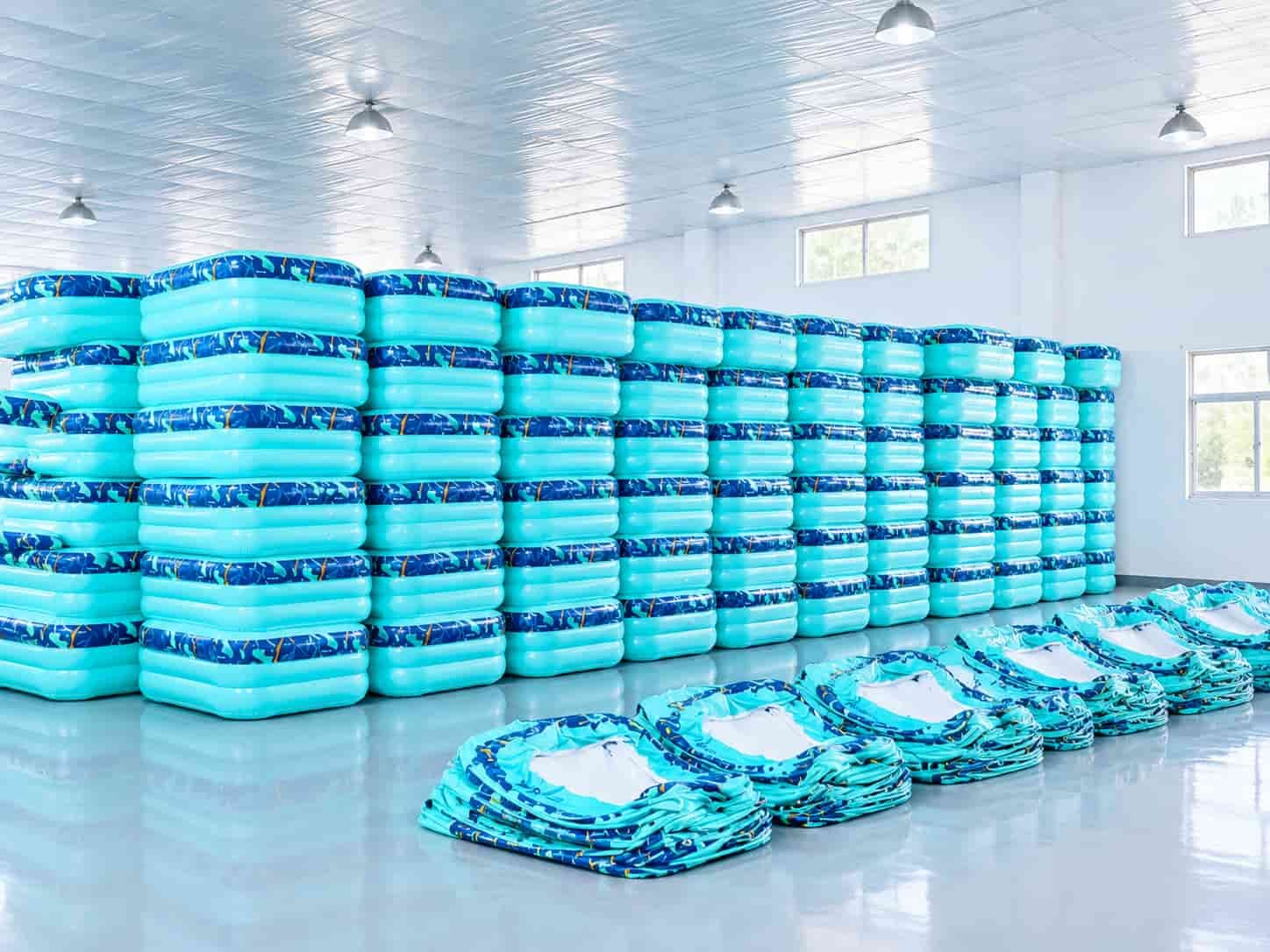
The objective is not to use the thickest PVC possible. It is to define a production-ready specification that balances product structure, manufacturing reliability, quality requirements and commercial viability.
The Buyer Takeaway: Comparing Quotations Accurately
Buyers do not need to become PVC chemical engineers to make sound sourcing decisions.
What buyers do need to recognize is that PVC thickness alone does not define product quality or overall value.
When comparing quotations from different suppliers, do not compare PVC thickness in isolation. It is critical to confirm whether the competing proposals are based on identical or truly comparable specifications across the entire bill of materials:
- Product dimensions: Exact inflated vs. deflated cut dimensions
- Product structure: Chamber divisions, internal baffles, I-beam or coil-beam layout
- Material specification: Film gauge, resin formulation, embossing texture and cold-crack properties
- Printing: Number of colors, ink coverage area and surface treatment
- Accessories: Valve types, handles, rope attachments and repair patches
- Packaging: Gift box thickness, polybag specifications and master carton ratings
- Testing requirements: Applicable destination market standards (EN 71, ASTM F963, ISO 25649, etc.)
- Quality expectations: Air-retention observation standards and inspection criteria
A thicker PVC number or a lower unit price does not necessarily mean the buyer is comparing the same product. A well-engineered inflatable product is always the result of material, structure, welding, testing and manufacturing discipline working together.
PVC Thickness + Product Type + Product Size + Product Structure + Intended Use + Load / Stress + HF Welding / Manufacturing + Quality Requirement + Target Positioning + Cost
When these elements are aligned, the result is an inflatable product that performs reliably in the market while achieving the commercial goals of the project.
Frequently Asked Questions
What PVC thickness is best for an inflatable pool?
There is no universal thickness that fits every inflatable pool. The appropriate specification depends on pool dimensions, wall height, water volume and hydrostatic load, chamber architecture, target user age, seam geometry and retail positioning. A professional manufacturer evaluates these structural factors to recommend a material gauge that ensures safety and shape retention without unnecessary weight or cost.
Is thicker PVC always more puncture-resistant?
Additional film thickness provides more material mass at the surface, which can increase resistance to certain minor abrasions. However, overall puncture and tear resistance also depends heavily on the PVC resin formulation, plasticizer ratios, surface texture and the specific nature of external contact.
Does thicker PVC prevent air leakage?
Not necessarily. Air retention is primarily determined by welded seam integrity, valve sealing, corner stress points and manufacturing consistency. As detailed in our guide on why inflatable products leak, a product using thicker PVC can still lose air if seam parameters or valve welds are compromised.
Does PVC thickness affect the price of an inflatable product?
Yes. Material weight directly impacts raw material consumption and shipping freight. However, final FOB pricing is also shaped by product dimensions, chamber complexity, printing coverage, accessory specifications, packaging configuration, labor efficiency and production run size.
Can I specify PVC thickness when requesting an OEM quotation?
Yes. If your brand already has an established tech pack or required material specification, include it in your RFQ. If you are developing a new concept, providing product dimensions, intended use, target retail price and destination markets allows the manufacturer to recommend and review an appropriate material specification with you.
Should two supplier quotations be compared only by PVC thickness?
No. When comparing quotations, verify that both proposals are built on comparable dimensions, chamber structures, material specifications, printing methods, accessories, packaging and testing requirements. A thicker PVC number or a lower unit price does not necessarily mean the buyer is comparing the same product.
Planning a Custom Inflatable Product?
If you are developing a new inflatable product or reviewing an existing specification, send us your product type, target dimensions, intended market and use, expected order quantity, existing material specification (if available), and target positioning or cost direction. COMCO can review the material direction together with the product structure before sampling.
资源中心
相关文章
采购指南与行业洞察 · 28 9 月, 2026
How to Choose an Inflatable Pool Manufacturer: A Buyer’s Guide
Learn how to evaluate an…