
Guides & Insights
EN 71-8, EN 16927 or EN 16582: Which Standard Applies to a Pool?
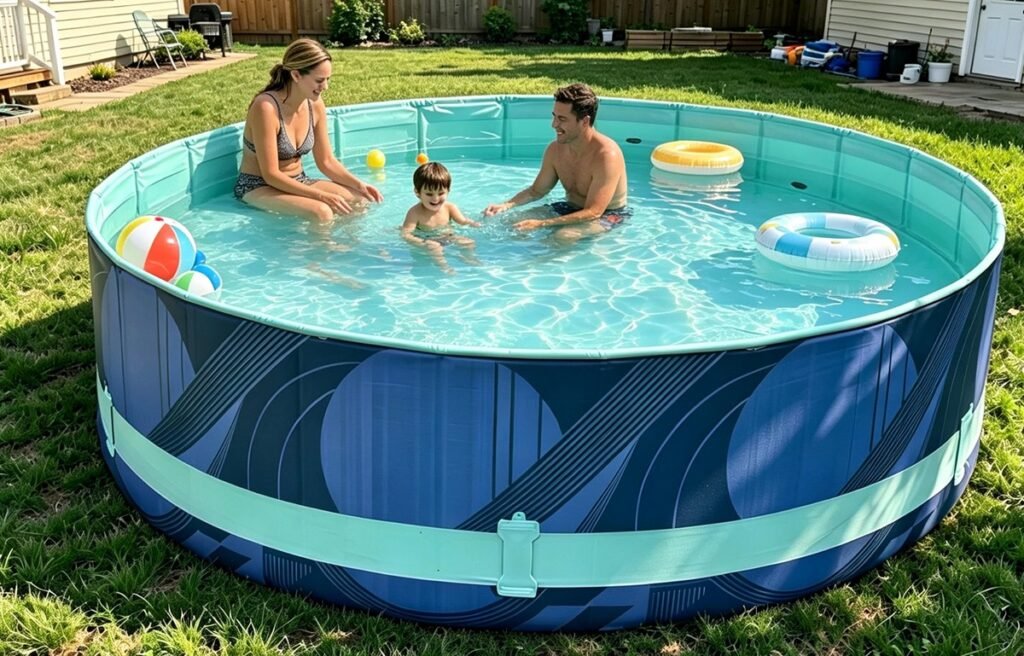
An inflatable paddling pool, a compact mini-pool and a 120 cm-high folding pool can all be commercially sold as “pools.” That does not mean they follow the same European compliance and testing route.
For European projects, the starting point is not simply whether the pool is inflatable, folding or frame-supported. The first step is understanding how the finished product is classified under European safety frameworks.
Similar Product Category. Different European Classification.
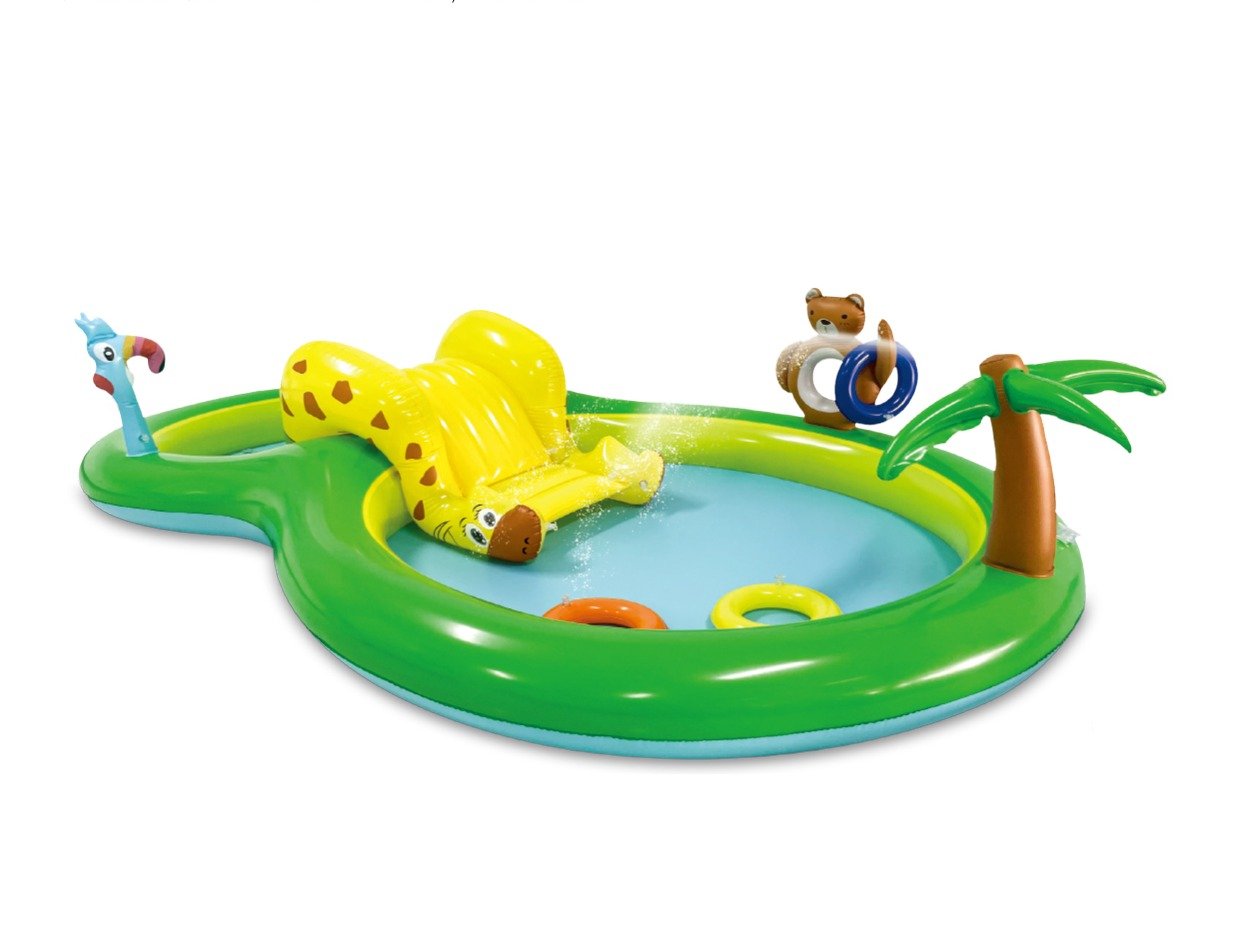
Shallow Paddling / Toy Pool
Designed for children’s water play with shallow water depth (≤400 mm).
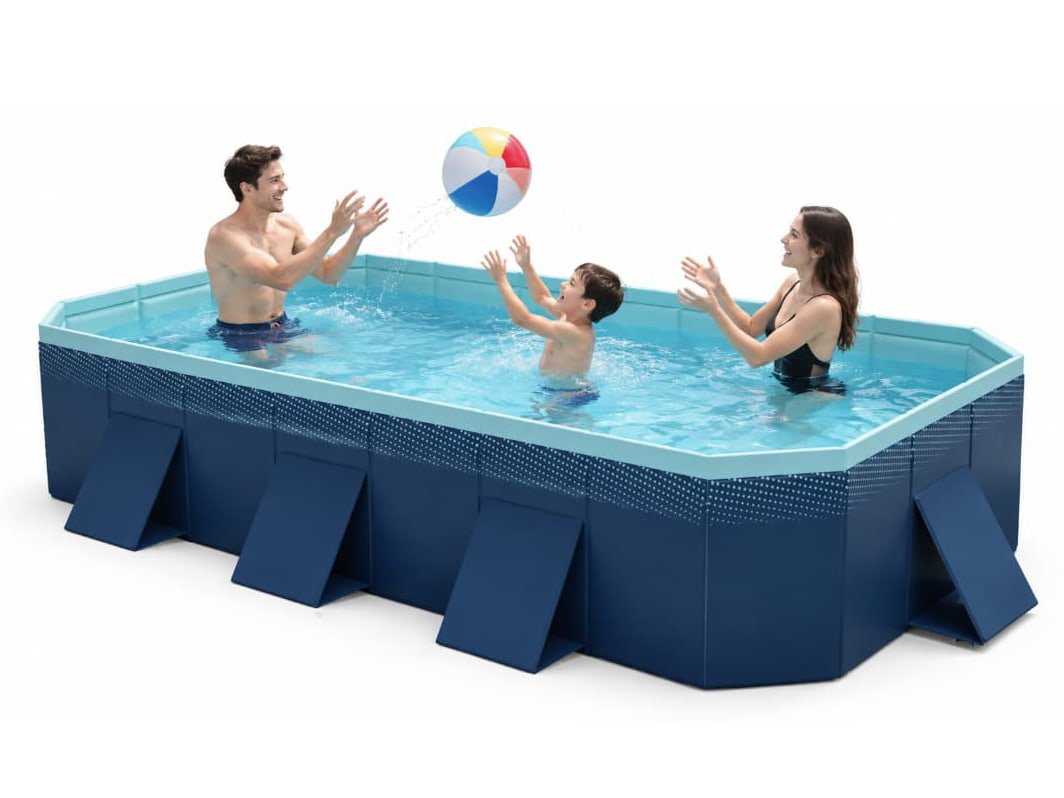
Compact Mini-Pool
Non-permanent basin meeting combined scope: depth >400 mm, wall <850 mm, volume <6 m³, no filtration needed.
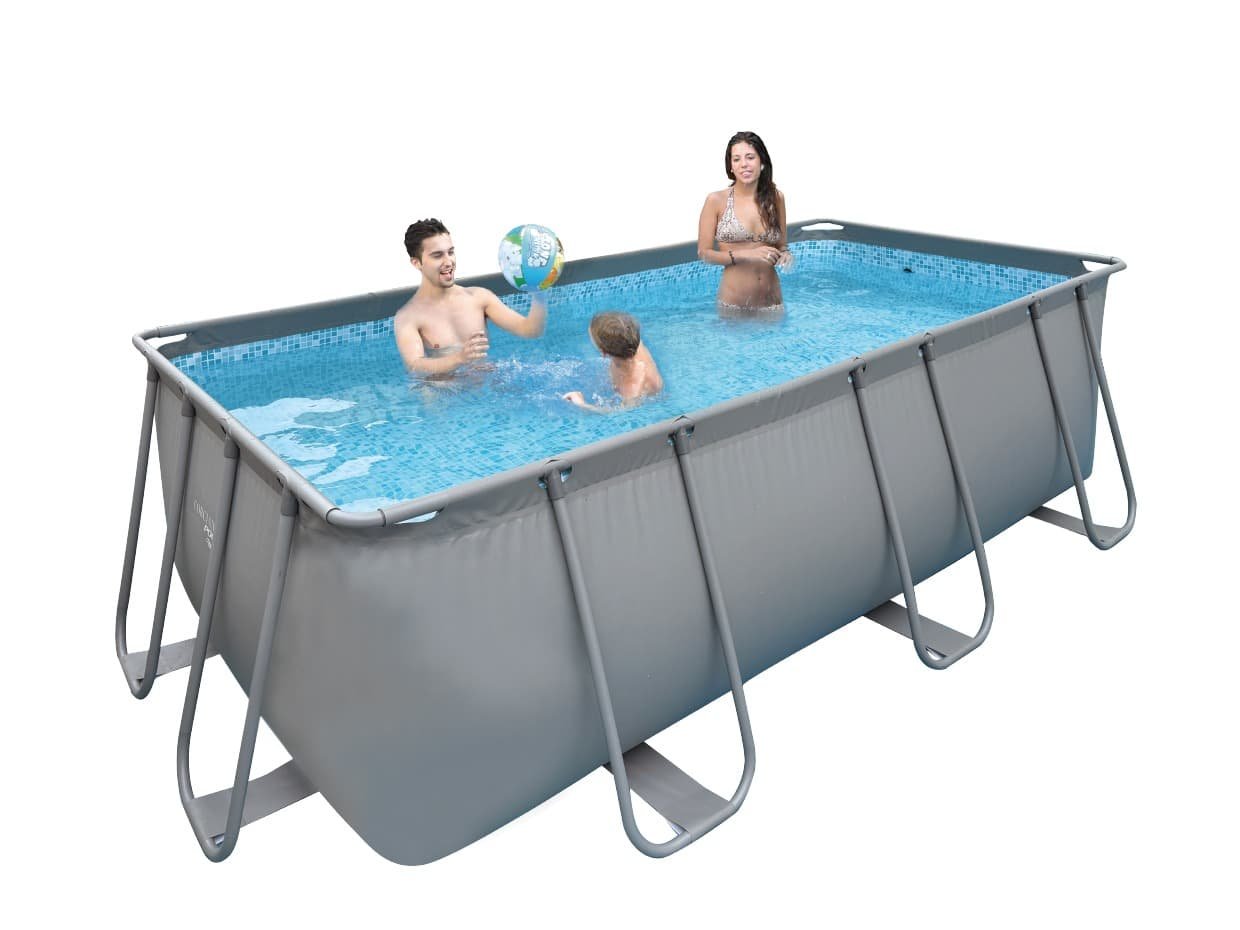
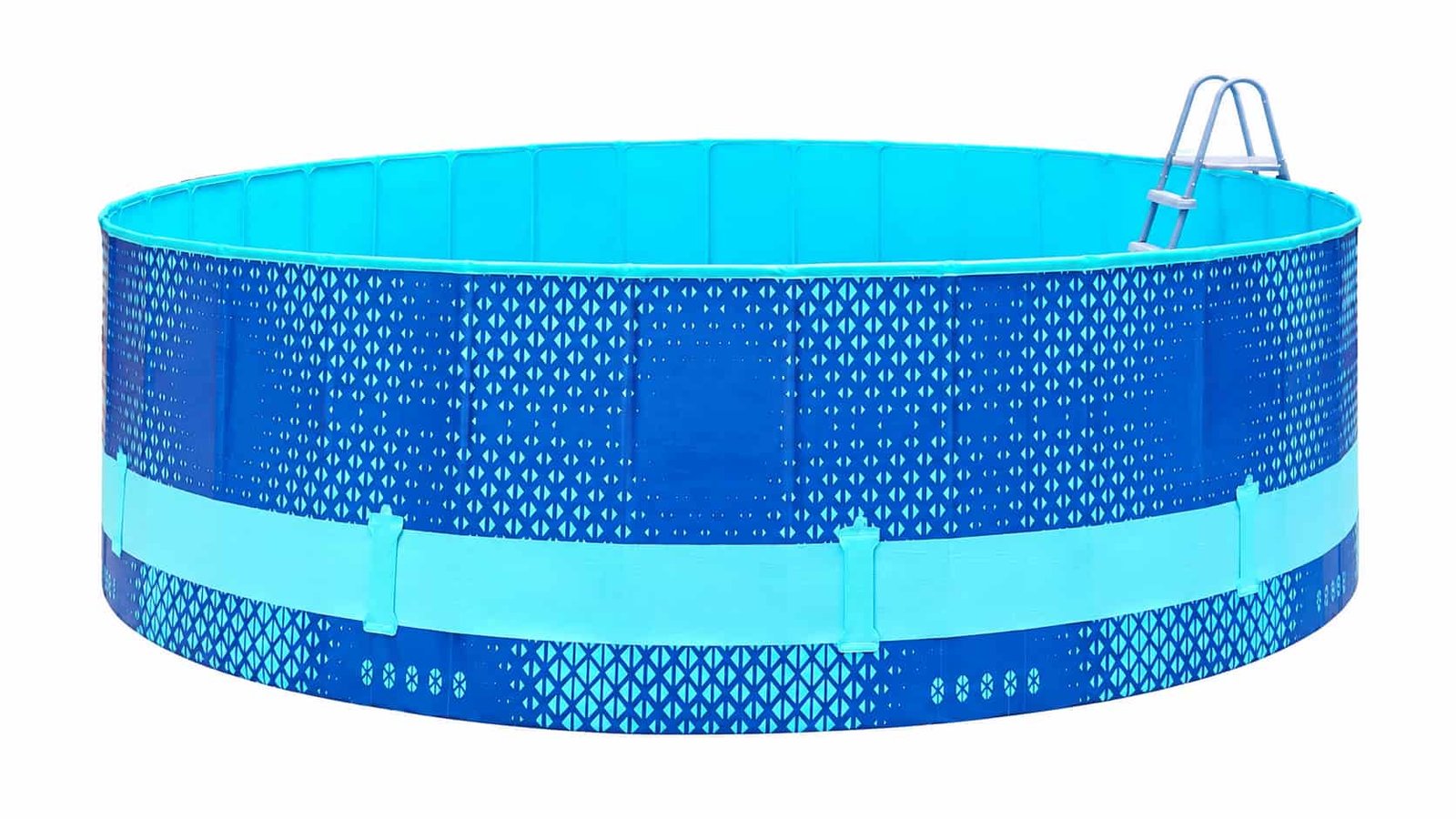
Domestic Above-Ground Pool
Domestic swimming pool structures with water depth >400 mm evaluated for structural resistance and access safety.
Different product directions lead to distinct safety scopes, structural evaluations and testing regimes.
1. Start With Pool Classification, Not Construction
In factory discussions and sourcing catalogs, commercial terms often describe structural assembly:
- Inflatable Pool: Air-chamber supported structure (inflatable rings or top-ring self-rising design).
- Folding / Non-Inflatable Pool: Semi-rigid panels or foldable side supports requiring zero inflation.
- Integrated-Frame Pool: Pre-connected folding framework combining quick deployment with rigid support.
- Conventional Frame Pool: Modular steel tubes and PVC liner assembled piece by piece.
While these terms are vital for packaging, logistics and manufacturing, construction alone does not determine the European testing route.
Core Principle: Construction is an engineering characteristic—not the regulatory classification itself.
An inflatable pool can be designed as a shallow toy paddling pool, or engineered as an adult-depth family basin. Similarly, a folding pool can be configured for compact splash play or scaled up to a 120 cm deep domestic swimming pool. Classification must begin with intended use and complete product configuration.
2. Paddling & Toy Pools: EN 71-8 Direction
Under European regulations, a paddling pool is not simply “any small inflatable basin.” It represents a specific toy classification regulated under the Toy Safety Directive 2009/48/EC.
In technical terms, the applicable European standard for activity toys for domestic use is EN 71-8. Under the standard scope (including the EN 71-8:2026 definition), a paddling pool is defined as a toy pool intended for water play with a maximum water depth of 400 mm.
Water Depth ≠ Pool Height
A frequent pitfall in pool compliance is confusing the physical wall height with actual water depth.
- External Wall / Structural Height: The total physical dimension from the ground to the top rim.
- Overflow / Intended Fill Level: The designed maximum water retention level before overflow occurs.
- Deepest Internal Point: The lowest contour of the internal pool basin floor.
- Actual Water Depth: Measured strictly between the overflow level and the deepest point within the pool.
A pool with a 450 mm wall height may have an overflow water depth of 380 mm. That measurement is critical during initial classification.
However, dimensional thresholds should not be read in isolation: a water depth at or below 400 mm does not automatically turn every basin into a toy. Intended play function, child design features and marketing presentation must align with toy classification.
3. Mini-Pools: EN 16927 Direction
When a pool moves beyond toy play territory, European standardization provides a dedicated framework for compact above-ground basins: EN 16927 (Mini-pools — Specific requirements including safety and test methods for mini-pools).
Under EN 16927, a mini-pool is an artificial non-permanently installed basin characterized by four interrelated scope criteria:
Scope Principle: These conditions must be evaluated together. A pool cannot be classified under EN 16927 based on water depth alone. EN 16927 specifically excludes paddling pools covered by EN 71-8 and domestic swimming pools covered by the EN 16582 series.
4. Domestic Above-Ground Swimming Pools: EN 16582 Direction
For larger domestic swimming pools installed in private gardens, the governing European framework is the EN 16582 series:
- EN 16582-1: General requirements, including safety and test methods for domestic swimming pools.
- EN 16582-3: Specific requirements, including safety and test methods for above-ground domestic pools.
Crucially, EN 16582-3 applies to domestic above-ground pool structures with a water depth exceeding 400 mm. It evaluates physical stability, wall structure resistance, watertightness, slip resistance, and means of access (such as safety ladders).
Notice the regulatory reality: both EN 16927 and EN 16582-3 operate in water depths greater than 400 mm. Therefore, a water depth of 500 mm or 600 mm does not automatically assign a product to EN 16927 or EN 16582. The overall product design, wall height, water volume, and intended installation must be evaluated against the complete standard scope.
5. What Does 400 mm Actually Mean?
400 mm Is a Water-Depth Threshold—Not a Complete Classification Rule
- It measures water depth: Measured strictly from the internal deepest point to the overflow level, never external wall height.
- It separates toy paddling pools from deeper pools: It sets the upper boundary for EN 71-8 toy paddling pools.
- Above 400 mm, multiple routes exist: Both EN 16927 (mini-pools) and EN 16582 (domestic swimming pools) operate above 400 mm.
- Assessment cannot stop at 400 mm: Sourcing teams and factories must continue evaluating volume, wall structure and filtration configuration.
6. Buyer-Oriented Classification Framework
When reviewing a new pool program during product development, use this 3-step decision flow to identify the likely European compliance direction:
Play Purpose + Water Depth ≤400 mm
If YES: Assess under EN 71-8 (Toy Safety Directive 2009/48/EC).
If NO / deeper pool: Proceed to Step 2.
Assess 4 Criteria Together
Evaluate together: water depth >400 mm, wall height <850 mm, water volume <6 m³, and no filtration/treatment required.
If YES: Assess under EN 16927.
If NO: Proceed to Step 3.
Depth >400 mm + Garden Swimming Basin
If YES: Assess under EN 16582-1 + EN 16582-3 (covering structural strength, deformation, and access safety).
This is a simplified buyer-oriented framework. Final classification should always be confirmed against the applicable standard scope and the specific product configuration before formal laboratory testing.
7. Real Testing Example: COMCO 366 × 120 cm Folding Pool
To see how this works in practice, consider a real testing project from COMCO’s manufacturing operations.
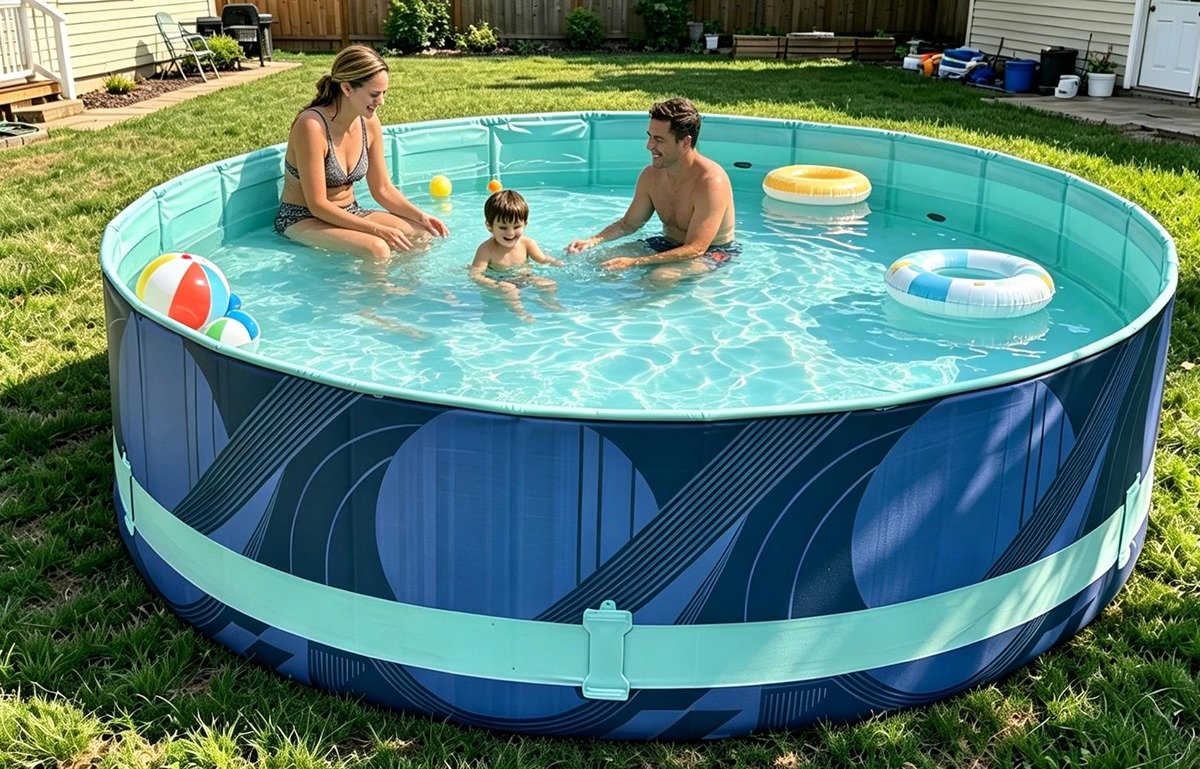
COMCO 366 × 120 cm Folding Pool (Tested Configuration)
TÜV SÜD Test Evidence
- Product: Folding Pool (Main model: 366120LFP)
- Tested Configuration: 366 × 120 cm
- Testing Body: TÜV SÜD Shanghai
- Standards Evaluated: EN 16582-1:2015+A1:2021 (excluding Cl. 6) and EN 16582-3:2015
- Scope Classification: Treated as an above-ground pool with frame-supporting walls
- Outcome: Relevant European EN 16582 items passed for the submitted sample
Full test report details available on request for qualified buyer programs.
A COMCO 366 × 120 cm Folding Pool configuration was tested by TÜV SÜD against EN 16582-1 and EN 16582-3 requirements. Within the EN 16582-3 test route, the tested configuration was assessed as an above-ground pool with frame-supporting walls.
This illustrates an essential classification principle: “Folding Pool” describes the product concept and engineering construction. The applicable European test route is determined by the complete pool configuration and standard scope.
What a Larger Above-Ground Pool Test Route Evaluates
When a product enters the EN 16582 framework, physical testing shifts toward structural integrity and long-term water retention:
- Structural Deformation & Resistance: Evaluating horizontal and vertical deflection under full water loads to ensure the frame cannot buckle.
- Watertightness: Verifying basin seam durability and burst resistance under continuous hydrostatic pressure.
- Applicable Membrane & Weld Performance: Testing wall-to-wall weld tensile and seam tear strength.
- User Safety & Access Requirements: Assessing entrapment hazards, sharp edges and access compatibility.
8. Construction vs Classification
To avoid confusion across merchandising and compliance teams, keep commercial descriptions distinct from standard routes:
| Commercial / Construction Description | Does It Automatically Determine the European Standard? | Regulatory Reality |
|---|---|---|
| Inflatable Pool | No | Can be an EN 71-8 paddling toy, an EN 16927 mini-pool, or an EN 16582 self-stabilizing pool depending on dimensions and design. |
| Folding / Non-Inflatable Pool | No | Ranges from shallow toddler splash pools to deep structural pools (such as the 120 cm tested configuration following EN 16582). |
| Integrated-Frame Pool | No | “Integrated-Frame” is COMCO’s manufacturing terminology; in testing, it is evaluated as an above-ground pool with frame-supporting walls. |
| Conventional Frame Pool | No | Typically domestic swimming pools (EN 16582), but specific dimensions, volume and intended use still dictate the formal test protocol. |
Key Takeaway: The same construction family can contain products with different intended uses, dimensions, volumes and water depths. Classification must therefore be based on the complete product—not the product marketing name alone.
9. What Buyers Should Define Before Formal Testing
To avoid laboratory delays and redundant testing rounds, define these seven parameters during early OEM/ODM discussions:
- Intended Use: Toy/paddling water play, mini-pool relaxation, or domestic swimming-pool use?
- Maximum Intended Water Depth: Measured internal water depth at overflow level (not external pool wall height).
- Pool Wall / Structural Height: Overall external vertical dimensions.
- Effective Water Volume: Calculated capacity in cubic meters (m³) at maximum fill line.
- Filtration / Water-Treatment Configuration: Are pump inlets, filter connections or chemical dispensers included or planned?
- Installation / Support Configuration: Inflatable ring, folding panel support, integrated frame or modular steel frame?
- Destination Market & Buyer Protocol: Specific European national retailer requirements or laboratory protocols.
10. Standard Editions Note
Technical standards and EU regulatory references evolve on distinct schedules. For example, standards committees periodically publish updated editions (such as EN 71-8:2026). However, a newly published standard edition does not automatically mean every national market surveillance authority or retailer test protocol has transitioned on the exact same date.
Transition Advisory: Standard editions and regulatory references can change on different timelines. The applicable edition should always be confirmed for your destination market and buyer test program before ordering formal test reports.
Frequently Asked Questions
Does every inflatable pool follow EN 71-8?
No. Construction alone does not determine classification. An inflatable pool can require assessment under EN 71-8, EN 16927 or EN 16582 depending on its intended use, user group, water depth and complete configuration.
Does a water depth over 400 mm automatically mean EN 16927?
No. EN 16927 defines mini-pools using multiple scope characteristics (depth, wall height, volume, and filtration) that must be assessed together. Domestic above-ground swimming pools can instead fall within the EN 16582 framework.
Is 400 mm measured from the outside height of the pool?
No. The relevant criterion is internal water depth measured from the deepest point to the overflow level, not the external pool wall or product height.
Can a folding or integrated-frame pool follow EN 16582?
Potentially, yes. Construction terminology does not prevent a product from being assessed as a domestic above-ground swimming pool. COMCO has a verified 366 × 120 cm Folding Pool configuration that successfully completed EN 16582-1 and EN 16582-3 testing by TÜV SÜD.
When should the European test route be considered?
During initial product development and prototype sampling—well before mass production, artwork finalization, and packaging warnings are locked down.
Developing a Pool for the European Market?
Share your target pool size, intended water depth, construction, effective volume, filtration configuration and destination market. COMCO can review the manufacturing requirements during product development and coordinate sample preparation with your nominated testing laboratory.
Explore related guides: European Compliance Guide | EN 71 vs EN ISO 25649 Classification
Resources
Related articles
Guides & Insights · October 3, 2026
EN 71 or EN ISO 25649: How Are Inflatable Water Products Classified?
Learn how inflatable water products are classified between aquatic toys and floating leisure articles, and why intended use, design and dimensions matter when considering…

Guides & Insights · September 29, 2026
Why Can Quotes for the Same Inflatable Product Be So Different?
Two inflatable products can look identical but have different structures, materials and market requirements. Learn what to define before comparing OEM quotations.
Guides & Insights · September 28, 2026
How to Choose an Inflatable Pool Manufacturer: A Buyer’s Guide
Learn how to evaluate an inflatable pool manufacturer based on product capability, development, materials, quality control, MOQ, sampling, capacity and quotation.