
Guides & Insights
Pool Wall Height vs. Usable Water Depth: What Pool Buyers Need to Know
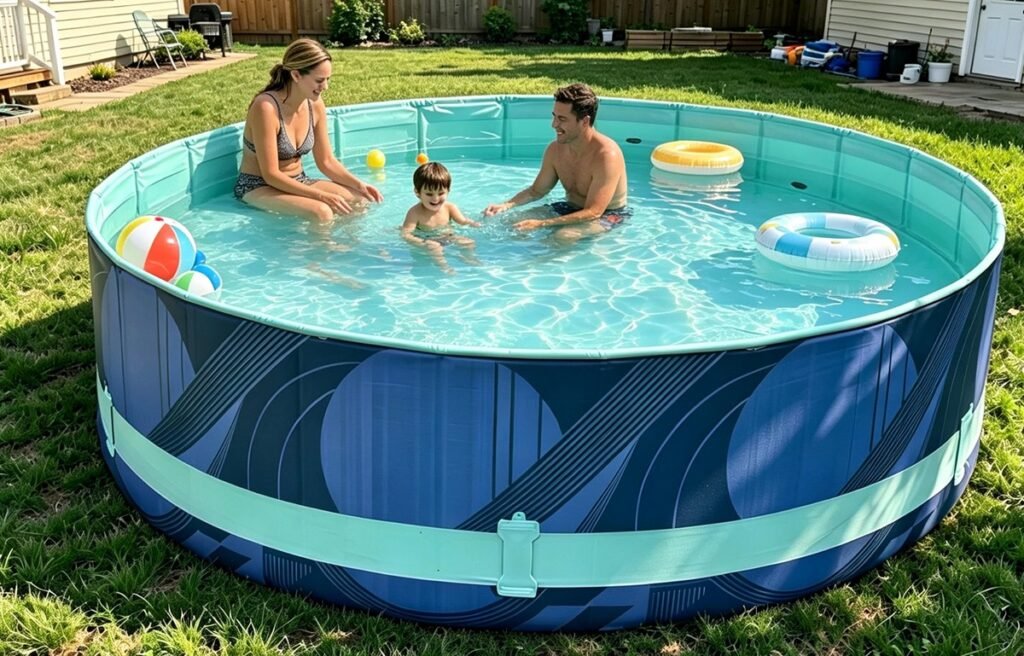
Pool wall height is not the same as usable water depth.
Pool wall height refers to the physical exterior height of the product structure, measured from the ground to the top edge, rail, or top ring. Usable water depth refers to the actual depth of water inside the pool when filled to the designated fill level for that specific design.
Because the intended water level is below the top edge of the pool, the usable water depth is lower than the overall wall height. Treating these two specifications as interchangeable can lead to inaccurate packaging claims, mismatched consumer expectations, and sizing discrepancies during product sourcing.
What Is Pool Wall Height vs. Usable Water Depth?
When evaluating above-ground pool specifications, buyers need to distinguish between two distinct vertical dimensions:
- Pool Wall Height: The total external vertical dimension of the pool structure from the ground to its uppermost point (such as the top rail of a steel frame pool or the inflated upper ring of an easy-set pool).
- Usable Water Depth: The vertical distance from the pool floor to the intended water line designated for that model.
In practical use, a pool cannot be filled completely to the top edge without overflowing during entry, movement, and normal water activity. Consequently, above-ground pool designs specify an intended water fill level below the upper perimeter. The usable water depth reflects this actual fill line, not the exterior height of the wall.
Structural Differences Across Pool Types
Above-ground pools use different structural methods to hold their shape and contain water. These differences determine how each format accommodates water depth relative to its physical wall height:
| Pool Structure | How the Wall Is Formed / Supported | Why Wall Height and Water Depth Differ |
|---|---|---|
| Inflatable Ring (Easy-Set) Pool | An inflated top ring rises as the pool fills, lifting the flexible sidewalls into place. | The intended fill level is below the top of the pool, so usable water depth is lower than the pool’s overall exterior height. |
| Steel Frame Pool | A PVC liner is suspended from horizontal top rails supported by vertical steel legs. | The designated water level sits below the top frame rails to prevent immediate overflow during use. |
| Foldable Non-Inflatable Pool | Rigid interior panels sealed inside PVC sidewalls provide freestanding support without air. | The fill level remains below the top sealed edge of the perimeter panels. |
| Multi-Ring Inflatable Pool | Multiple stacked inflatable air chambers form the perimeter wall. | The designated water level sits below the upper inflatable ring chamber. |
For buyers comparing these formats across retail programs, our guide on Inflatable Pool vs Frame Pool vs Non-Inflatable Pool breaks down format selection, setup considerations, and consumer trade-offs.
Why Buyers Must Distinguish Wall Height from Water Depth
Differentiating between these two measurements is essential when reviewing factory specifications, planning packaging copy, and defining product ranges:
- Clear Packaging and Marketing Copy: Retail buyers and brand owners need to ensure box artwork and product listings clearly state both total exterior dimensions and usable water depth. Consumers may incorrectly assume that a stated wall height equals the usable water depth; communicating the actual water depth clearly helps prevent negative reviews and retail returns.
- Accurate Specification Reviews: Sourcing teams comparing quotes across different manufacturers must confirm whether dimensions listed on spec sheets refer to physical wall height or usable water depth. Evaluating water volume requires knowing the actual intended water level rather than relying solely on exterior frame or wall dimensions.
Manufacturing Note: How Water-Level Markings Are Applied
When a pool design includes a printed water-level marking, the marking is added after the PVC film has been produced.
Depending on the product artwork and design requirements, COMCO uses two production routes:
- Route A (Integrated with complex artwork): When the water-level line is part of a more complex product artwork that requires external printing, the water-level line is printed together with the main artwork.
- Route B (Simple independent marking): When the water-level line is a simple single-color marking separate from the other artwork, COMCO can cut the PVC material into the required product panels first and then print the water-level line separately on the cut panel before welding and assembly.
Sourcing Takeaway
When finalizing product specifications for an above-ground pool line, sourcing teams should always confirm:
- The exterior physical wall height (for product dimension and structural comparison);
- The designated fill level and usable water depth (for packaging accuracy and clear consumer expectations);
- Whether a water-level indicator marking is required on the interior liner, and which artwork route fits the overall design.
Developing an Above-Ground Pool Program?
Contact COMCO to discuss pool structural options, custom dimensions, and OEM manufacturing requirements.
Resources
Related articles
Guides & Insights · October 6, 2026
PVC vs. TPU for Inflatable Products: Which Material Should You Choose?
Compare PVC and TPU for inflatable products, including material cost, performance, PVC-free requirements and how to choose the right material.
Guides & Insights · October 6, 2026
High-Frequency vs. Hot-Air Welding for Inflatable Products
Compare HF and hot-air welding for inflatable products, including seam construction, production efficiency, cost and commercial water park applications.
Guides & Insights · October 4, 2026
Japan Safety Requirements for Inflatable Water Products
Learn how Japanese product classification, ST toy safety standards and product construction can affect swim rings, pool floats, water toys and other inflatable water…