Compliance & Testing
U.S. Compliance Guide for Inflatable Toys, Pool Floats & Inflatable Pools

What testing does this product need? When developing inflatable water products for the United States, B2B buyers and importers encounter a simple reality: there is no single U.S. test standard for every inflatable water product.
A children’s swim ring, an inflatable sprinkler mat, and a family-sized inflatable pool may all share similar PVC film formulations and high-frequency (HF) welding processes. Yet each can follow entirely different U.S. compliance pathways. The starting point is never the laboratory test report itself — it is the product classification.
Applicable requirements depend on product type, intended age grading, intended use, physical construction, materials, and, for pools, the intended water depth and configuration.
Product Classification Workflow
Plaything intended for children → Subject to 16 CFR Part 1250 / ASTM F963 & applicable CPSC children’s product rules.
Classified based on age, design & function → May enter aquatic toy framework or adult recreation category.
Evaluated on water capacity & intended water depth → Governed by ASTM F2666 (< 36 in.) or larger on-ground pool standards.
Start With Product Classification
Similar manufacturing processes do not necessarily indicate identical compliance obligations. Below is how the preliminary review begins for custom OEM/ODM programs:
| Product Category | First Compliance Question | Typical Starting Point |
|---|---|---|
| Children’s Inflatable Toy | Is it intended primarily as a plaything for children? | ASTM F963 + applicable children’s product requirements |
| Pool Float / Swim Ring | Is it an aquatic toy, child-care article, or recreational lounger? | Applicable ASTM F963 aquatic toy rules or general consumer product standards |
| Inflatable Pool | Is it a residential portable pool? What is its intended water depth? | ASTM F2666 scope evaluation or broader portable pool frameworks |
Key Principle: Similar manufacturing does not mean similar compliance requirements. A PVC swim ring and a PVC family wading pool may utilize identical radio-frequency welding machinery, but their regulatory definitions diverge significantly.
Inflatable Toys: ASTM F963 Is a Standard, Not a Single Test
For children’s toys distributed in the U.S., ASTM F963 serves as the mandatory federal benchmark, officially incorporated through federal regulation 16 CFR Part 1250 (mandating ASTM F963-23).
It is critical to recognize that ASTM F963 is a comprehensive standard comprising numerous sub-clauses, not a single laboratory test. An accredited testing body applies only the specific sections relevant to a product’s age grading, physical design, and functionality, such as:
- Material cleanliness and chemical safety
- Accessible sharp edges and points
- Thickness of flexible plastic film (to mitigate suffocation hazards)
- Seam tensile strength and small-parts release under mechanical abuse
- Mandatory safety warnings, age grading, and instructional literature
Age distinction note: While ASTM F963 covers toys designed for play by children under 14 years of age, U.S. federal statutory third-party testing and certification rules (under the Consumer Product Safety Improvement Act) generally apply to products designed primarily for children 12 years of age or younger.
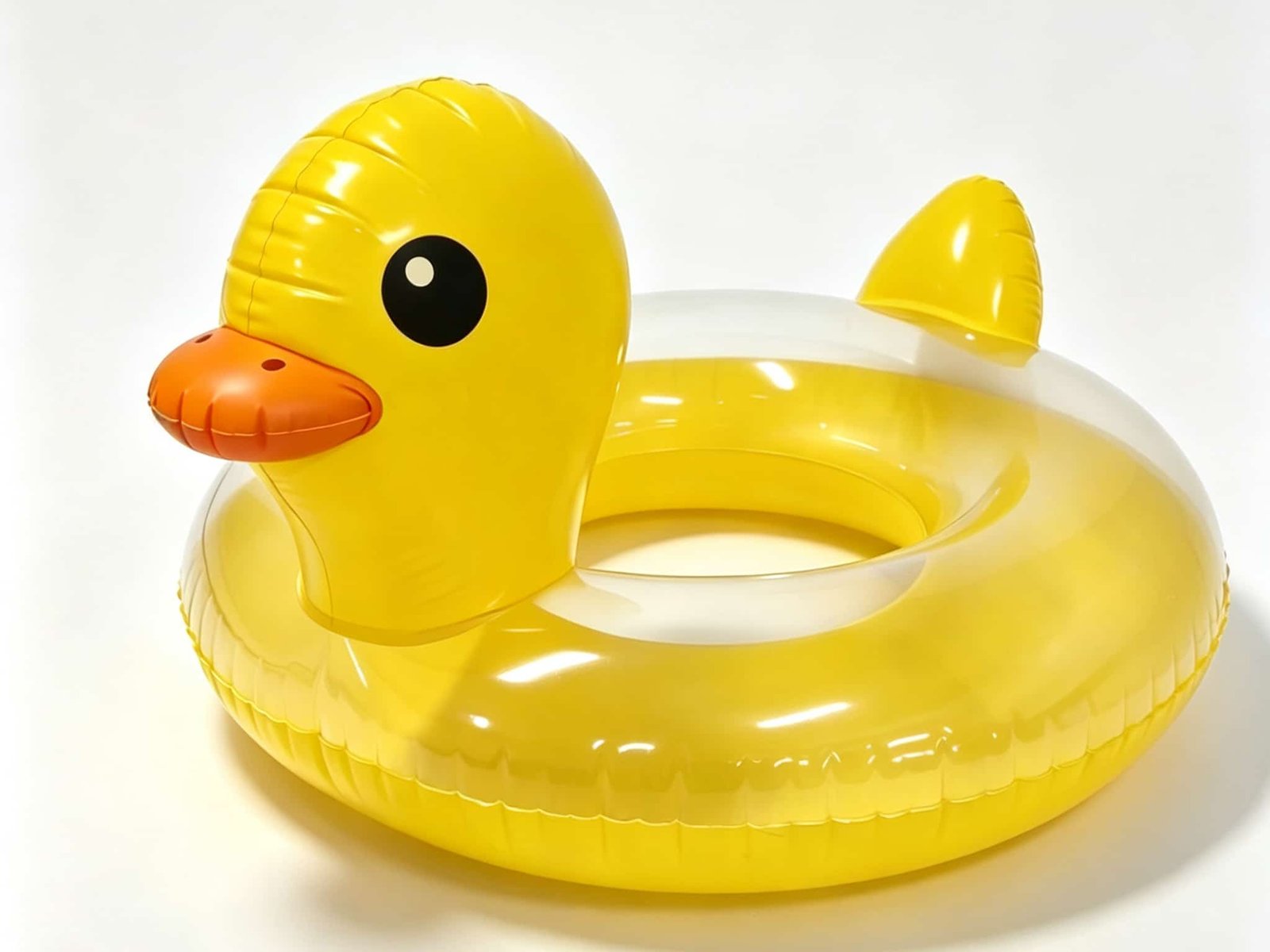
Pool Floats and Swim Rings Need More Than a Material Test
Pool floats and swim rings cannot be evaluated solely on raw PVC material data sheets. When items are classified as aquatic toys or children’s products based on sizing, child-appealing graphics, or intended use, multi-layered compliance comes into play:
- Toy Safety (ASTM F963): Aquatic toy sections mandate specific structural integrity, valve retention, and deflation safety parameters.
- Total Lead Content: Compliance with statutory limits on total lead in accessible substrates (100 ppm) and surface coatings (90 ppm).
- Regulated Phthalates: Conformity with 16 CFR Part 1307, restricting eight specific ortho-phthalates in accessible plasticized components of children’s toys and child care articles to 0.1% (1,000 ppm).
- Tracking Labels: Permanent distinguishing marks (tracking labels) on both product and packaging, compliant with 15 U.S.C. § 2063(a)(5).
- Safety Warnings: Prominent on-product drowning risk warnings legible during inflation and use.
For children’s inflatable water products, compliance affects physical design, valve tooling, warning artwork, and packaging layout — well beyond a simple chemical lab screening.
Inflatable Pools Follow a Different Logic
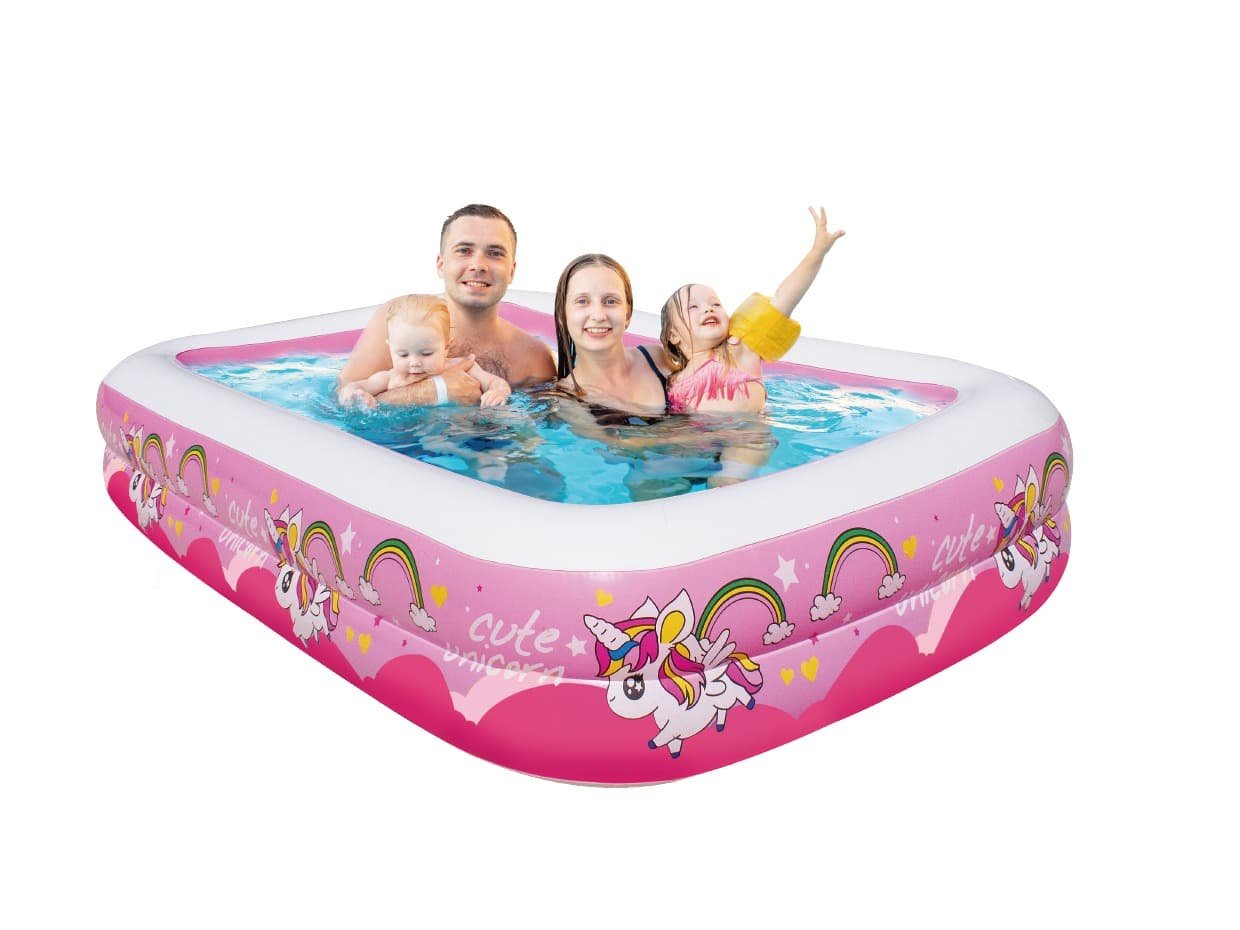
An inflatable pool should not automatically be treated as a toy or pool float simply because children play in it. Instead, residential portable pools fall under specialized containment and structural standards.
The primary technical specification is ASTM F2666-16(2024) (Standard Specification for Aboveground Portable Pools for Residential Use).
Crucial Distinction: Pool Height ≠ Intended Water Depth
ASTM F2666 covers aboveground portable residential pools with an intended water depth below 36 inches (approximately 91 cm). Water depth is measured at the designated manufacturer fill line. Pools designed for water levels at or exceeding 36 inches fall outside this scope and trigger distinct barrier, safety, and entrapment frameworks.
Learn more about structural variations in our Pool Manufacturing Hub and our comparative guide on Inflatable vs. Frame vs. Non-Inflatable Pools.
Testing Requirements Can Come From More Than One Source
B2B buyers reviewing an accredited laboratory test report (e.g., from BV, SGS, or Intertek) often find dozens of listed checkpoints. These line items typically originate from three distinct levels:
- U.S. Federal & State Regulations: Mandatory baseline statutes (e.g., CPSIA total lead, 16 CFR Part 1307 phthalates, labeling acts, and state-level chemical regulations).
- Product Safety Standards: Recognized consensus standards addressing structural safety and performance, such as ASTM F963 for toys or ASTM F2666 for residential portable pools.
- Retailer & Buyer Protocols: Proprietary quality specifications required by major retailers (e.g., Walmart, Target) that include transit testing, valve torque, accelerated UV conditioning, leak resistance, and packaging drop standards.
Guardrail: Passing U.S. federal regulatory requirements and satisfying a specific retailer’s testing manual are related, but they are not identical. A specialized test clause in a retailer report is not automatically a universal statutory mandate.
Test Report and CPC Are Not the Same Thing
A frequent misconception among new importers is assuming that a third-party laboratory issues legal product certification. In the U.S. children’s product framework, the roles are strictly separated:
CPSC-Accepted Accredited Lab → Issues Test Report → Responsible Importer/Manufacturer → Issues CPC
Under CPSC certification guidance, an accredited testing laboratory provides objective test results. The Children’s Product Certificate (CPC) is an official document issued by the responsible U.S. importer (or domestic manufacturer) certifying that the product complies with all applicable safety rules, based on passing test results from a CPSC-accepted laboratory.
Testing laboratories provide evidentiary reports; the responsible importing entity issues the CPC.
What Buyers Should Define Before Testing
To avoid redundant lab expenses or late design revisions, clarify these fundamental parameters with your factory engineering team prior to tooling release:
| Information | Why It Matters |
|---|---|
| Product Type & Function | Determines primary regulatory classification (toy, pool, general sport). |
| Target Age Grading | Dictates whether mandatory children’s product testing and tracking labels apply. |
| Materials & Thickness | Determines applicable chemical testing and physical puncture thresholds. |
| Intended Water Depth (Pools) | Establishes applicability of ASTM F2666 (< 36 in.) vs. larger pool codes. |
| Target Retailer Channels | Identifies custom commercial testing protocols required for vendor compliance. |
| Artwork & Warning Prints | Ensures regulatory warnings and lot tracking are integrated into screen printing. |
How COMCO Approaches U.S. Programs
COMCO operates as an experienced OEM/ODM manufacturer supporting international brands and sourcing teams. We do not act as an accredited certification laboratory or legal counsel. Instead, our engineering and quality assurance teams assist buyers by:
- Reviewing product construction and valve configurations during sampling (OEM Development Process).
- Preparing accurate pilot production test samples aligned with the nominated testing protocol.
- Coordinating sample dispatch with your designated accredited test lab (e.g., BV, SGS, Intertek).
- Verifying that batch tracking formats and required warning copy are properly integrated into high-frequency printing screens.
Factory Quality Control: 100% 24-Hour Air-Hold Testing
Factory quality assurance must not be confused with federal regulatory compliance. Before any product is approved for final packaging at COMCO, it undergoes our standardized in-house air retention protocol:
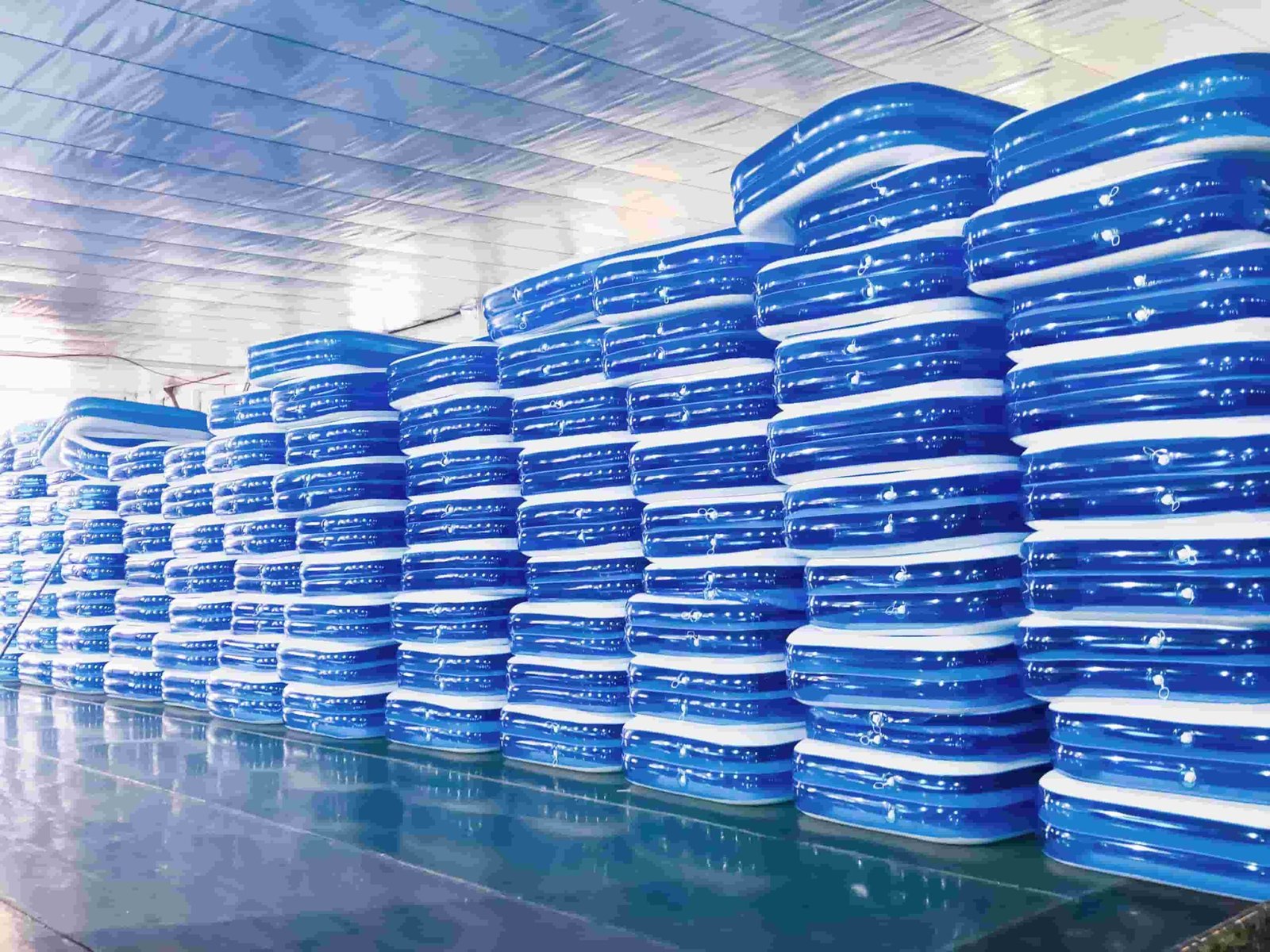
Every inflatable unit is fully inflated and observed for at least 24 hours to verify seam integrity and identify micro-leakage before folding and boxing. Discover more about our validation stages in What Happens Before Mass Production.
Buyer Takeaway
When planning an inflatable product launch for the U.S. market, avoid the pitfall of simply asking: “Which ASTM number applies to all inflatables?”
Instead, establish three foundational answers first:
- What is the precise product type and intended use?
- Who is the target consumer (age group)?
- Which sales channels and retailer protocols apply?
Product classification comes first. Testing scope follows.
Developing an Inflatable Product for the U.S. Market?
Share your product concept, target age, key dimensions, and retailer requirements with COMCO. Our engineering and manufacturing team can review structural feasibility, valve configurations, and sample preparation considerations with your sourcing team.
Resources
Related articles