
品质洞察
Why Inflatable Products Leak: How Factories Control Leakage Before Mass Production
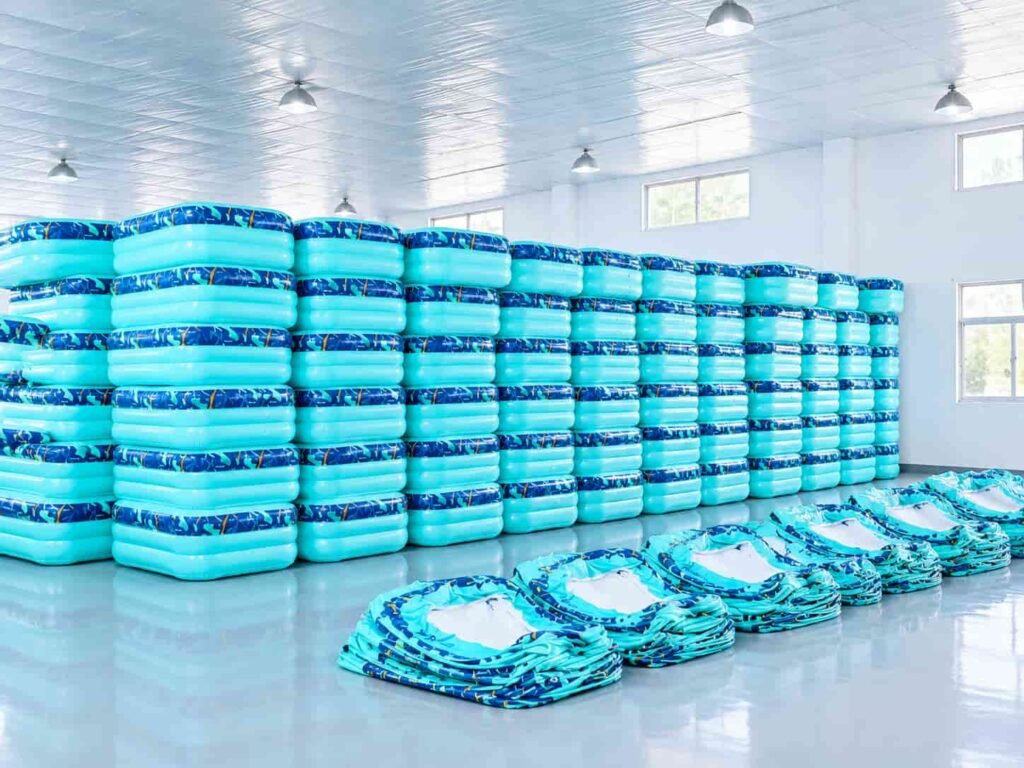
Air leakage in PVC inflatable products can come from several places — including the material, welded seams, valves, attachments and structural stress points. Some leaks appear immediately, while slow leaks may take much longer to become visible.
For buyers, the important point is not to become an expert in welding parameters or inspect every production step themselves.
It is to understand whether the manufacturer has a clear process to identify leakage risks early, correct the cause when a problem is found, and establish a stable process before mass production begins.
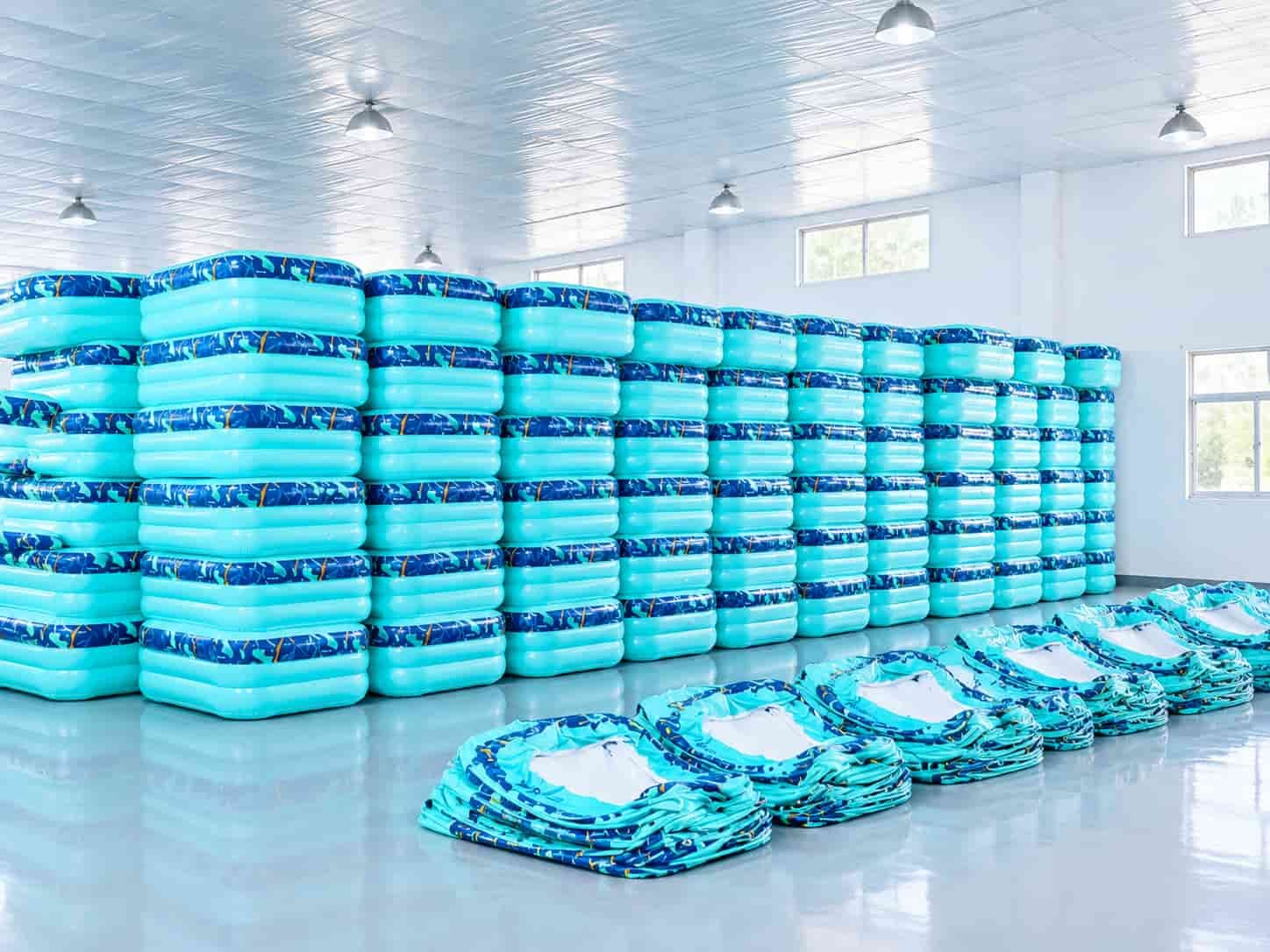
Where Does Leakage Usually Come From?
When an inflatable product loses air, the first assumption is often that the PVC has been punctured or that the material is too thin.
That can happen, but leakage is not only a material issue.
Depending on the product, possible leakage points include:
- small defects or physical damage in the material
- incomplete or unstable welded seams
- corners and chamber transitions
- valve installation and sealing
- welded accessories and attachments
- areas under concentrated load or repeated movement
- structural stress that places unexpected force on a seam
This is why simply increasing PVC thickness does not automatically solve an air-retention problem. In fact, PVC thickness alone does not determine air-retention performance.
A product can use thicker material and still leak if the weak point is a seam, valve, attachment or product structure.
Why Visual Inspection Alone Is Not Enough
Some defects are easy to see.
A badly positioned valve, visible material damage or an obvious welding problem may be identified quickly.
Slow leakage is different.
An inflatable product can look completely normal immediately after inflation while a very small sealing problem gradually reduces the internal air volume over time.
This creates an important manufacturing principle:
“Air-retention quality cannot always be judged at the moment a product leaves the welding station.”
For applicable inflatable products, the factory needs enough time and an appropriate inspection process to allow slow problems to become visible.
How Does a Factory Control Leakage Before Mass Production?
Leakage control should begin before the full production run.
The exact process varies by product, but for many closed-air PVC inflatable products, the logic can be understood as a sequence:
The objective is not simply to find one defective unit.
It is to establish whether the proposed material, structure, tooling and production parameters can work together consistently.
1. Start with the Material
Before an inflatable product is welded, the material itself needs to be suitable for the product and production process.
For PVC film, relevant checks can include characteristics such as:
- appearance
- width
- thickness
- physical properties
- color consistency or migration where applicable
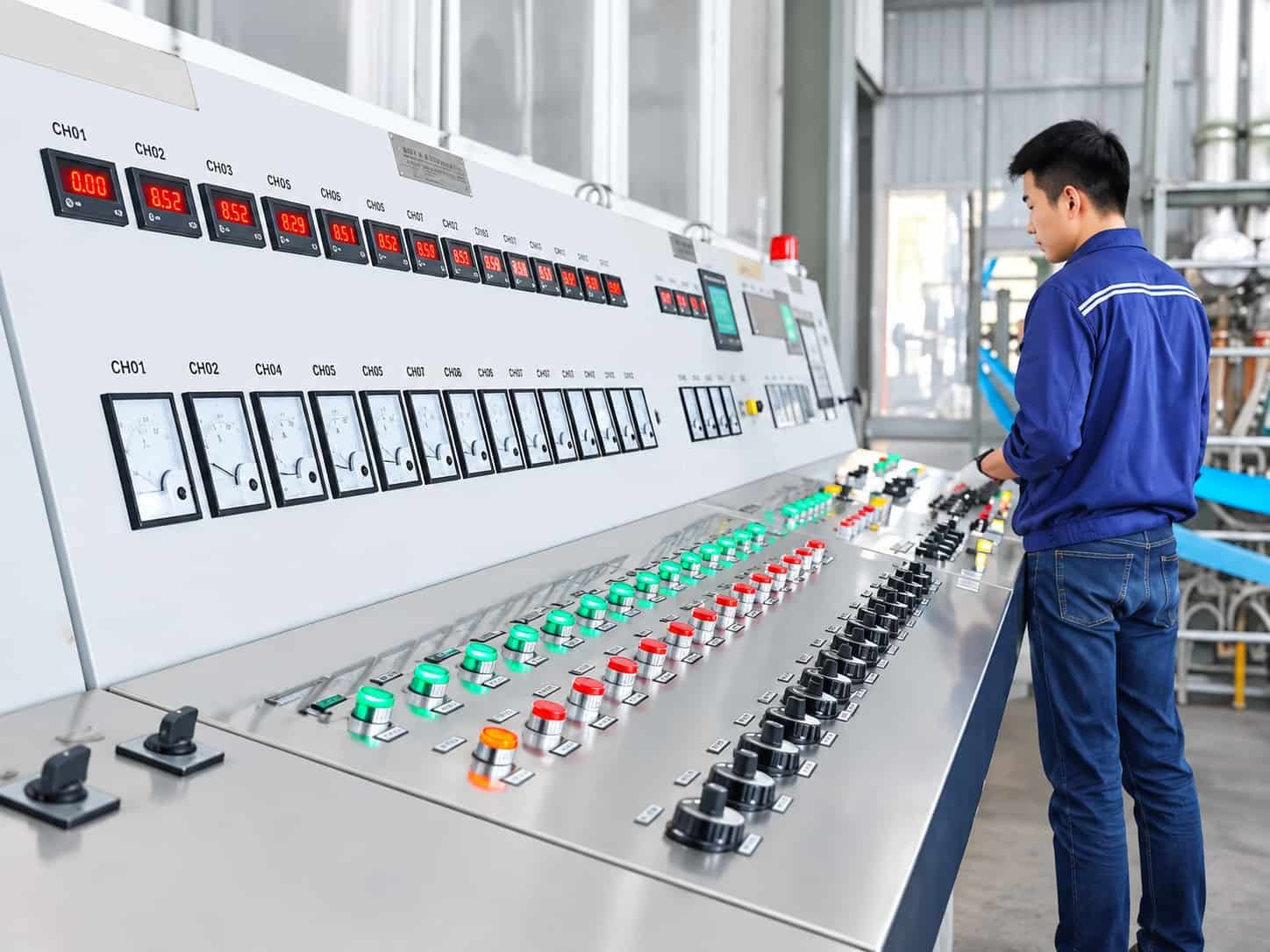
Material specification also needs to match the product.
A lightweight swim ring, a family inflatable pool and an air mattress do not necessarily require the same material decision because their structures, loads and intended uses are different.
This is one reason COMCO reviews PVC film together with the product rather than treating thickness as a standalone quality grade.
2. Set Up the HF Welding Process
For many closed-air PVC inflatable products, high-frequency (HF) welding joins separate PVC panels and creates the airtight structure. To understand each connected step from raw film to packaging, see the full PVC inflatable manufacturing process.
Before mass production, the welding process needs to be set up for the actual product.
This can involve:
- checking tooling and alignment
- establishing appropriate process parameters
- reviewing seam formation
- checking corners and transitions
- producing the first pieces for validation
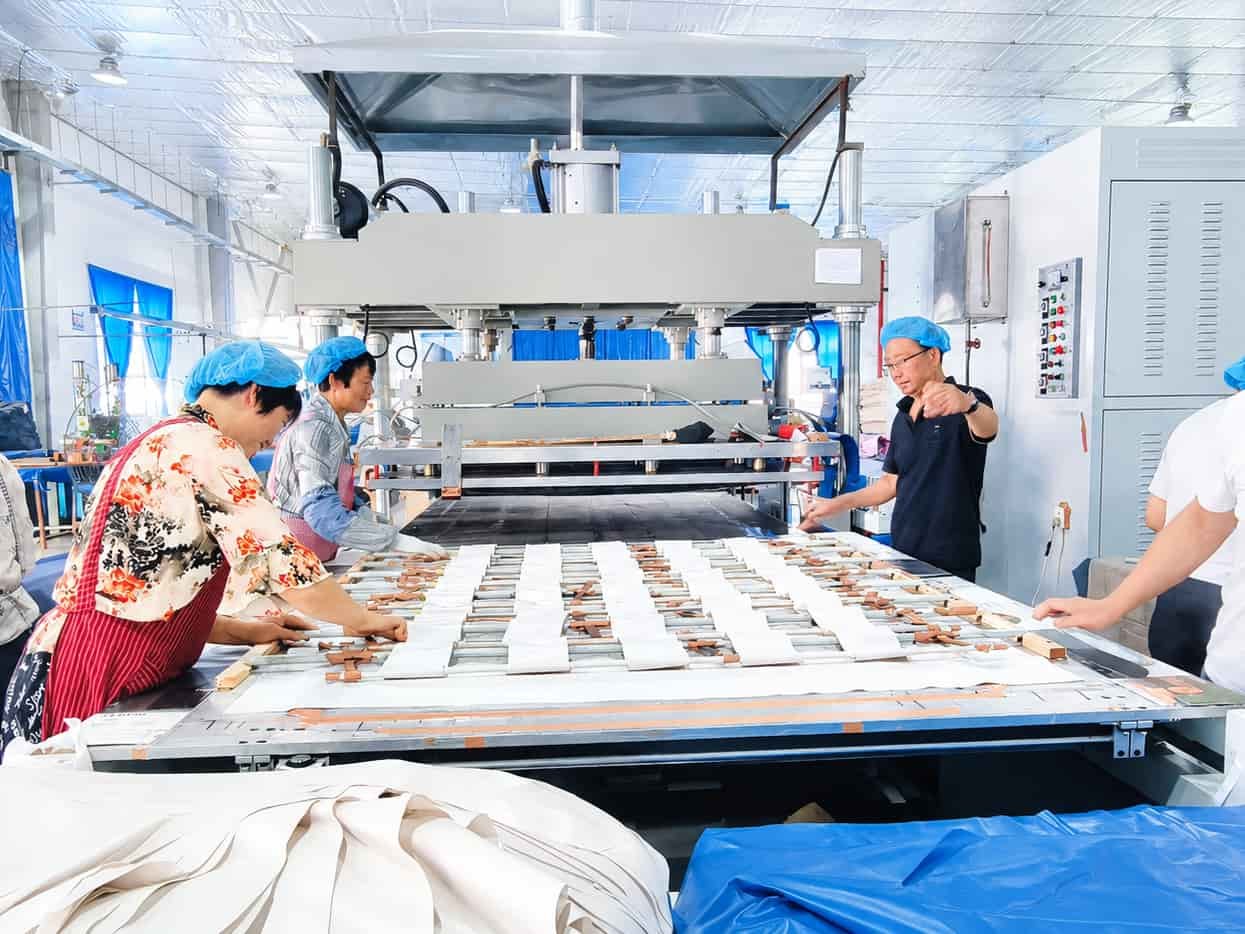
The important point is that welding is a process, not simply a machine operation.
Material, product geometry, tooling and process settings need to work together during initial OEM product development.
3. Validate the First Product Before Releasing the Line
Once the first production-intent pieces are made, the factory can evaluate whether the product is behaving as expected before releasing full production.
Depending on the product, validation may include checks such as:
- dimensions and appearance
- seam condition
- valve and accessory attachment
- applicable material or seam testing
- repeated inflation and deflation
- load-related testing
- water-holding or other product-specific checks
- inflation observation
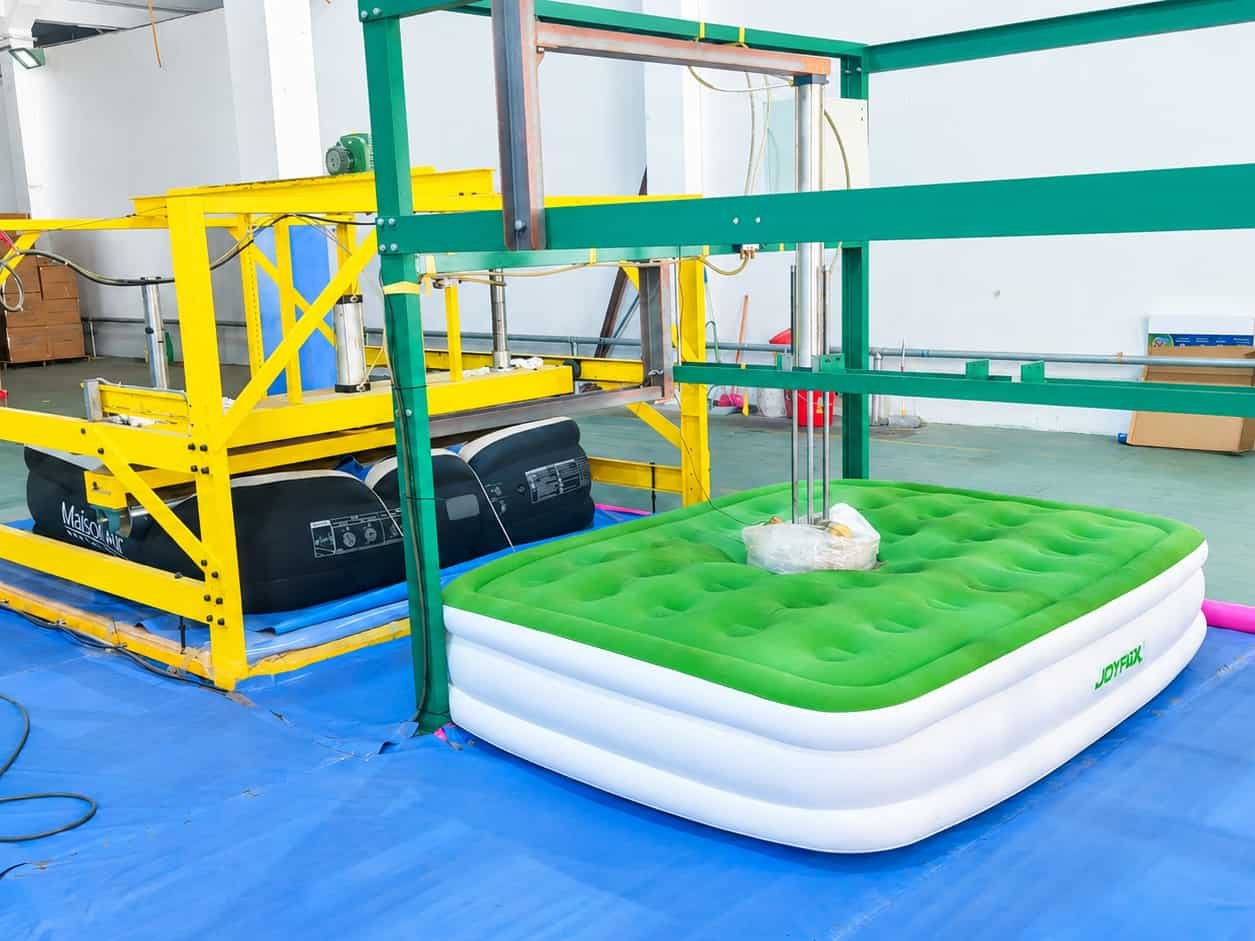
Not every inflatable product requires every test. Learn more about how COMCO conducts pre-production quality validation.
The validation plan should follow the product’s construction, intended use and applicable quality requirements.
This stage is valuable because it gives the factory an opportunity to find a weak point before that weak point is repeated across a large production batch.
4. Give Slow Leaks Time to Appear
One of the most important differences between an obvious leak and a slow leak is time.
A product with a major sealing problem may lose air quickly.
A small pinhole, minor seam issue or sealing problem may take much longer to become noticeable.
For applicable inflatable products, COMCO may use a 24–48 hour inflation observation period, depending on the product, process and quality-control procedure.
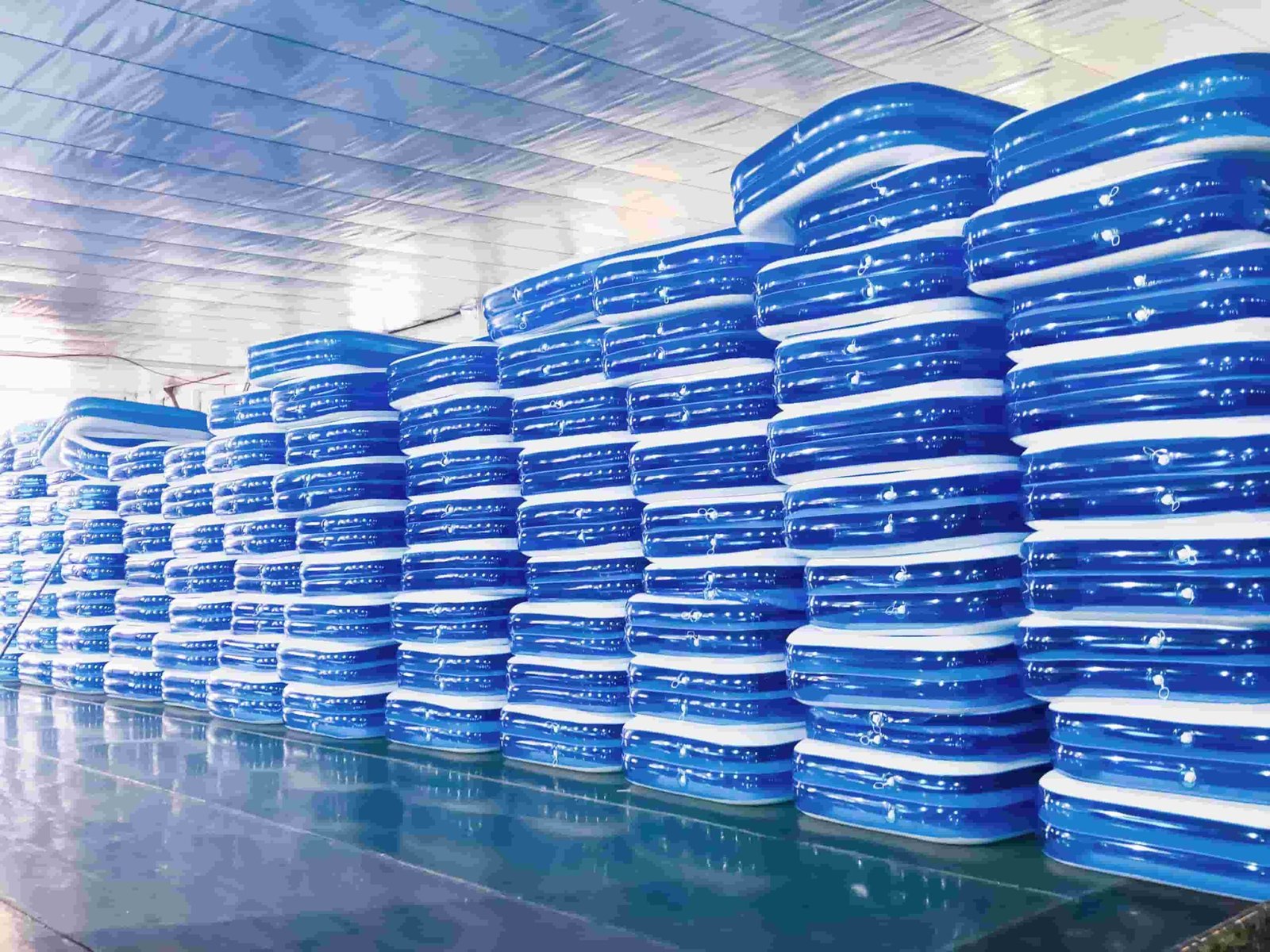
The purpose is straightforward:
“Give slow air-retention problems enough time to become visible before the product moves forward.”
This should not be interpreted as one universal test that applies identically to every inflatable product.
The appropriate inspection and observation method depends on the product.
5. If a Product Fails, Find the Cause — Not Just the Defective Piece
Finding one leaking product is useful.
Understanding why it leaked is more important.
If a problem appears during validation, the next step is to investigate the likely source.
Depending on the failure, this may involve reviewing:
- the PVC film
- seam position or geometry
- welding parameters
- tooling alignment
- valve installation
- attachment construction
- product structure
- assembly process
The factory can then make an adjustment and validate the product again.
The logic is:
Detect → Identify Cause → Correct → Re-test → Release
rather than:
Detect → Remove One Defective Piece → Continue Production
This is how pre-production quality control helps prevent a problem from becoming a batch-level issue.
What Happens After Mass Production Starts?
Passing pre-production validation does not mean quality control stops.
A buyer is purchasing hundreds or thousands of products, not one approved sample.
Once production begins, the factory still needs to maintain the established product and process requirements across the batch.
Depending on the product and production stage, this may involve:
- first-piece and in-process checks
- dimensions and appearance control
- welding and assembly monitoring
- inflation inspection for applicable products
- air-retention observation according to the product and procedure
- packing and final inspection
The goal is to make mass production repeat the approved product consistently through rigorous quality control and testing.
How COMCO Approaches Air-Retention Control
At COMCO, leakage control is treated as part of the product-development and manufacturing process rather than only as a final inspection step.
For applicable PVC inflatable products, the process can involve:
PVC Film Check → HF Welding Setup → First-Product Validation → Applicable Physical Testing → Inflation Observation → Root-Cause Correction → Mass Production
COMCO operates in-house PVC film production, allowing closer coordination between PVC film production and downstream inflatable-product manufacturing.
During pre-production validation, applicable products may undergo physical tests based on their construction and intended use. These can include seam-related testing, repeated inflation and deflation, load-related tests or other product-specific checks.
For applicable inflatable products, a 24–48 hour inflation observation period may be used according to the product and quality-control procedure to help identify slow air-retention problems before packing.
The specific control plan varies by product because a swim ring, inflatable pool, pool float and air mattress do not have identical structures or use conditions.
What Does This Mean for Buyers?
Buyers do not need to inspect every welding parameter themselves.
What matters is understanding whether the manufacturer has a systematic way to:
- identify likely leakage risks,
- validate the product before mass production,
- give slow leakage enough time to become visible where applicable,
- investigate the cause when a problem is found,
- correct and revalidate the process, and
- maintain the approved process during mass production.
That tells a buyer much more than a simple statement such as:
“Yes, we do leak testing.”
For an OEM program, the stronger question is:
“How do you control air-retention risk before and during mass production?”
Frequently Asked Questions
Why does an inflatable product lose air when there is no visible hole?
Air loss can come from very small material defects, welded seams, valves, attachments or other sealing points. Some leakage is too slow to identify immediately and may require inflation observation or targeted inspection.
Does thicker PVC prevent leakage?
Not necessarily. PVC thickness is only one part of the product. Seam quality, valves, structure, welding conditions and production consistency can also affect air retention.
Why are some inflatable products observed for 24–48 hours?
Slow air-retention problems may not appear immediately after inflation. For applicable products, extended observation gives small leakage or sealing problems more time to become visible. The appropriate duration depends on the product and quality-control procedure.
How does HF welding affect leakage?
HF welding is commonly used to create airtight structures in PVC inflatable products. Seam performance depends on the material, product design, tooling, alignment, process parameters and production consistency rather than the welding method alone.
What happens if the first production product leaks?
The useful response is to investigate the cause before releasing mass production. Depending on the failure, the factory may need to review material, structure, welding parameters, tooling, valve installation or another process, make an adjustment and validate the product again.
Can an approved sample still develop leakage problems during mass production?
Yes. Sample approval confirms an agreed product direction, but mass production also requires process consistency. Material, welding, valves, assembly and other production conditions need to remain controlled across the production run.
Developing a PVC Inflatable Product?
If you are developing a new inflatable product or reviewing an existing product with air-retention concerns, send us your product reference, drawing or defined concept, target dimensions, intended use and market, expected order quantity, existing material specification (if available), and known leakage or quality issue.
COMCO can review the product structure and manufacturing direction before sampling or mass production.