
Guides & Insights
How Inflatable SUP Boards Are Made: A Buyer’s Guide to Drop-Stitch Construction
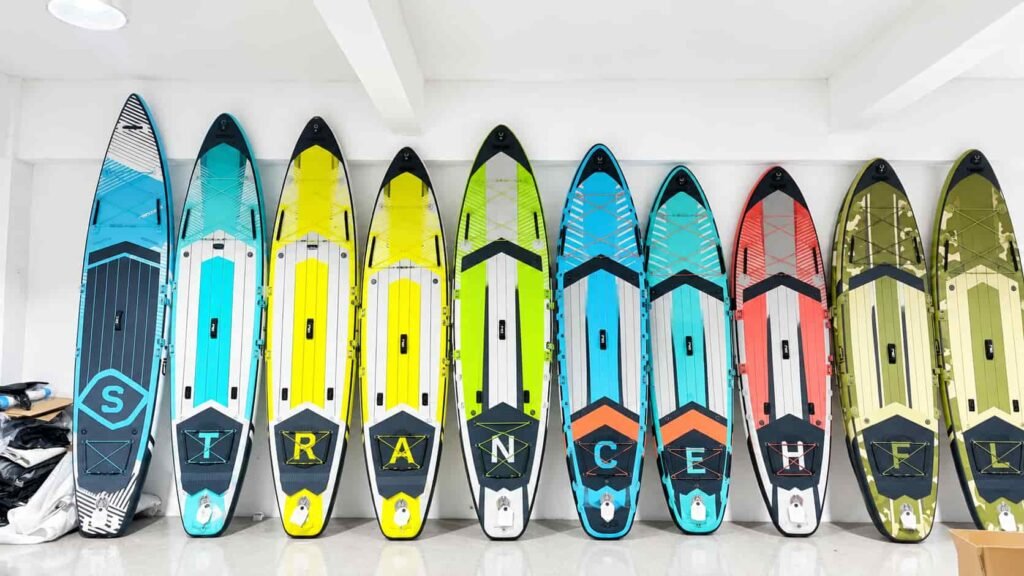
If you only look at a finished inflatable SUP, the construction seems quite simple — a board, an EVA deck and a few accessories.
But once you walk into a SUP factory, you quickly realize that most of the important parts are hidden inside the board.
The drop-stitch material helps the board hold its shape. The side rail forms the airtight structure. And during production, air retention needs to be checked before the board is finally packed.
In this guide, we’ll show you how an inflatable SUP is actually made in our factory — from drop-stitch material to a finished, retail-ready board.
What’s Actually Inside an Inflatable SUP?
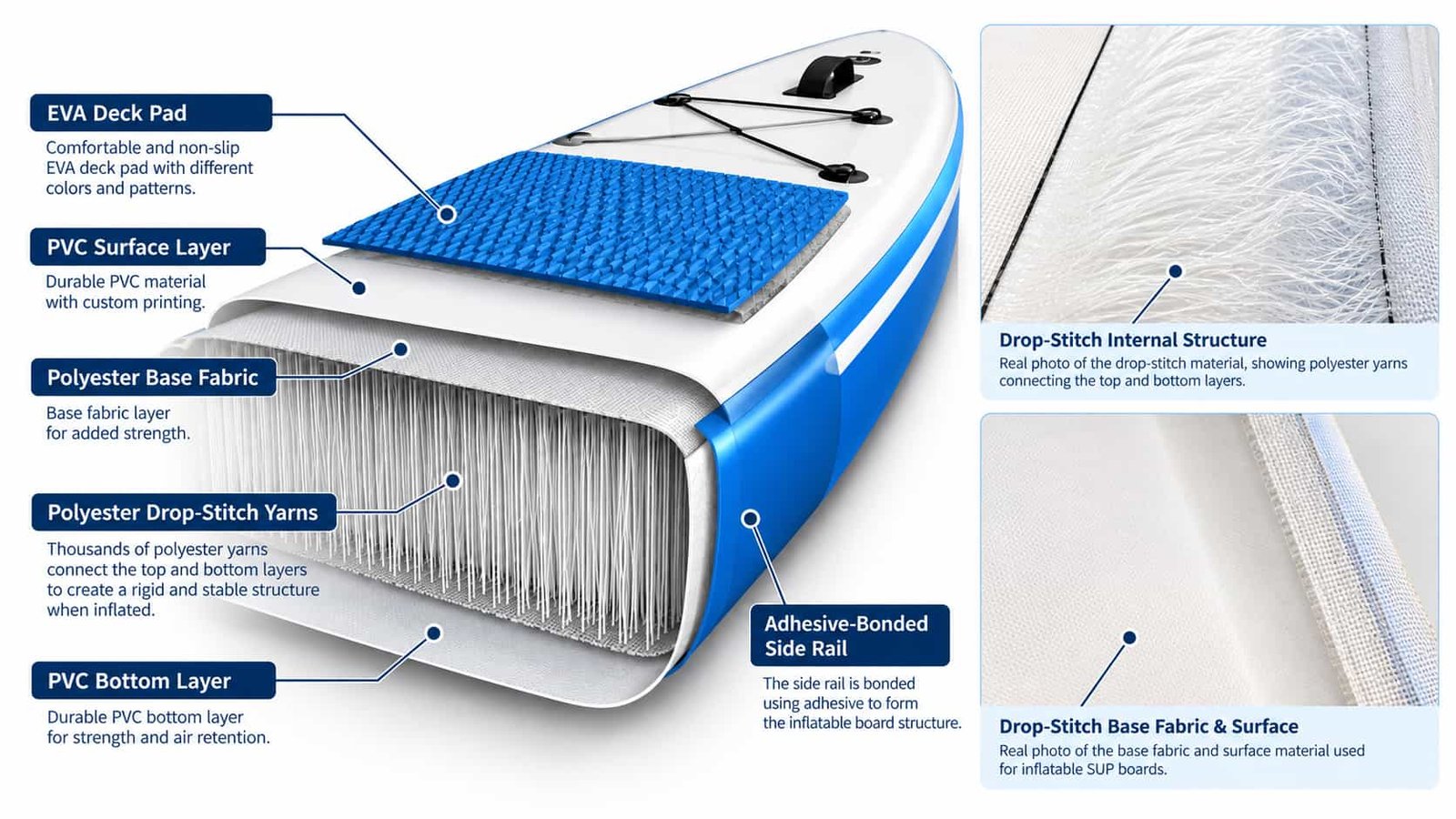
This is one of the first things we like to show buyers when discussing SUP construction.
Cut open the material and you’ll see many polyester yarns connecting the upper and lower fabric layers.
When the board is inflated, these yarns limit how far the two surfaces can move apart. This is what allows an inflatable SUP to maintain a relatively flat board shape instead of expanding like a normal inflatable chamber.
This is the basic idea behind drop-stitch construction.
For a buyer, however, “drop stitch” is only the starting point. The finished board also depends on the PVC surface materials, EVA deck, side rail construction and how these components are assembled.
From Drop-Stitch Material to a Finished SUP
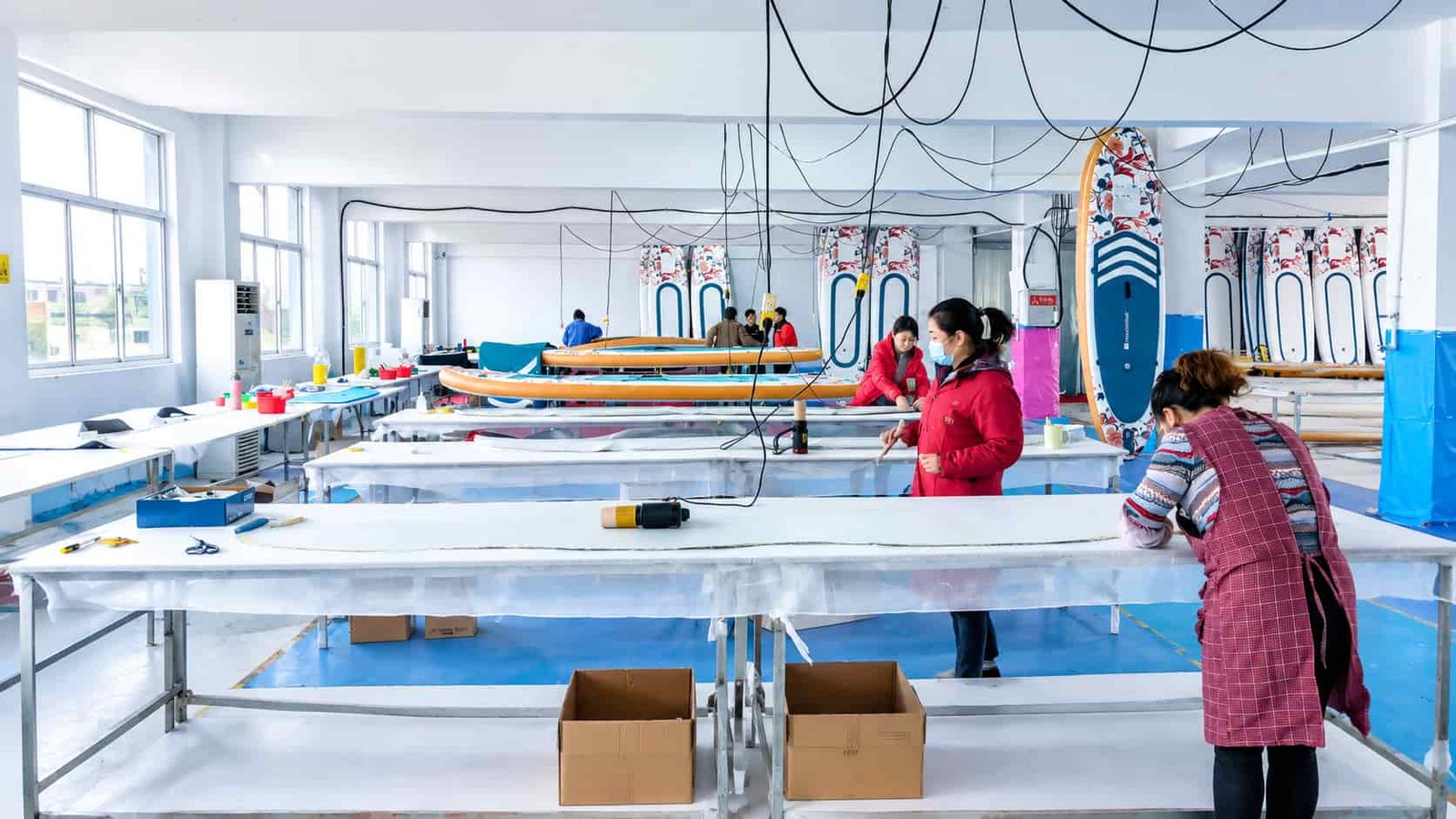
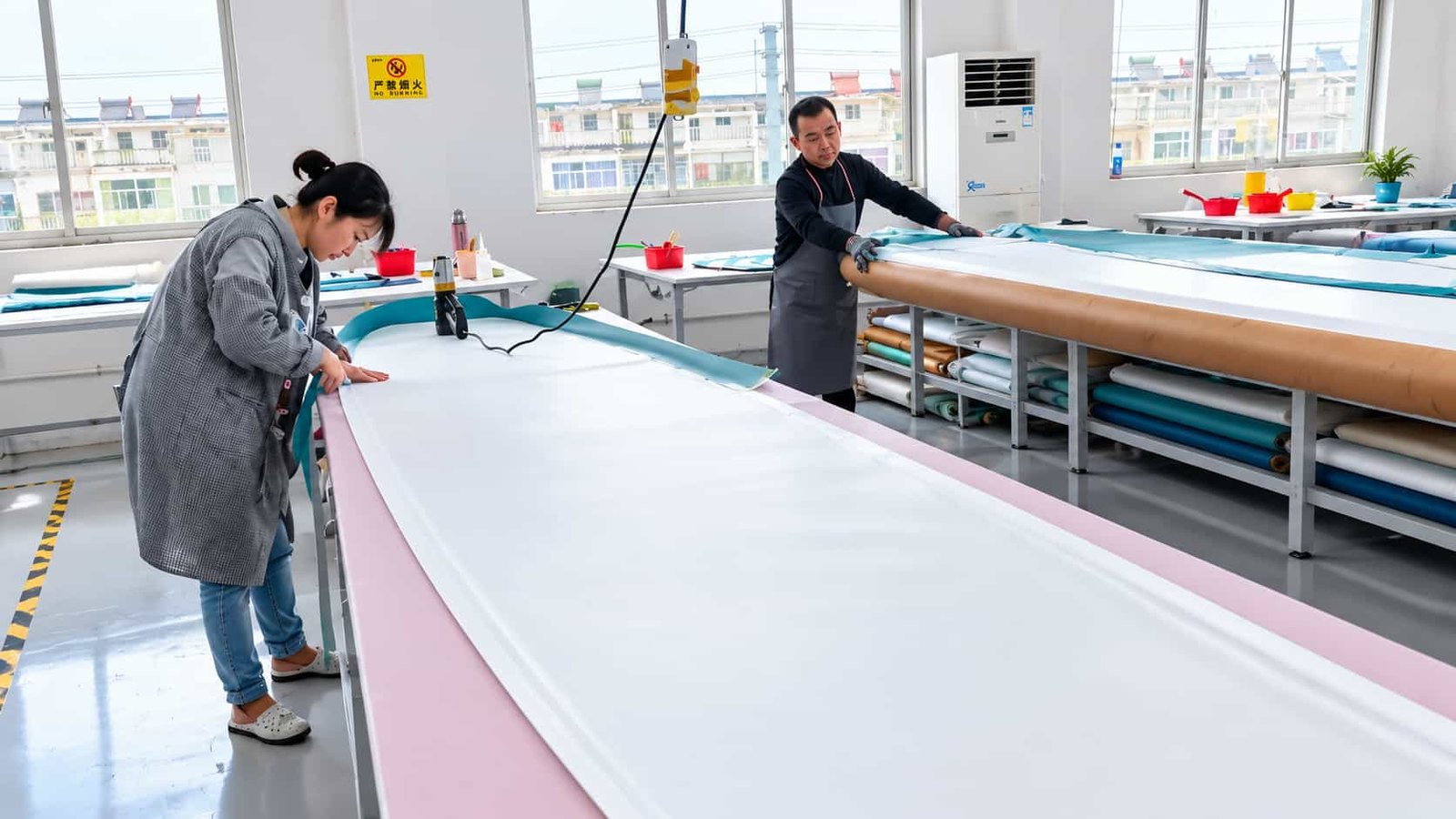
In our factory, production starts with cutting the material according to the required board shape and size.
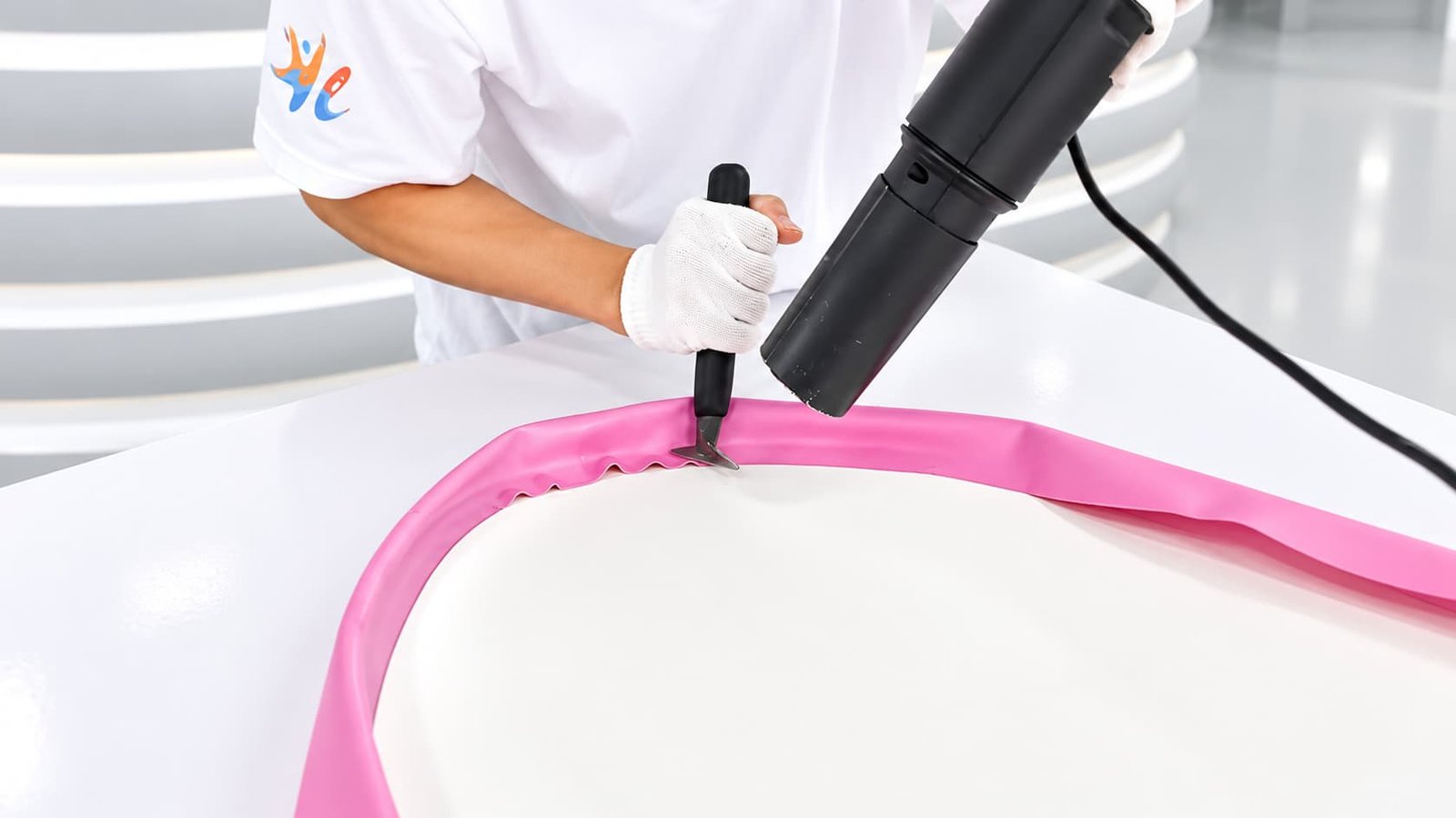
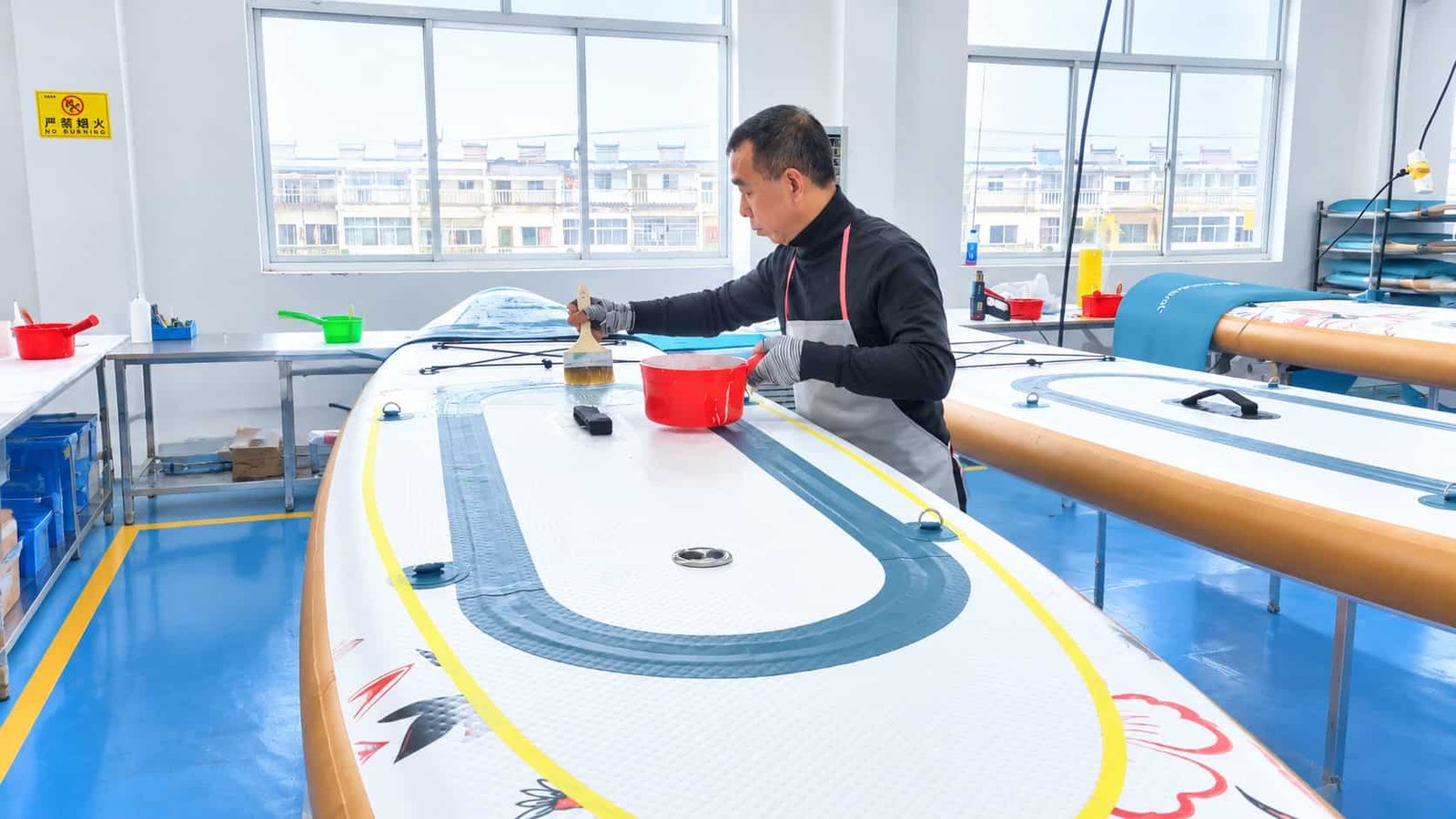
After cutting, the approved graphics are printed. The side rail is then bonded around the drop-stitch board body to create the inflatable structure.
This is also where our first 24-hour inflation check begins.
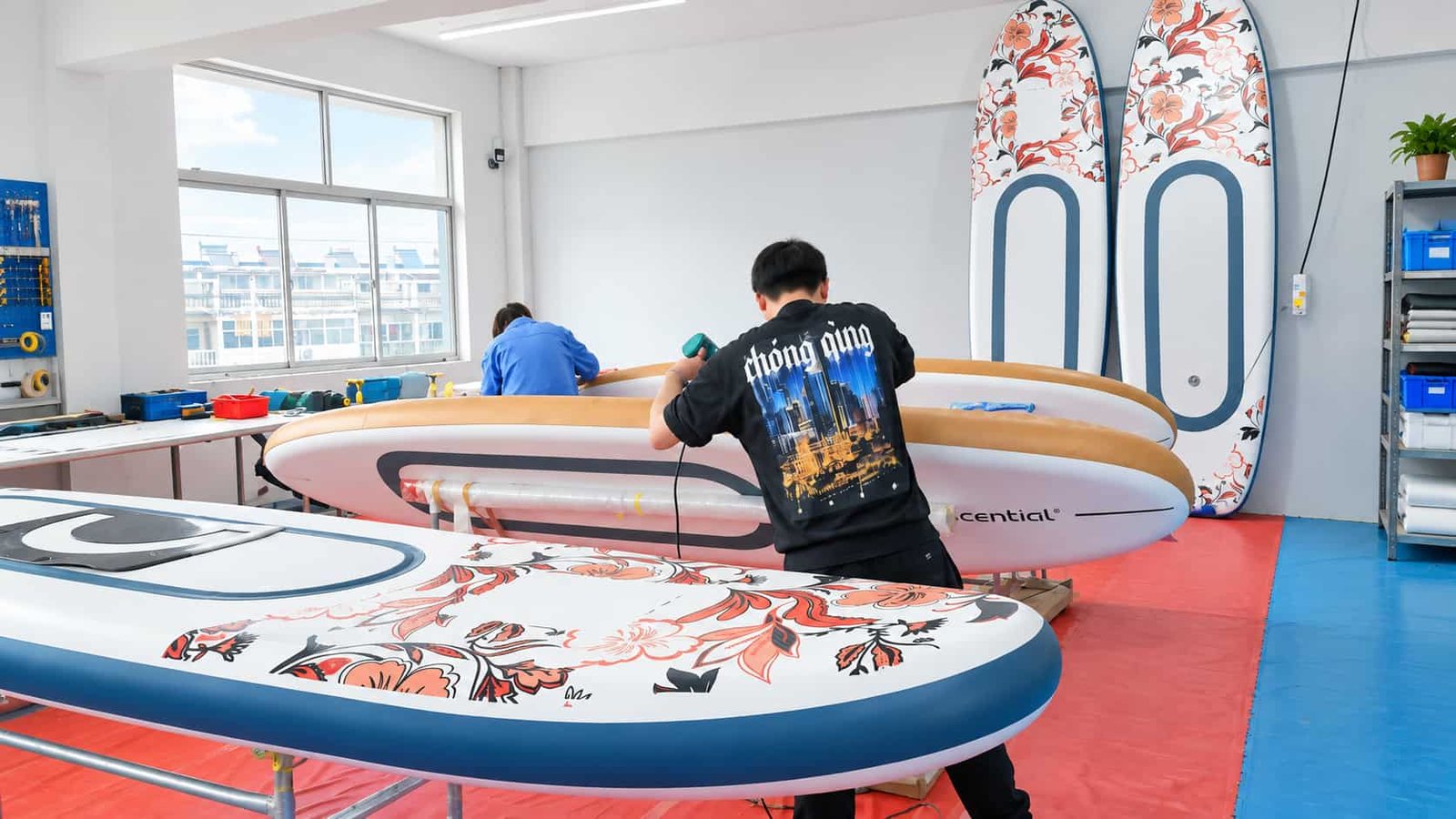
Once the initial check is completed, the board stays inflated while our workers carry out finishing and appearance inspection. This makes it easier to see the actual shape of the board and identify details that may not be obvious when it is deflated.
Before the EVA deck and accessories are installed, the board goes through another 24-hour air-retention check.
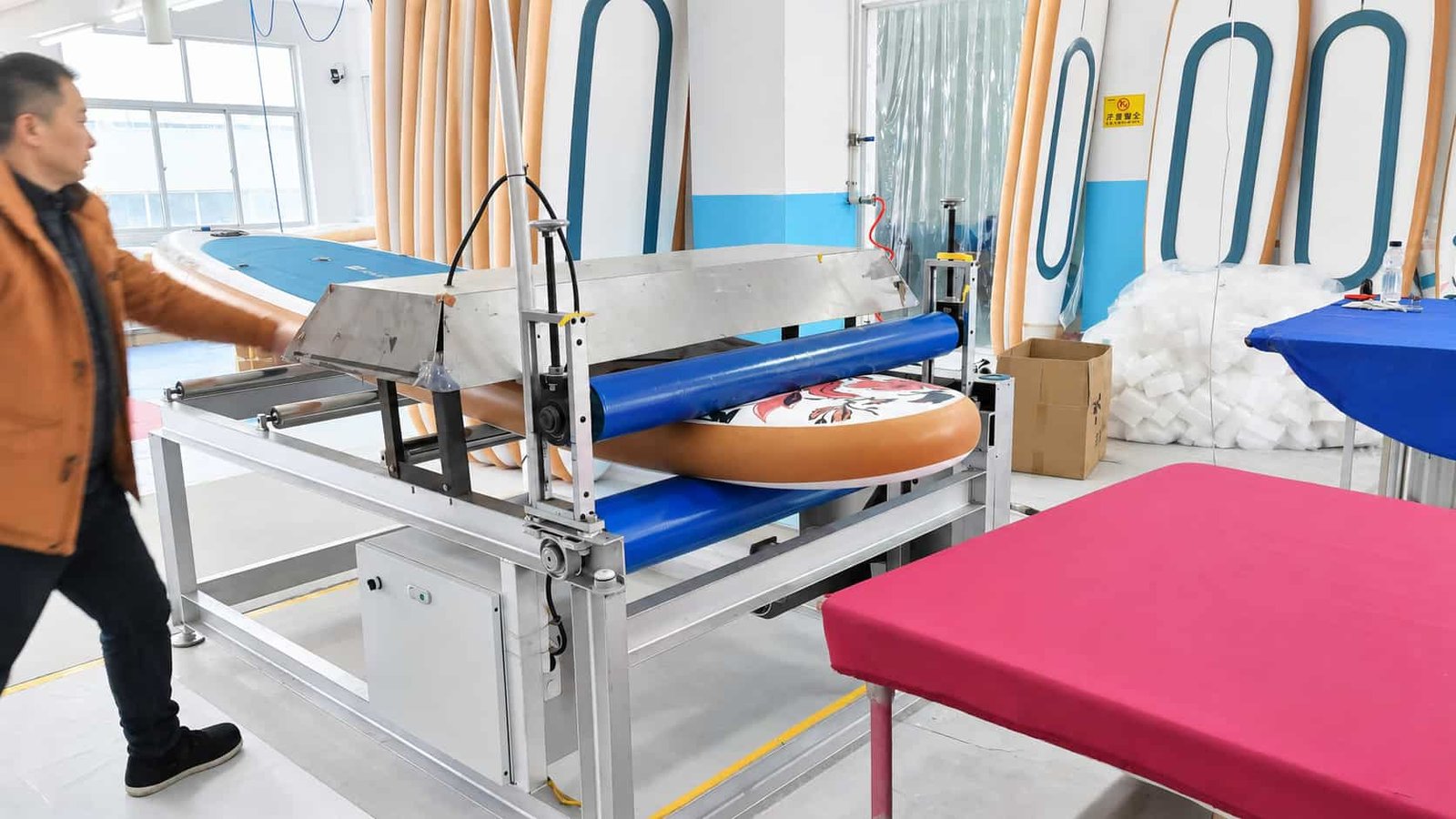
The EVA deck, handles, D-rings, fin system and other specified components are then assembled. After this stage, we carry out another 24-hour inflation check before final inspection and packing.
So the actual flow looks like this:
Cutting → Printing → Rail Bonding → 24h Check → Inflated Finishing → 24h Check → EVA & Accessories → Final 24h Check → Inspection & Packing
Why Do We Check the Board More Than Once?
A finished SUP can look perfect from the outside. For a buyer, however, appearance is only part of the story.
Air retention is something you cannot judge from a product photo.
That is why we don’t wait until the very end of production to check it.
For our current SUP production process, boards are kept inflated for 24 hours at three key stages:
If an issue appears earlier in production, it is better to identify it before more components are added to the board.
For us, these checks are simply part of the normal production flow.
What Can Be Customized?
Once the basic construction is confirmed, this is usually where conversations with buyers become more interesting.
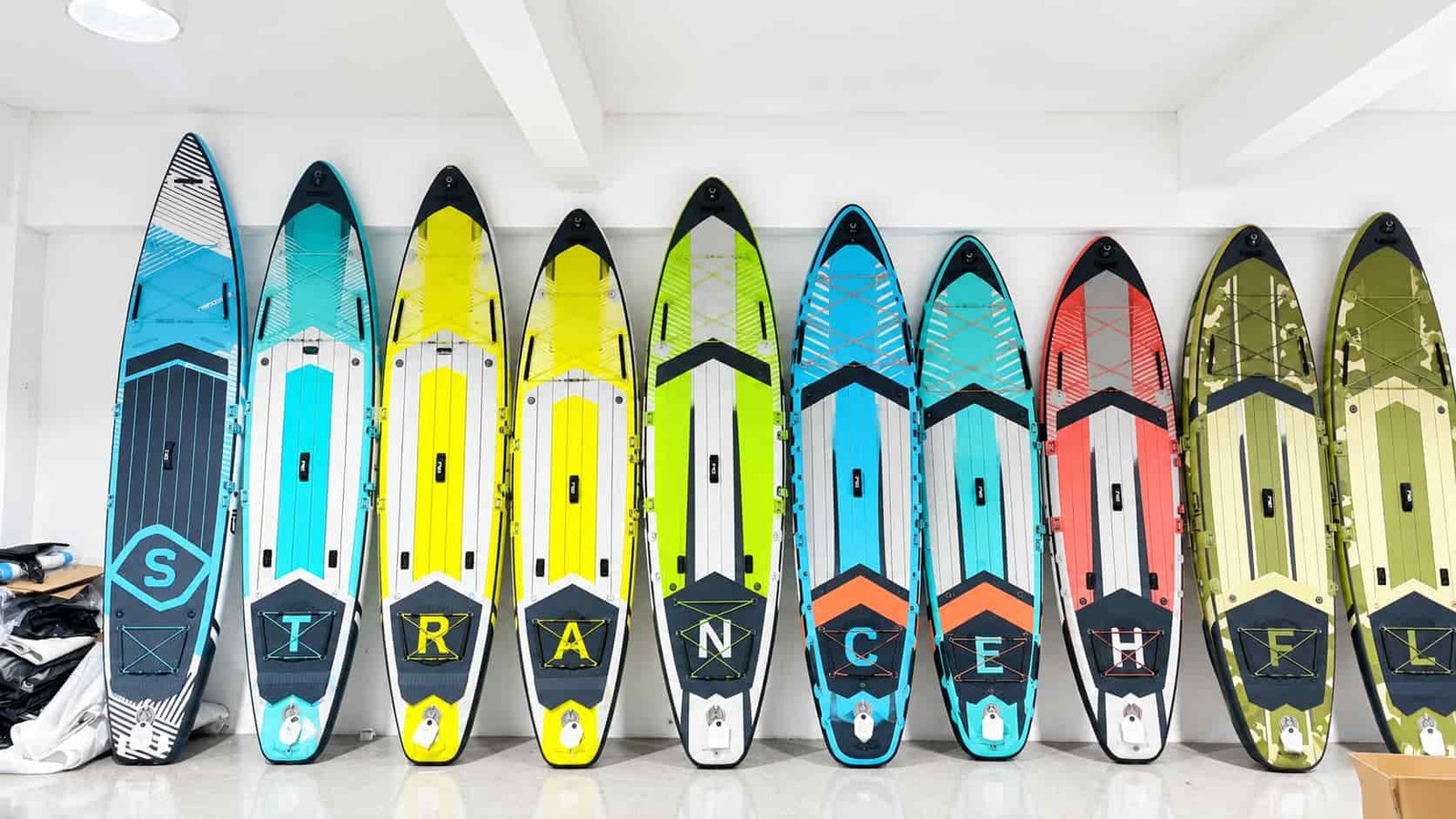
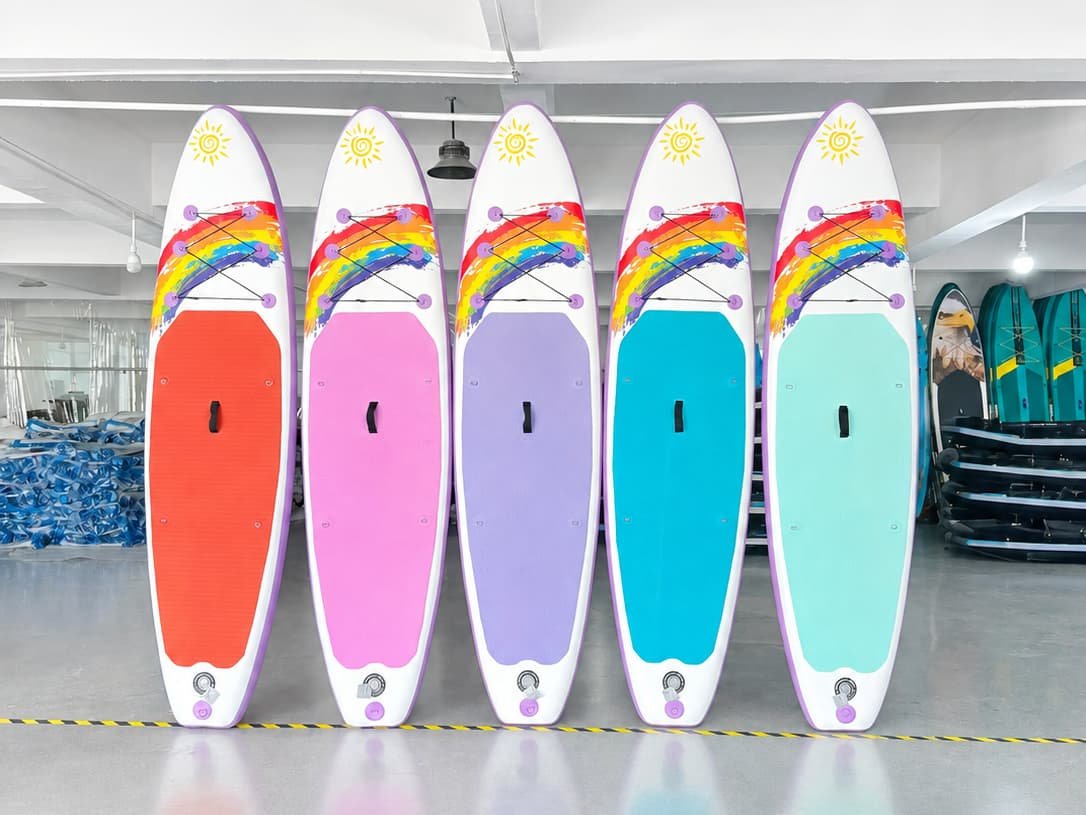
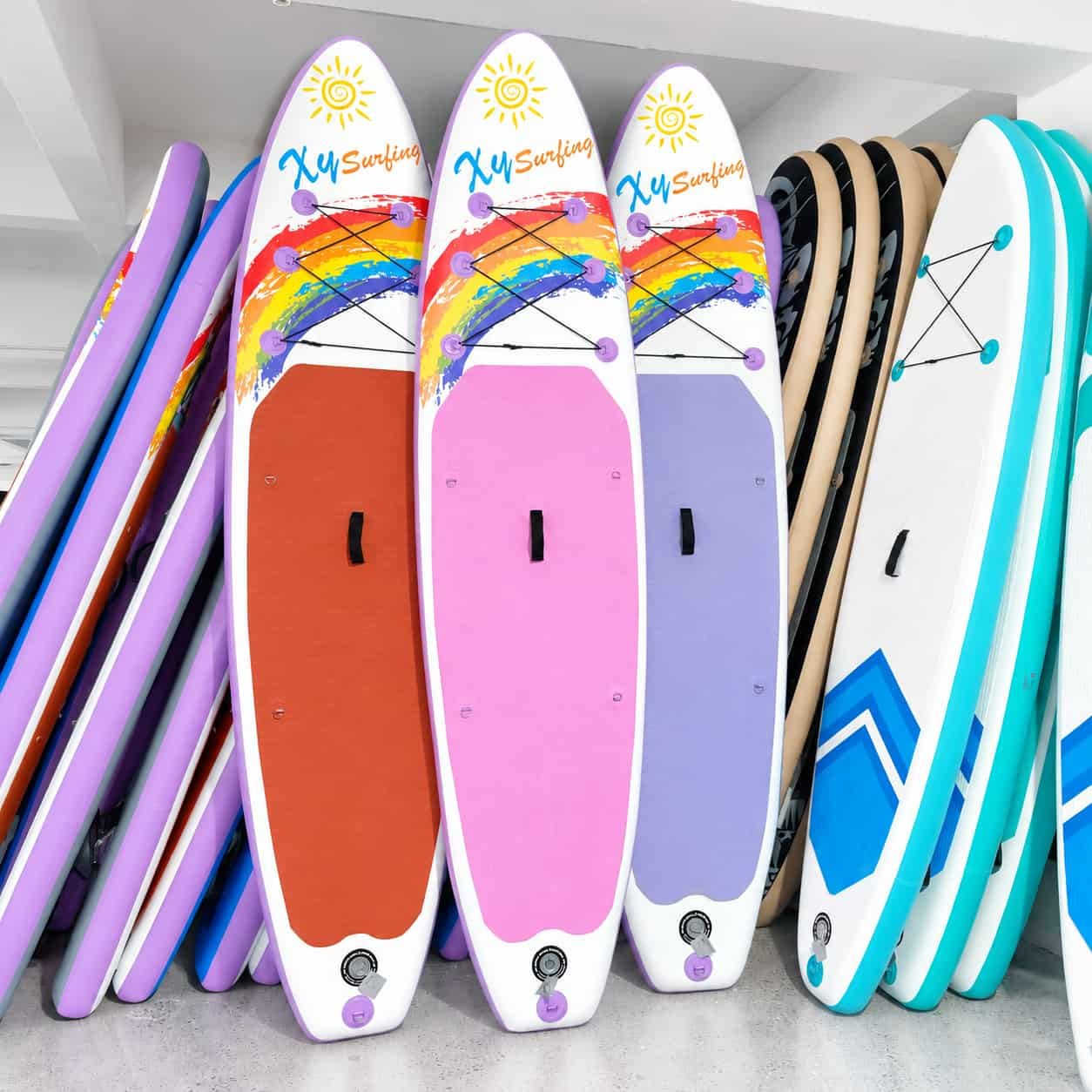
Different programs need different board shapes, graphics, EVA designs and accessory combinations.
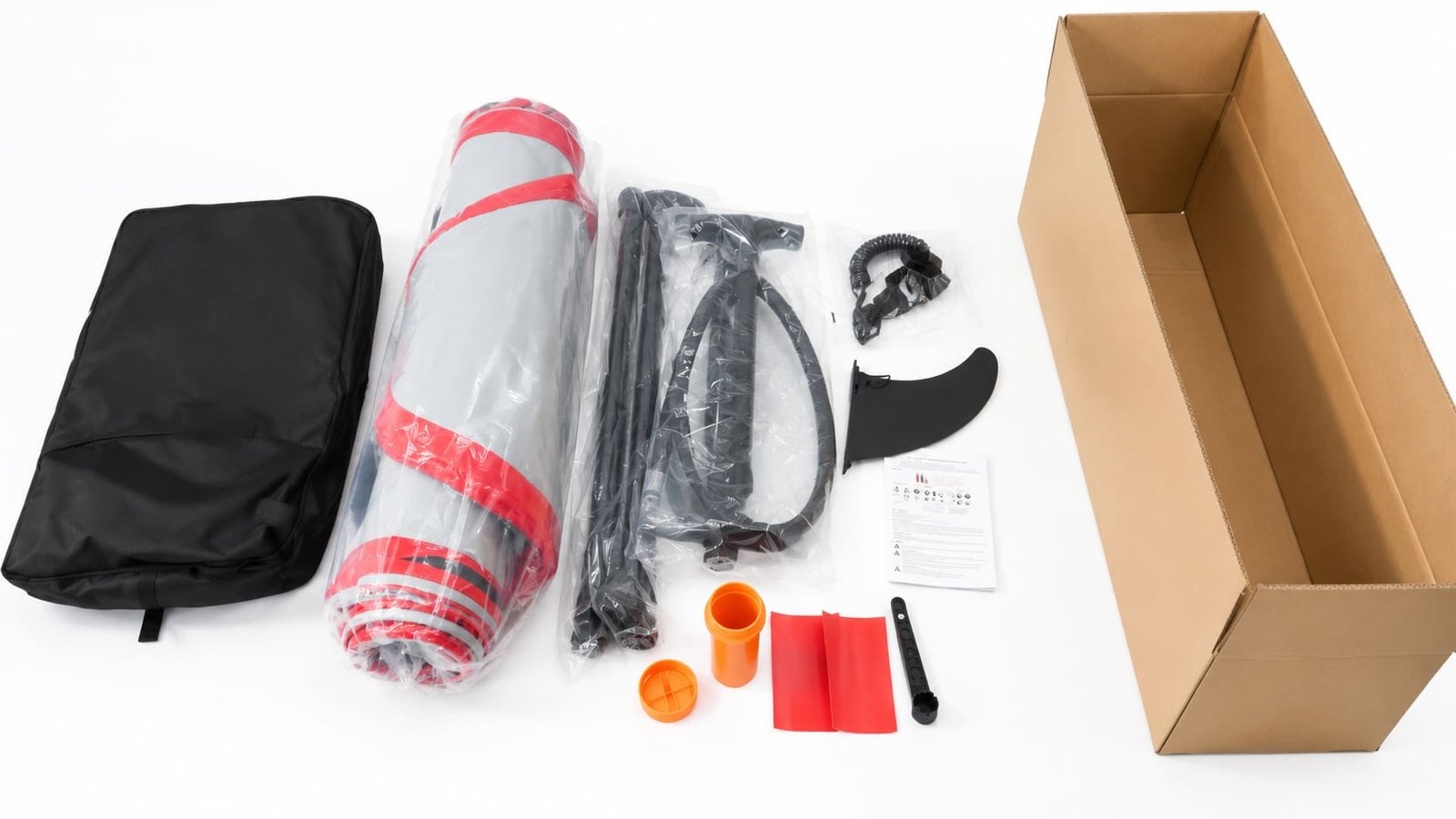
Depending on the project, we can work with buyers on board size and shape, custom graphics, EVA deck colors and patterns, handles, D-rings, fin systems, paddles, pumps, leashes, carry bags and retail packaging.
So when we talk about an OEM SUP, we are not simply putting a different logo on an existing board. The goal is to build the product around the buyer’s program.
One Question We Suggest Buyers Ask
When buyers first contact a SUP supplier, the conversation often starts with price, MOQ, size and artwork.
Those are important questions.
But we would suggest adding one more:
At what stages do you test the SUP for air retention?
It is a simple question, but the answer can tell you quite a lot about how the factory actually manages SUP production.
A good-looking sample is important. Consistency during mass production matters even more.
Looking for an Inflatable SUP Manufacturing Partner?
COMCO supports OEM and private-label inflatable SUP programs, including custom board designs, graphics, EVA deck options, accessories and retail packaging.
Resources
Related articles
Guides & Insights · October 7, 2026
Commercial Water Park Slide Tubes vs. Recreational Swim Rings: What Buyers Should Know
A commercial water park slide tube can look structurally similar to a recreational swim ring. Discover why material elasticity and weld seam selection matter.
Guides & Insights · October 6, 2026
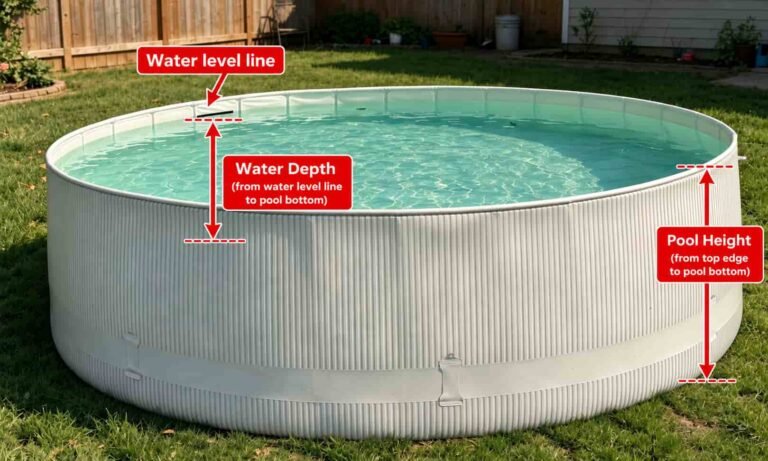
Pool Wall Height vs. Usable Water Depth: What Pool Buyers Need to Know
Understand the difference between pool wall height and usable water depth, plus how water-level markings are applied during pool manufacturing.
Guides & Insights · October 6, 2026
PVC vs. TPU for Inflatable Products: Which Material Should You Choose?
Compare PVC and TPU for inflatable products, including material cost, performance, PVC-free requirements and how to choose the right material.