
Japan Safety Requirements for Inflatable Water Products
How product classification, ST toy safety standards, and physical construction affect swim rings, pool floats, and inflatable water products entering the Japanese market.
Developing an inflatable water product for Japan involves more than selecting a test standard after the sample is finished. A children’s swim ring, a novelty pool float, an arm ring, and a large inflatable lounger may all share high-frequency welded PVC construction, but they do not automatically follow the same Japanese safety route. In the Japanese compliance framework, requirements can influence the physical engineering of the product itself before laboratory testing begins.
When B2B buyers and sourcing teams approach custom OEM/ODM programs for Japan, conversations often start with a familiar assumption: “Japan needs ST.” However, Japanese safety requirements cannot be reduced to a single blanket acronym. Understanding how intended use, target user, product classification, physical construction, third-party testing, and Japanese markings connect is essential to executing a successful production run without costly re-tooling or compliance delays.
Used in Water ≠ Same Japanese Safety Route
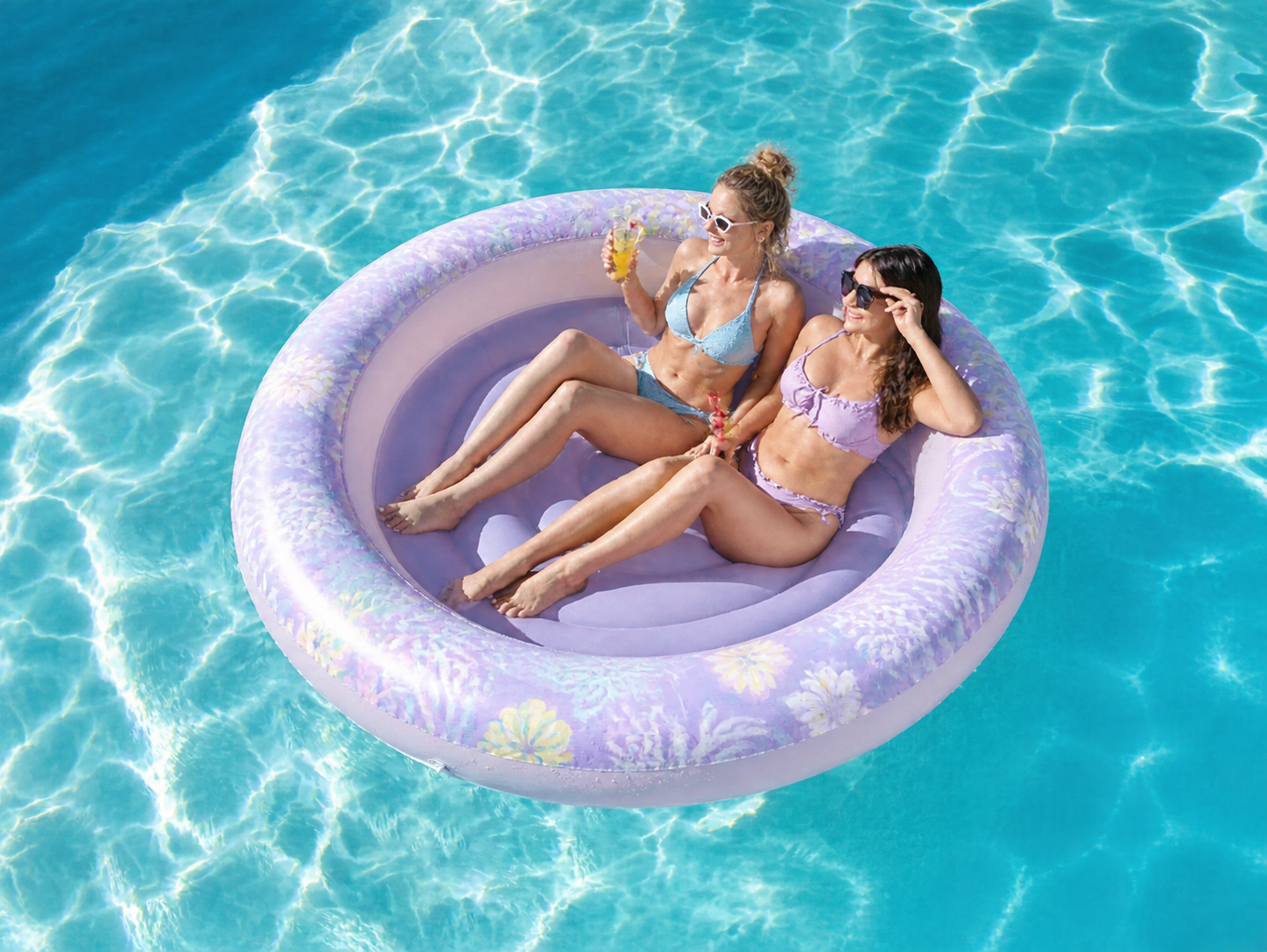
In Japan, safety routes diverge depending on whether a product is designed for play, buoyancy support, or general water recreation. Construction specifications such as chamber independence are established during early development.
Discuss a Japan Market Project →
What Is the ST Standard in Japan?
ST (Safety Toy) is the toy safety standard and marking system administered by the Japan Toy Association (日本玩具協会). Established in 1971, it is one of the most widely recognized voluntary toy-safety systems used in the Japanese retail market.
However, ST should not be treated as a generic term for all Japanese product testing. It is a specific voluntary conformity system established by the toy industry association, not an all-encompassing government test that covers every consumer inflatable.
The ST Standard comprises three core parts addressing critical toy hazards:
| ST Section | Main Safety Focus | Relevance to Inflatables |
|---|---|---|
| Part 1 (ST Part 1) | Mechanical & Physical Safety | Evaluates sharp points, edges, seam integrity, small parts release, projection hazards, cords, and deflation behavior. |
| Part 2 (ST Part 2) | Flammability | Tests the rate of flame spread across toy materials and textiles under standardized laboratory ignition conditions. |
| Part 3 (ST Part 3) | Chemical Safety | Regulates heavy metal migration, coloring matter release, and specific plasticizer / phthalate limits in accessible plasticized materials. |
Products that successfully satisfy the applicable ST testing requirements through designated testing laboratories and conclude an ST Mark license agreement with the Japan Toy Association are authorized to carry the ST Mark on their packaging.
Important Compliance Distinctions for Global Sourcing: In international sourcing, ASTM F963 (United States), EN 71 (Europe), and ST (Japan) all serve as foundational toy safety benchmarks in their respective markets. However, their legal structures and conformity procedures differ significantly:
- ST is not simply the “Japanese version of EN 71” — testing protocols and acceptance systems have distinct national characteristics.
- ST is not a universal legal mandate for every toy sold in Japan; it is a market-driven voluntary conformity mark widely requested by major retailers and department stores.
- ST is not a mandatory government-administered certification regime like Korea’s statutory KC Safety Certification.
Child PSC: Japan’s Mandatory Regime for Infant Toys
In addition to industry standards, Japan’s Ministry of Economy, Trade and Industry (METI) introduced a mandatory government safety framework for applicable infant toys under the Consumer Product Safety Act (PSC regime). Effective from 25 December 2025, this system establishes mandatory safety requirements specifically for applicable toys intended for children under three years of age (commonly designated as Child PSC).
For products falling within the statutory infant-toy scope, compliance requires meeting technical safety benchmarks and displaying the official Child PSC mark alongside designated Japanese warning and age-grading information before the product can be legally distributed in Japan.
The current ST 2025 system has been aligned by the Japan Toy Association so that conforming to relevant ST 2025 technical criteria can support the technical compliance route required for applicable infant toys under Child PSC.
Child PSC is a mandatory government product-safety regime established by Japanese statute for applicable infant toys under three years old.
ST (Safety Toy) is an industry standard and mark administered by the Japan Toy Association.
While the two frameworks coordinate technical criteria for relevant infant toys, they are not the same system, nor should they be viewed as interchangeable commercial alternatives.
The Critical Buoyancy-Support Water Product Exception
A crucial distinction in official guidance from METI and the Consumer Affairs Agency (CAA) is that inflatable products utilizing buoyancy to support all or part of a child’s body in water are not simply treated as ordinary infant toys under the new Child PSC toy scope.
Official Japanese regulatory documentation explicitly identifies specific buoyancy-supporting water articles, including:
- Swim Rings (浮き輪 / うきわ)
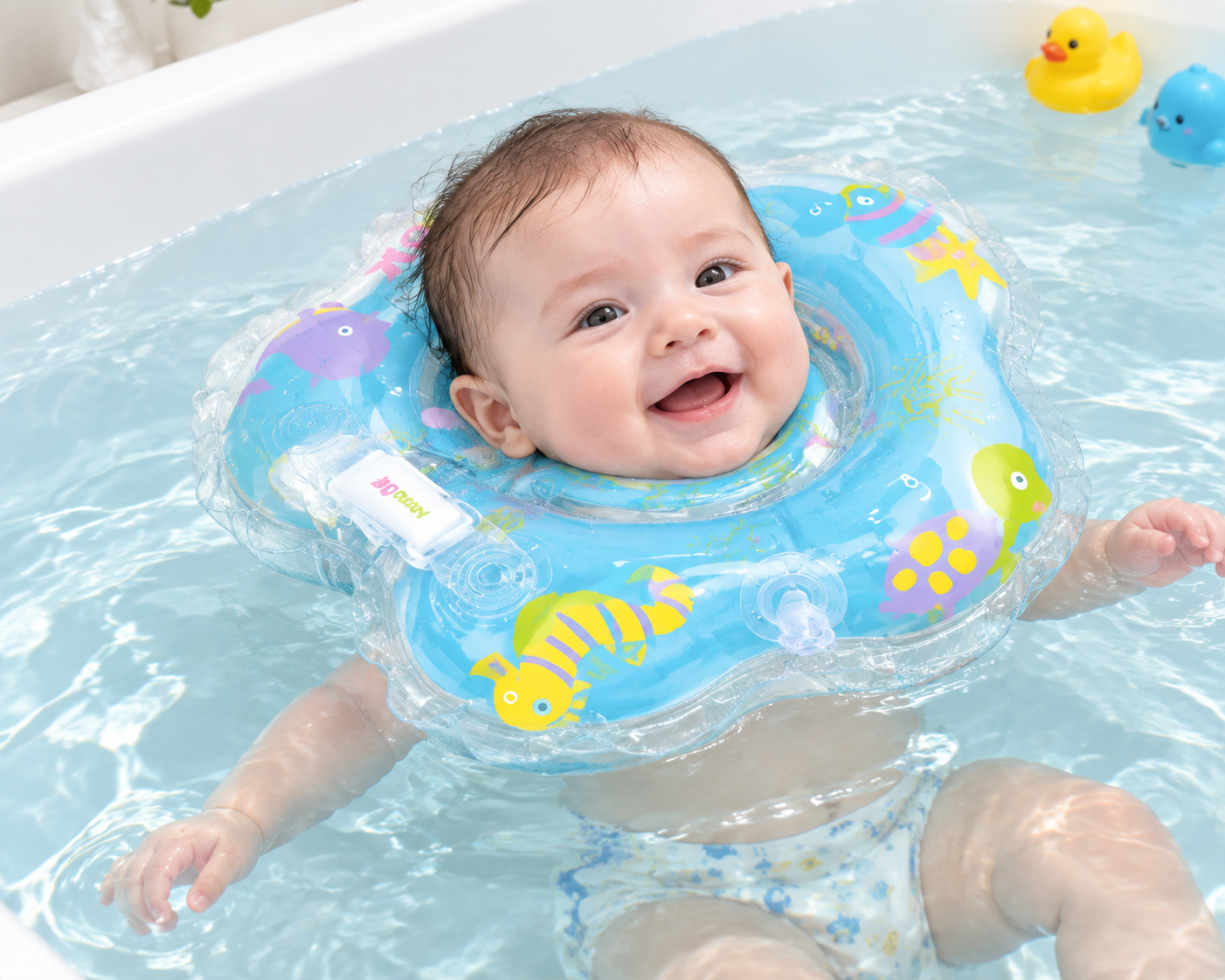
- Baby Neck Floats (首リング)
- Inflatable Float Beds / Mats (フロートベッド)
- Arm Rings / Water Wings (アームリング)
Because items like neck rings, arm bands, and swim rings hold a child above water, their primary risk profile involves drowning hazards, deflation risks, and slippage rather than ordinary toy projectile or small-part hazards. Treating a buoyancy-supporting ring as a conventional plaything misdirects the testing plan, warning labels, and structural evaluation.
Product Classification Map for the Japanese Market
To help product managers, sourcing leads, and OEM buyers navigate product development, the following directional map highlights how common COMCO inflatable water products align with Japanese compliance pathways:
| Product Type | Current Japan Safety Direction | What Sourcing & Engineering Teams Should Consider |
|---|---|---|
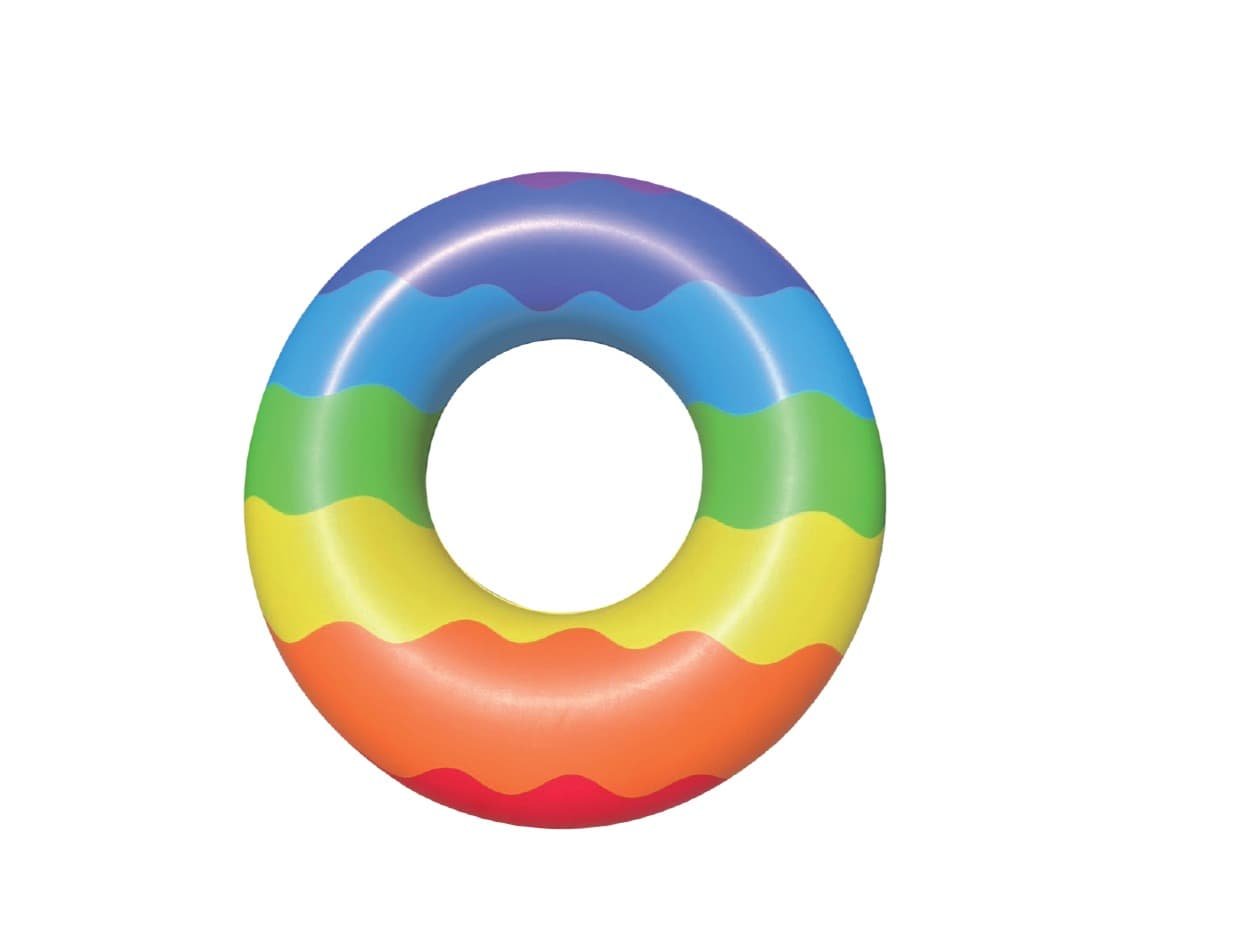
| Swim Ring (浮き輪) | ST applicability and/or inflatable vinyl water-product industry safety route depending on size and intended user. | Intended use, outer/inner diameter, two-air-chamber construction, non-return valve design, Japanese warning copy. |
| Pool Float / Ride-On (フロート) | Larger recreational floats and ride-ons often follow inflatable vinyl industry safety criteria rather than ordinary toy rules. | Dimensions, weight capacity, grab handles, rope attachment safety, stable buoyancy configuration. |
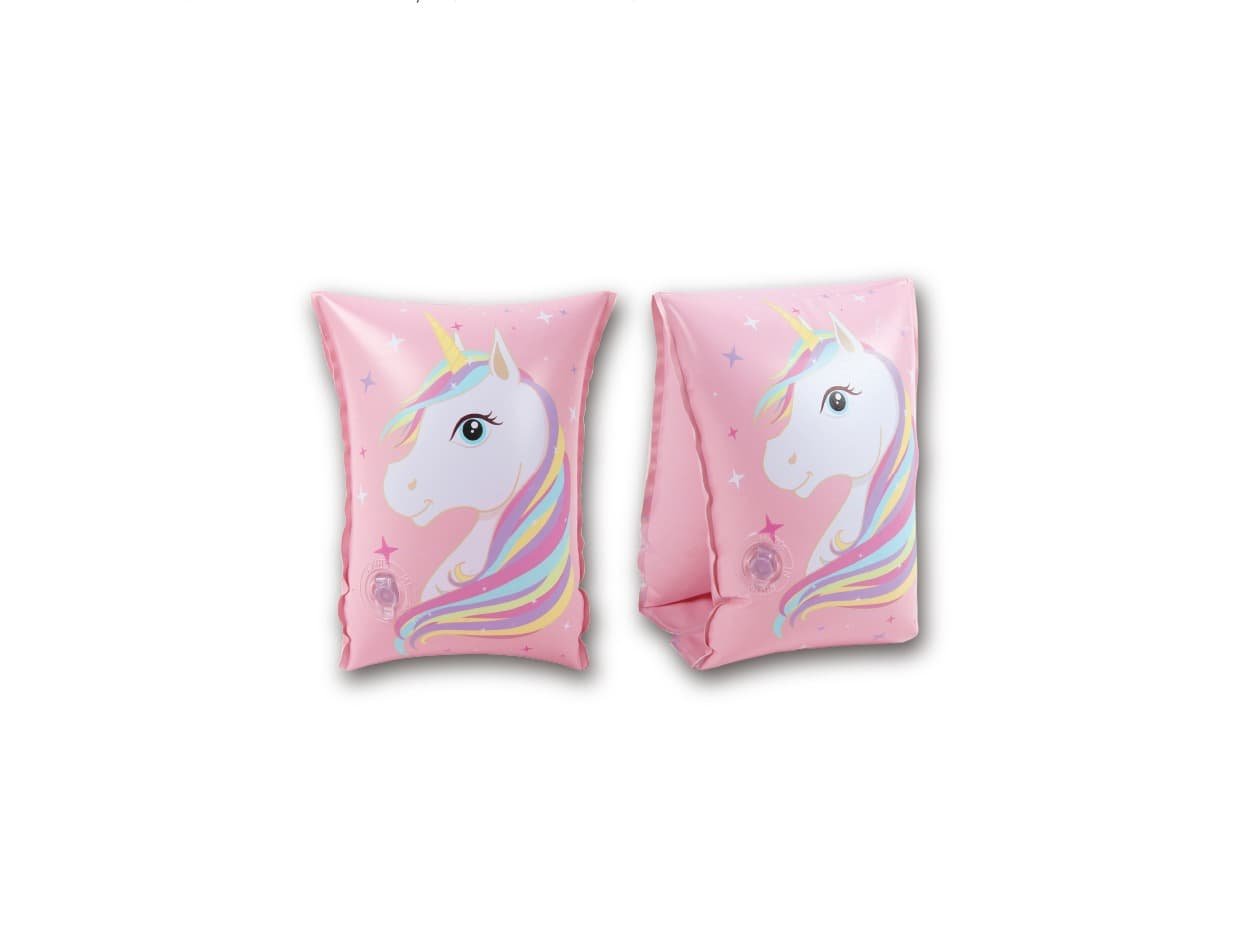
| Water Wings / Arm Rings (アームリング) | Buoyancy-supporting product; not treated as an ordinary infant toy under Child PSC toy rules. | Double air chambers per arm, arm circumference sizing, non-slip inner surface, explicit supervision markings. |
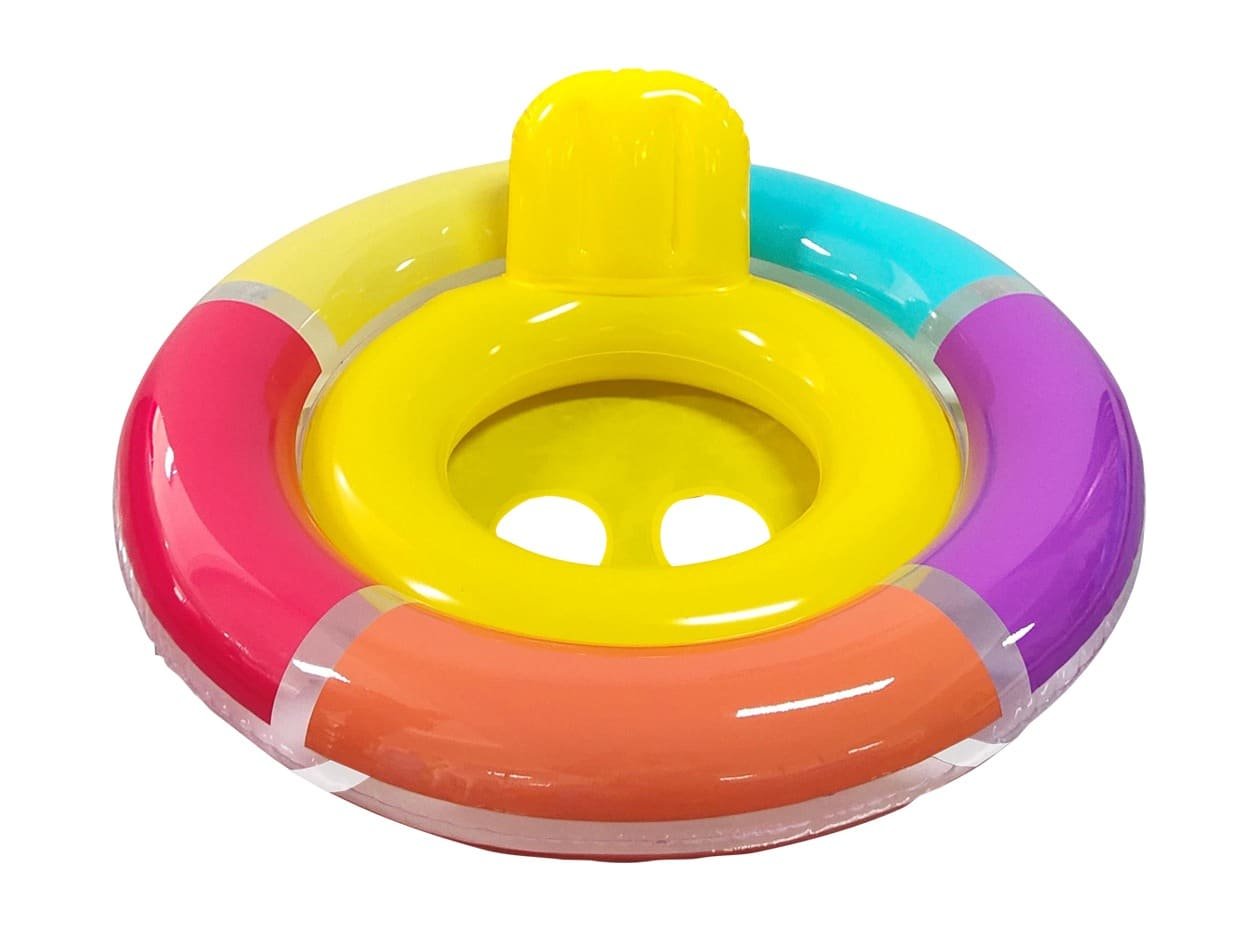
| Baby Swim Seat / Neck Float (足入れ浮き輪 / 首リング) | Higher-risk buoyancy-supporting structure with specialized stability and slippage considerations. | Leg-hole smooth edge welding, dual chamber independence, rollover stability, explicit drowning hazard warnings. |
| Beach Ball / Vinyl Ball (ビーチボール) | May follow toy safety route (ST) or general leisure route depending on intended age grading and marketing. | Age grading, phthalate compliance in PVC film, valve plug security, inflation instructions. |
| Children’s Inflatable Pool (ビニールプール) | Certain infant configurations may enter infant-toy considerations; larger domestic pools follow distinct basin safety criteria. | Wall height, water volume capacity, drain plug durability, pinch points, structural welding integrity. |
| Water Toy / Sprinkler (水遊び玩具) | Follows toy route (ST and/or Child PSC) if designed genuinely for active play rather than flotation. | ST Part 1 mechanical tests, hose connector safety, chemical testing under ST Part 3, child age grading. |
Note: This classification map is directional and educational for manufacturing feasibility. Final testing requirements and legal classifications must be verified against actual product specifications and current Japanese regulations before certification commitments or volume production.
Why Do Japanese Swim Rings Often Use Two Air Chambers?
Anyone developing swim rings or inflatable flotation products for the Japanese market will quickly notice a consistent engineering request from Japanese buyers and trading houses: two independent air chambers (二気室 / 2-Chamber Construction).
Why is this design feature so prevalent in Japan? The rationale is grounded in physical product safety and water risk mitigation:
Single Point of Failure
If a swim ring relies on a single chamber, any puncture, weld rupture, or open valve cap leads to immediate, complete deflation. In open water, a sudden loss of buoyancy can cause an inexperienced swimmer or child to sink instantly.
Redundant Buoyancy Protection
Chamber A and Chamber B are separated by an internal welded partition wall, each equipped with its own independent valve. An air-loss incident in one chamber leaves the secondary chamber inflated, providing crucial residual buoyancy to reach safety.
Coaxial & Concentric Chamber Tooling
Manufacturing a two-chamber swim ring requires specialized high-frequency (HF) welding dies. Instead of a single outer perimeter and inner perimeter weld, the die must create an internal concentric partition or dual-stacked ring structure, with valves precisely aligned for easy consumer access.
At COMCO, our in-house tooling engineers configure HF brass dies to guarantee uniform seam tensile strength across both chamber dividers, eliminating micro-leaks between Chamber A and Chamber B.
Two-air-chamber construction is widely seen across Japanese swim rings of various diameters and represents a firmly established safety-oriented product design practice. Early structural confirmation prevents re-tooling mid-project.
Crucial Compliance Guardrail: Do not assume that Japanese statutory law categorically mandates two air chambers for every inflatable product. The complete applicable standards and industry guidelines depend on size and classification. For Japanese-market swim rings, two-air-chamber construction is a widely expected, safety-oriented market requirement that must be evaluated and confirmed with the buyer before tooling is cut.
Japanese Requirements Affect Product Construction Before Testing
Product compliance is not a stamp applied after production. For the Japanese market, technical requirements directly shape physical manufacturing specifications across multiple areas:
01. Air Chamber Partitioning
As noted above, chamber count and structural independence determine how the product behaves under stress. Sizing the volume ratio between chambers ensures that if deflation occurs in one chamber, the remaining chamber retains sufficient surface buoyancy.
02. Safety Valve Design & Air Retention
Japanese consumers and quality inspectors place high scrutiny on valve tightness and backflow prevention. Japanese-market inflatables typically incorporate non-return valves (flapped safety valves) that minimize rapid air loss when the stopper is accidentally opened. Stopper pull tabs must also be sized to avoid posing small-part release or mouth hazards.
03. Perimeter Ropes and Grab Handles
Larger swim rings (e.g., 90 cm to 120 cm diameter), floating loungers, and surf riders frequently incorporate perimeter grab ropes or welded PVC handles. In the Japanese market:
- Ropes must have controlled lengths and secure grommet attachments to eliminate strangulation or entanglement risks.
- Welded handles must undergo tensile peel testing to ensure they withstand adult pulling forces in surging waves.
04. Product Dimensions and User Sizing
In Japan, swim rings are commonly designated by deflated outer chest diameter (e.g., 50 cm, 60 cm, 70 cm, 80 cm, 90 cm, 100 cm, 120 cm), with recommended chest circumferences and age brackets clearly defined on packaging. Outer diameter and inner circle dimensions influence whether a ring enters children’s toy or general recreational guidelines.
05. PVC Film Formulation and Softness
The flexibility, plasticizer type, and low-temperature crack resistance of the PVC film must match the Japanese summer environment and rigorous chemical standards.
Japan’s Inflatable Vinyl Product Industry Safety Route
In addition to the Japan Toy Association’s ST standard, Japan has established industry safety standards administered by the Japan Inflatable Vinyl Products Industry Association (日本空気入ビニール製品工業組合).
A prime example is the industry’s recognized safety standard for inflatable water craft and surf products:
This safety framework is specifically relevant to larger inflatable boats, floating surf mats, ride-on novelties, and specialized swim-ring-type leisure products. The existence of this established industry route demonstrates a fundamental compliance reality:
Large inflatable water products should not automatically be forced into ordinary ST toy testing. Inflatable water articles designed for surf riding or general leisure have dedicated industry standards that reflect real-world mechanical loads, marine environments, and multi-chamber requirements.
PVC Chemical Requirements: Moving Beyond “6P Free”
Because COMCO specializes in flexible PVC film calendering and high-frequency welding, chemical compliance is a daily operational discipline. When exporting to Japan, foreign buyers often submit a simple chemical request: “Please ensure the material is 6P Free.”

In Japan, reducing chemical compliance to a generic “6P Free” statement is overly simplistic:
- Regulated Phthalates: Japanese standards for applicable toys and PVC components regulate common ortho-phthalates — including DBP, DEHP, BBP, DINP, DIDP, and DNOP.
- Application-Specific Scopes: Certain restrictions apply specifically to components intended to come into contact with a child’s mouth, while other restrictions govern general synthetic resin coatings or flexible substrates.
- Heavy Metal & Organic Substance Controls: Beyond phthalates, regulations govern lead, cadmium, arsenic, and evaporative residues depending on the regulated article.
At COMCO, our in-house PVC film calendering workshop enables us to compound virgin PVC resins with verified, non-ortho-phthalate plasticizers (such as DOTP, DINCH, or ATBC) tailored to the exact requirements of the target market.
Why Food-Sanitation Terminology May Appear
OEM buyers occasionally encounter references to Japan’s Food Sanitation Act (食品衛生法) in toy compliance discussions. This can cause confusion: “Why is a food regulation being cited for an inflatable water toy?”
Historically, Japan’s regulatory criteria for toy chemical safety — particularly synthetic resin requirements for toys intended for infants and young children who may mouth them — have been established under the administrative purview of the Food Sanitation Act. Understanding this connection prevents misunderstanding when laboratory test packages or Japanese documentation cite food-sanitation criteria.
Japanese Markings, Safety Warnings, and Packaging Artwork
Regulatory conformity extends directly into graphic design, instruction manuals, and packaging layout. For products entering Japan, required on-product and packaging elements include:
- Target Age Information: Clear age grading (e.g., “対象年齢 3歳以上” — Target age 3 and up) based on confirmed classification.
- Japanese Warning Headers: Standard Japanese safety icons and explicit warning terminology, including “警告 (けいこく)” (Warning) and “注意 (ちゅうい)” (Caution).
- Specific Drowning Warning Copy: Clear statements that the product is not a life-saving device (救命用具ではありません) and must only be used under direct parental/guardian supervision (保護者監督のもとで使用してください).
- Dimensional Sizing: Stated inflated dimensions, deflated fabric dimensions, and recommended user chest circumference.
- Responsible Party Details: Japanese importer/distributor contact information as required by Japanese consumer protection standards.
The ST Mark Is Not Decorative Clip Art
A vital operational rule for factory sales and design teams: the ST logo cannot simply be placed into an artwork file as decorative art. The ST Mark is a proprietary certification mark owned and managed by the Japan Toy Association. Its use is authorized exclusively after:
- The product has successfully passed applicable ST testing at an accredited laboratory.
- The Japanese applicant has executed the appropriate license contract with the Japan Toy Association.
Furthermore, ST conformity and test validity are governed by the Japan Toy Association’s procedural rules. Importers and factories should not assume that a historical test report from a past season covers future production runs indefinitely.
How COMCO Supports Japanese-Market Product Development
COMCO is an experienced OEM/ODM manufacturer of custom inflatable water products, pool floats, and pools. We do not position ourselves as a Japanese legal consultancy or certification registrar. Instead, our value lies in integrating Japanese market requirements into the physical engineering, prototyping, testing support, and volume manufacturing process.
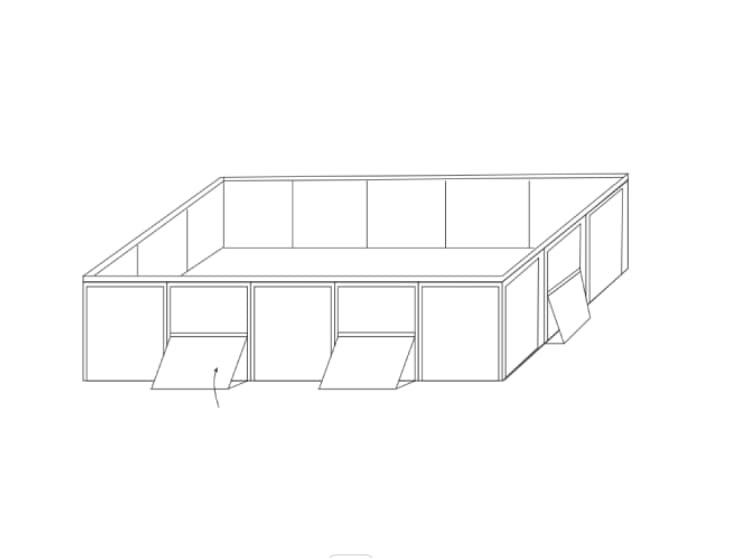
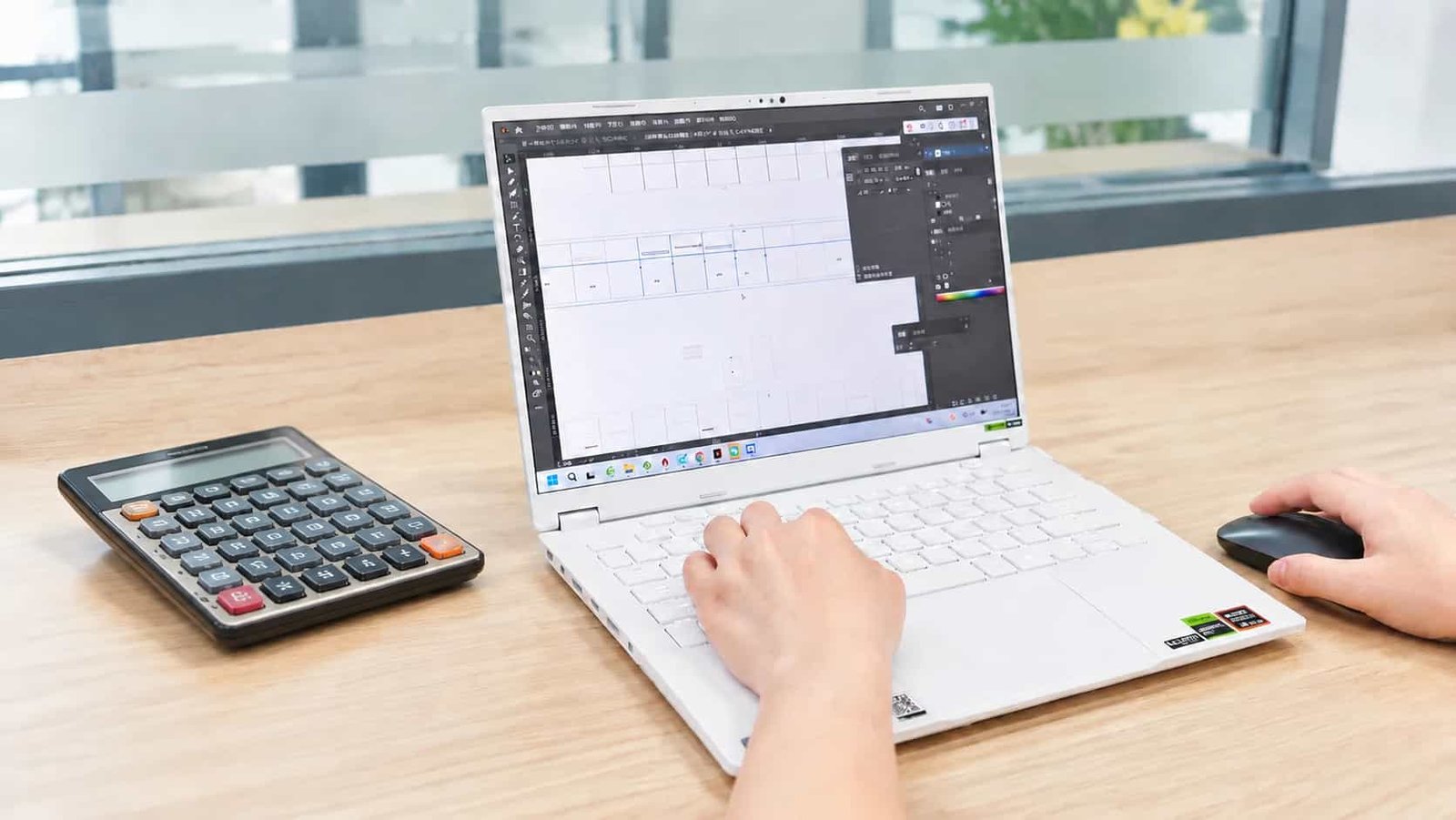
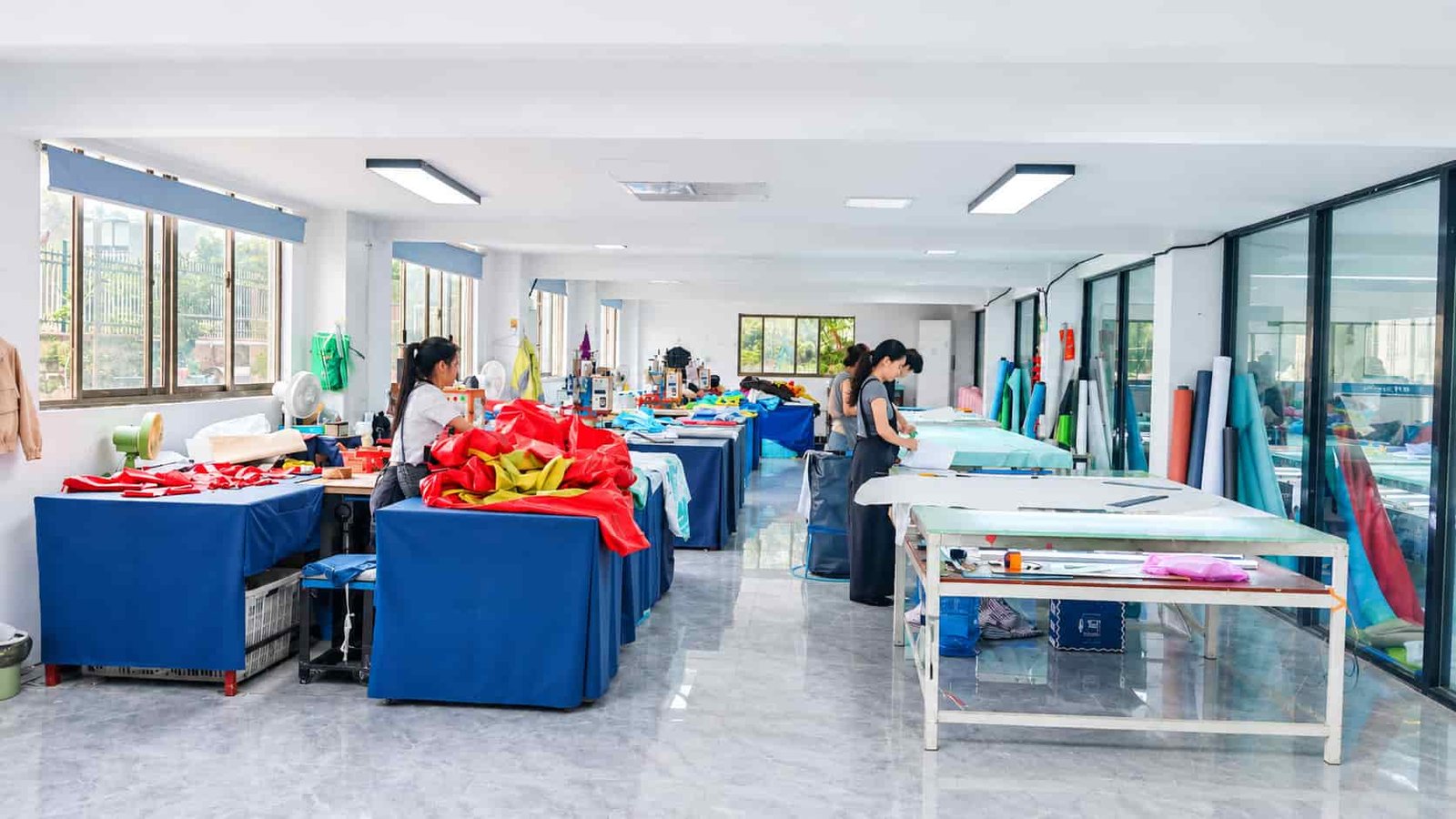

Our Manufacturing & Quality Capabilities:
- Custom Multi-Chamber HF Tooling: Proven capability in precision high-frequency welding tooling for concentric two-chamber swim rings, multi-tier pools, and compartmentalized floats.
- In-House Calendering & Material Formulation: Direct control over PVC film thickness, phthalate-free formulation, cold resistance, and custom color matching.
- Production-Representative Prototyping: Hand-sampled prototypes created with actual production dies and materials, ensuring testing accuracy.
- 100% 24-Hour Air-Retention Testing: Every sealed inflatable unit undergoes 24-hour inflation holding to verify seam integrity and valve seal reliability before packaging.
- Third-Party Laboratory Coordination: Extensive experience supplying test specimens, technical construction drawings, and material declarations to international inspection bodies (e.g., SGS, Intertek, BV, BCTC) for Japanese conformity programs.
Frequently Asked Questions
What is the ST Standard in Japan?
Does every inflatable water product sold in Japan need ST?
Why do Japanese swim rings often have two air chambers?
Is Child PSC the same as the ST standard?
Can COMCO provide an ST certificate directly?
Developing an Inflatable Water Product for Japan?
Share your concept, drawing, or reference specification with our engineering team. We will evaluate construction feasibility, chamber configuration, valve options, and material compliance for the Japanese market.
Discuss Your Japan Project →KC Certification for Inflatable Water Products in Korea
How product classification affects testing, factory inspection and KC requirements for inflatable water products entering South Korea.
For inflatable water products entering Korea, “KC certification” does not always mean the same compliance route. Commercial descriptions such as swim ring, pool float, ride-on, arm ring, baby seat, or beach ball share similar PVC materials and high-frequency welded construction. In the Korean regulatory system, however, physical resemblance alone does not determine the regulatory pathway.
Depending on product design, user age, and intended function, some children’s water-play products fall under Korea’s Children’s Water Play Equipment category — a stringent Safety Certification (안전인증) regime that mandates both product inspection/testing and factory inspection. Other items, such as ordinary water toys, may follow Safety Confirmation (안전확인), while larger water-leisure products can be governed under entirely separate frameworks. Understanding this classification distinction early helps align product development, certification, artwork, and production schedules before mass manufacturing begins.
Same Inflatable Category ≠ Same KC Route
In Korea, common inflatable water items are regulated under distinct statutory pathways. Physical samples, factory audits, and marking rules are tied directly to product classification.
Discuss a Korea Market Project →
KC Is More Than a Laboratory Test
KC (Korea Certification) should not be treated as the name of a single laboratory test or an all-encompassing test report. Korea’s product-safety framework, overseen by the Korean Agency for Technology and Standards (KATS) and recorded under Safety Korea, applies distinct conformity routes to different product categories.
For inflatable water products, the compliance workflow operates in a sequential, structured chain:
Because the certification route determines whether a factory audit is mandatory, how samples must be drawn, and what Korean-language information must be printed on the packaging and product, classification needs to be understood before tooling release, artwork completion, and mass production begin.
When Inflatable Water Products Fall Under Safety Certification
Under Korea’s Special Act on the Safety of Children’s Products (administered via the Korean Law Information Center), certain products intended for water use by children are classified as Children’s Water Play Equipment (어린이용 물놀이기구).
This is classified under the most rigorous statutory category: Safety Certification (안전인증).
Children’s Water Play Equipment (어린이용 물놀이기구) → Product Inspection / Testing + Factory Inspection → KC Safety Certification
Official Korean regulatory records published on Safety Korea confirm that products commonly entering this route include:
- Children’s swim rings and tubes (어린이용 튜브 / 물놀이 튜브)
- Arm rings and water wings (암링 / 팔튜브)
- Baby and kids walker tubes / swim seats (보행기 튜브 / 착용형 튜브)
- Neck floats (목튜브)
This is why a Korean KC project for a children’s inflatable water product can involve substantially more than sending physical samples to an accredited testing laboratory. The manufacturing facility itself is an integral part of the certification process.
Why the Factory Can Be Part of KC Certification
For products regulated under the Safety Certification route, certification is issued not merely for an isolated test specimen, but to the designated manufacturing factory and specific product model combined.
The certification process evaluates:
- Factory Manufacturing Capabilities: Consistency of production lines, high-frequency tooling maintenance, and raw material handling.
- In-House Quality Control & Inspection Systems: Quality checkpoints across incoming PVC film inspection, seam strength testing, in-line welding checks, and air retention protocols.
- Calibration & Testing Apparatus: Maintenance records and calibration traceability of internal inspection equipment.
Furthermore, Safety Certification should not be treated as a one-time test report that lasts indefinitely without oversight. Korean statutory rules provide for periodic post-certification inspection and ongoing certification management. Production consistency, batch tracking, and raw material controls remain directly relevant throughout commercial mass manufacturing.
Product Name Alone Does Not Determine the KC Route
Two products that appear similar on a catalogue page or retail shelf may follow completely different Korean compliance routes based on dimensions, intended user, and product design.
Consider the following regulatory distinctions:
- Intended User & Age Group: Products specifically designed, sized, or marketed for children in water play typically invoke children’s product safety laws. In contrast, larger leisure floats engineered for adult relaxation may be assessed under different water-leisure frameworks.
- Product Construction & Body Support: An unattached recreational tube may be evaluated differently from a float with integrated body harnesses, leg holes, or neck supports.
- Intended Function & Product Claims: A beach ball intended for casual toss-play may differ in classification from equipment specifically engineered to support a child’s body in water.
Because classification depends on the totality of the product’s design, size, and intended use, commercial product titles should never be used as the sole basis for regulatory determinations.
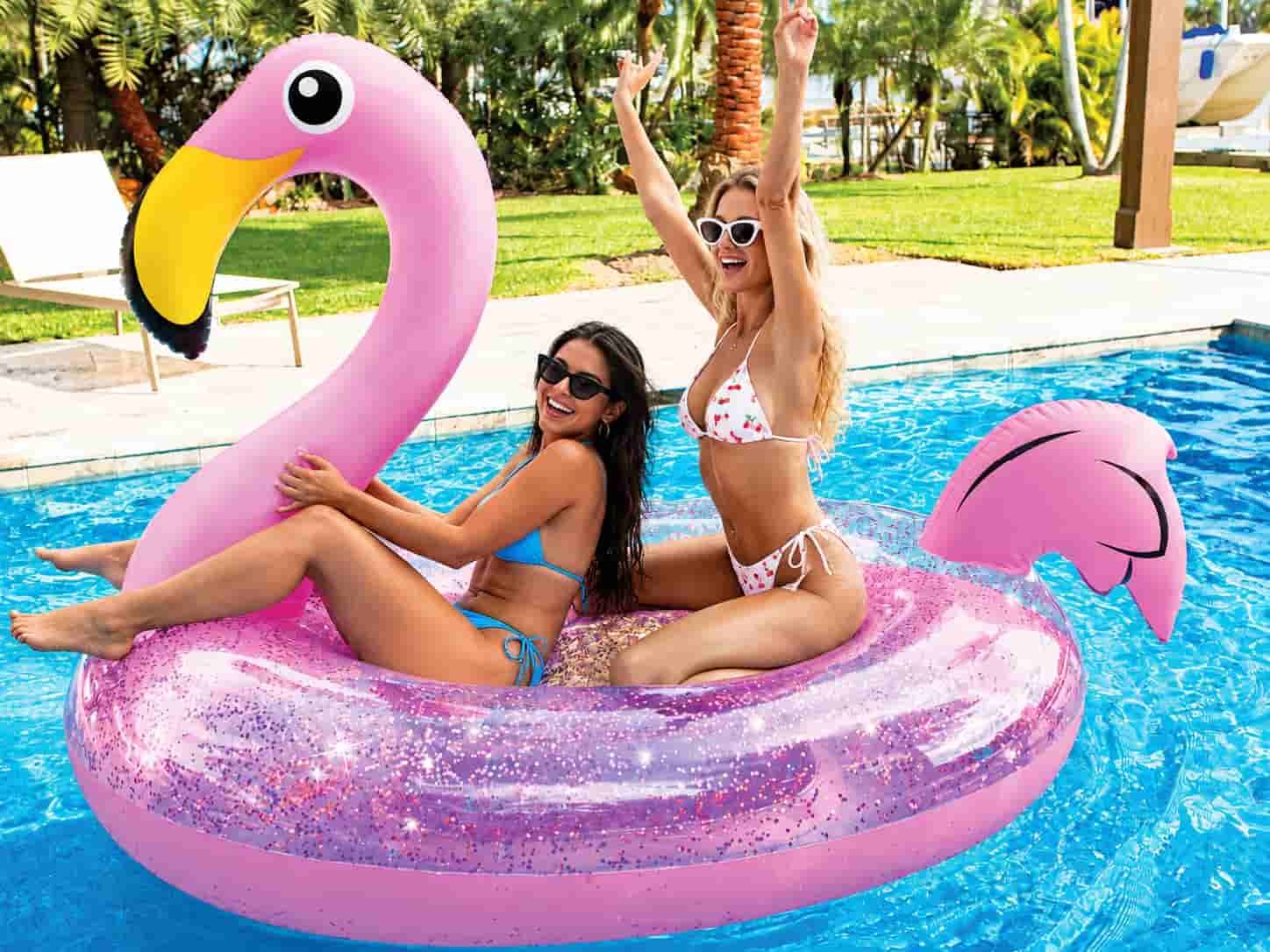
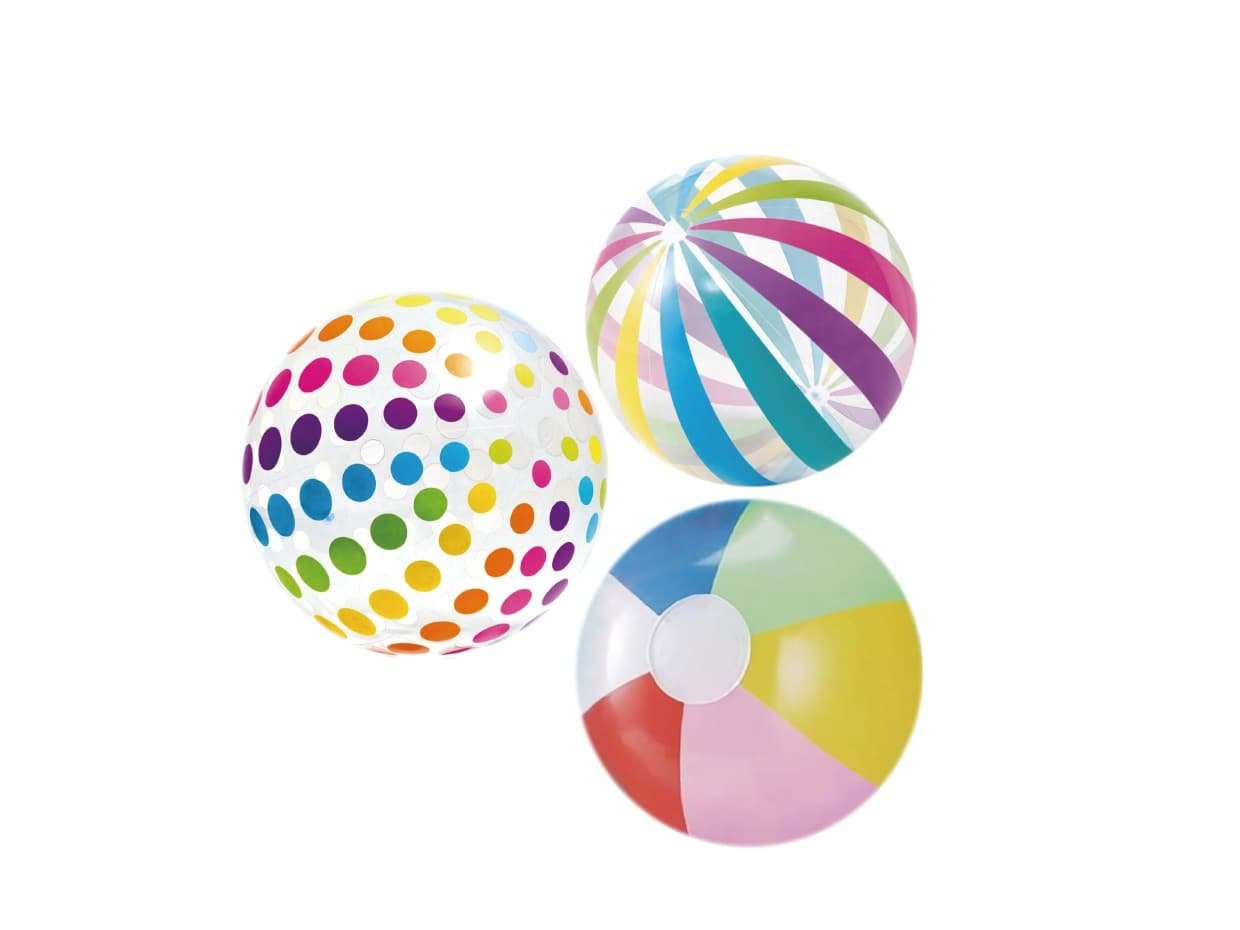
Product Classification Matrix for Korean Inflatable Products
The table below outlines common inflatable product types and their directional regulatory status in Korea. This matrix serves as an engineering and sourcing guide rather than a definitive legal ruling; final classifications must always be confirmed against the actual product specification and current Korean regulations.
| COMCO Product Type | Korea Direction | Typical KC Route / Status | Factory Inspection |
|---|---|---|---|
| Children’s Swim Ring / Tube | Children’s Water Play Equipment | Safety Certification | Yes |
| Water Wings / Arm Rings | Children’s Water Play Equipment | Safety Certification | Yes |
| Baby Walker Float / Swim Seat | Children’s Water Play Equipment | Safety Certification | Yes |
| Neck Float | Children’s Water Play Equipment | Safety Certification | Yes |
| Larger Inflatable Leisure Float | May fall under another regulated water-leisure category | Product-specific classification required | Depends on route |
| Ride-On / Novelty Pool Float | Classification depends on actual dimensions & target user | Do not pre-classify from product title alone | Depends on route |
| Beach Ball / Water Toy | Classification can vary (e.g. Toy vs other category) | Do not state universally as Toy | Depends on classification |
| Inflatable Children’s Pool | Product-specific classification must be confirmed | Do not publish a fixed route without confirmation | Depends on route |
*Note: This matrix provides directional guidance. Sourcing teams and brand managers should confirm product categorization with designated certification agencies based on final CAD drawings, sizing, and intended marketing claims.
Safety Certification and Safety Confirmation Are Not the Same
In discussions around Korean compliance, buyers often hear the terms Safety Certification (안전인증) and Safety Confirmation (안전확인) used interchangeably. Under Korean product safety legislation, they represent two fundamentally different compliance regimes with distinct manufacturer obligations:
| Parameter | Safety Certification (안전인증) | Safety Confirmation (안전확인) |
|---|---|---|
| Example Category Direction | Children’s Water Play Equipment | Ordinary Toy Category |
| Product Evaluation | Required under applicable statutory standards | Required under applicable statutory standards |
| Factory Inspection | Mandatory part of certification route | Not the same factory-audit route |
| KC Marking & Registration | Applicable according to route | Applicable according to route |
| Manufacturing Implications | Factory audits + ongoing QA consistency + product testing | Different compliance workflow and verification mechanism |
Safety Confirmation should never be misunderstood as “unregulated” or a mere informal self-declaration — it carries strict testing and reporting obligations. However, for products under Safety Certification, the manufacturer must be prepared for direct factory inspection as an integral gate before certification can be granted.
Certification Affects More Than the Product Sample
A common misconception in OEM manufacturing is treating KC compliance simply as “adding the KC logo to the box at the end of the project.” In reality, Korean market regulations impose comprehensive labeling, marking, and packaging requirements that must be integrated early into design artwork.
Depending on the applicable category, Korean compliance mandates:
- Permanent Product Marking: Certain warning statements, age advisories, and model numbers may need to be screen-printed directly onto the inflatable product body using ink systems that withstand water and flexing.
- Certification Identification: Specific certification numbers or report identifiers issued by designated Korean bodies.
- Korean-Language Safety Warnings: Standardized Korean warning text, hazard pictograms, and inflation instructions on packaging and user manuals.
- Importer / Manufacturer Details: Exact business registration, importer details, and production dates formatted per statutory guidelines.
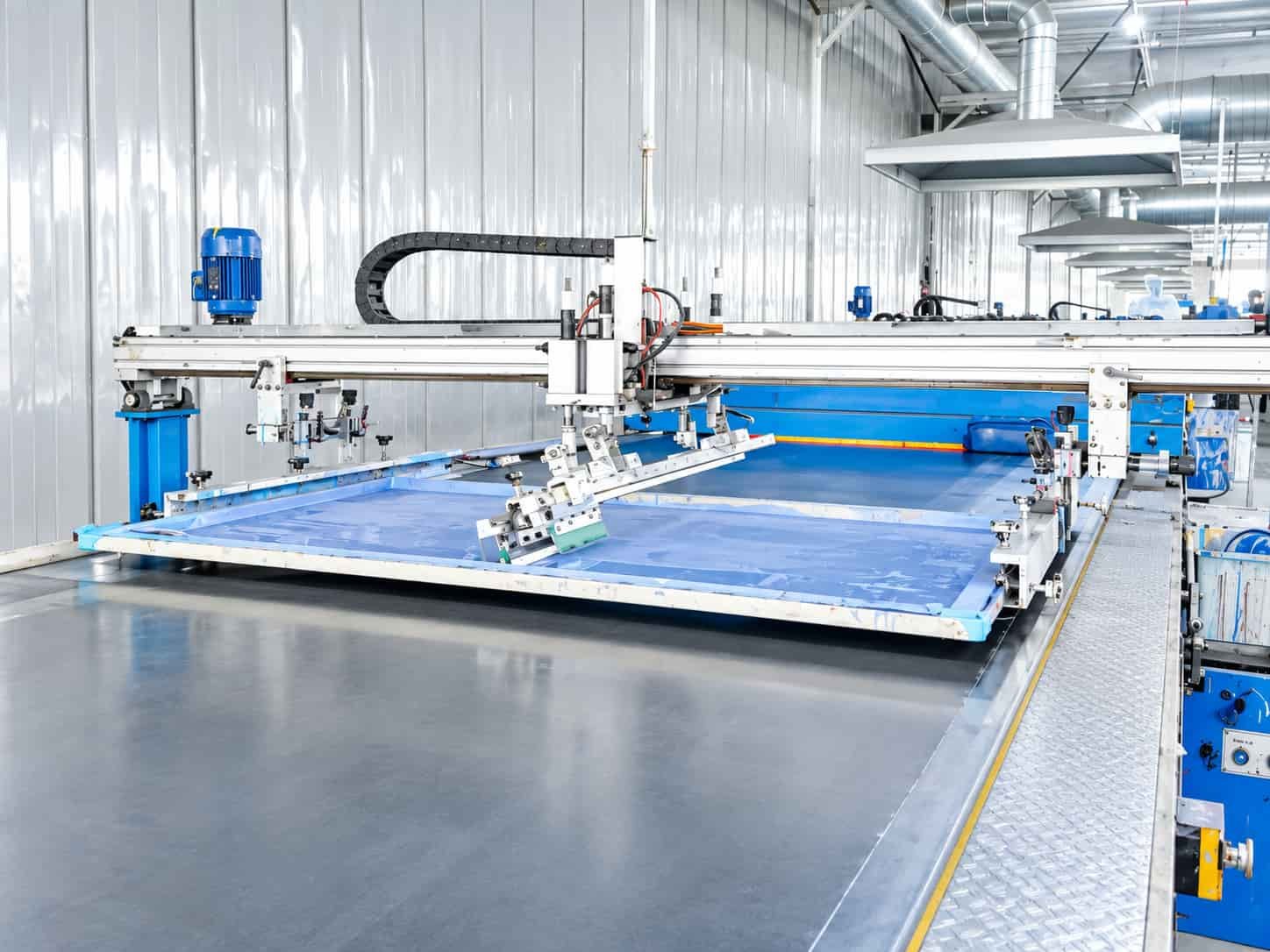
Because physical printing screens and packaging plates cannot be altered after production begins, all KC certification details and artwork files should be finalized and approved in coordination with the buyer and designated testing agency prior to mass printing.
From Product Development to KC-Ready Production
COMCO has practical experience supporting KC projects for the Korean market, including product certification and factory-inspection requirements. Rather than treating compliance as separate buyer homework, our engineering and manufacturing teams work alongside brands and importers to ensure that product samples, factory audits, and production runs move forward in alignment.
Review product dimensions, target user age, chamber design, and intended use against Korean regulatory directions.
Fabricate official test samples using intended production tooling, calibrated welding parameters, and certified raw PVC formulation.
Provide factory documentation, material declarations, and technical files to support the buyer’s application with designated Korean certification bodies.
Support on-site factory inspections for applicable Safety Certification programs, ensuring QA records, equipment calibration, and production SOPs are audit-ready.
Implement confirmed KC certification marks, Korean warning statements, and model information directly into printing plates before production.
Execute mass production adhering to approved specifications, with 100% 24-hour inflation holding observation for every applicable unit.
COMCO Manufacturing Capabilities & Quality Control
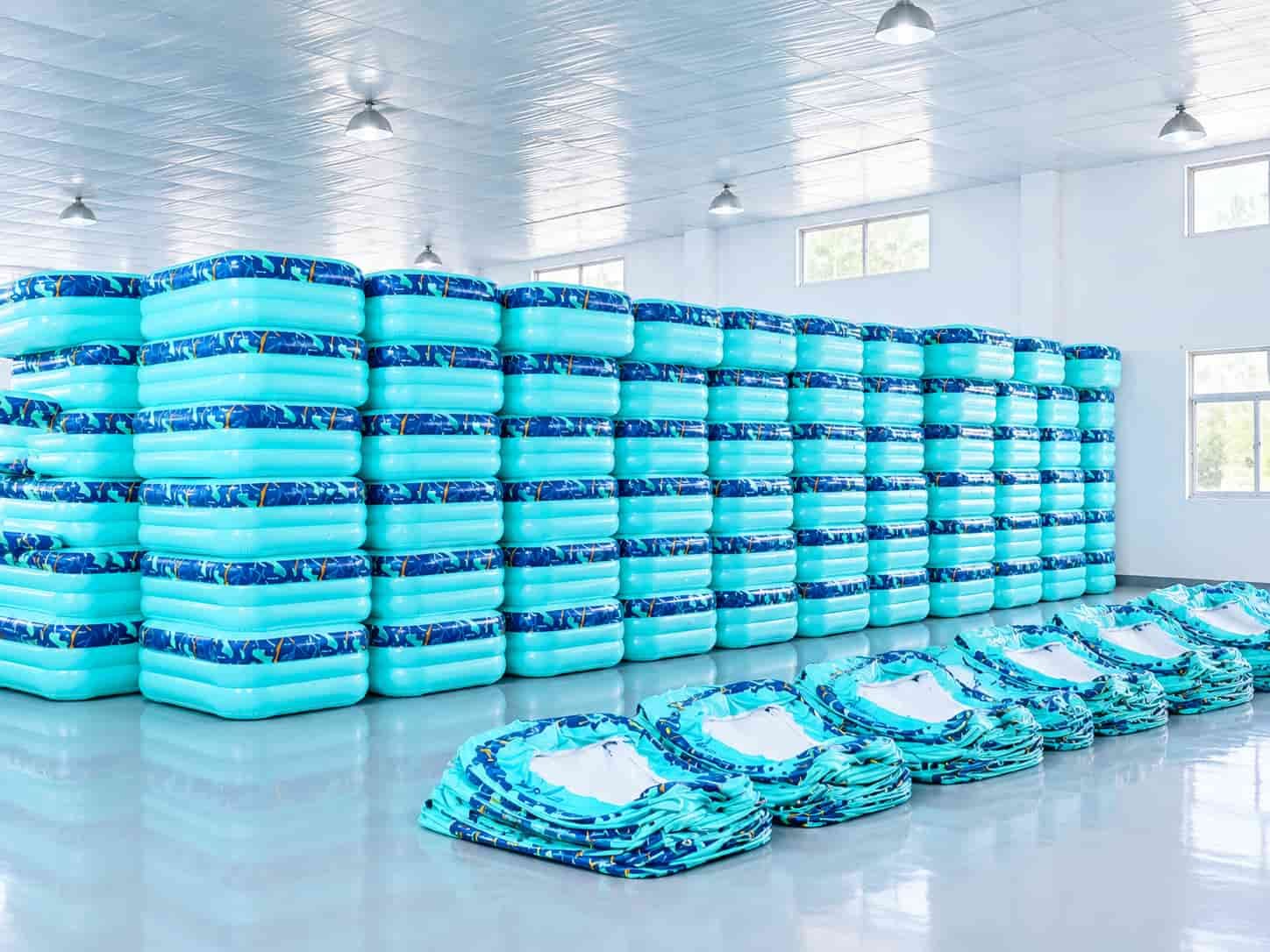
As an OEM/ODM manufacturer specializing in high-frequency welded inflatable and outdoor leisure products, COMCO provides end-to-end production support designed to meet international compliance frameworks:
- In-House PVC Film Calendering: Dedicated extrusion and calendering lines allowing precise control over polymer formulation, plasticizer compliance, cold-crack resistance, and chemical safety.
- High-Frequency Welding Infrastructure: Advanced HF welding lines with precision tooling to achieve robust seam tensile strength and uniform weld thickness.
- Internal Physical & Chemical Labs: In-house testing facilities for seam shear strength, accessory pull tests, rapid material aging, and cycle inflation testing.
- 100% 24-Hour Air-Hold Observation: Full inflation testing for 24 hours on applicable inflatable items to identify slow micro-leaks before packaging.
- Multinational Compliance Experience: Extensive background supporting third-party laboratory testing and factory audits across U.S., European, Australian, and South Korean regulatory schemes.
For more detailed insights into how our quality infrastructure operates across international markets, explore our COMCO Quality Overview and our guide on What Happens Before Mass Production.
Frequently Asked Questions
Does every inflatable water product need the same KC certification?
No. The applicable Korean compliance route depends entirely on product classification. Children’s water-play products, toys, and general water-leisure products are governed under distinct safety categories with different conformity procedures.
Do children’s swim rings require a KC factory inspection?
Yes. Products classified as Children’s Water Play Equipment (어린이용 물놀이기구) fall under Korea’s Safety Certification (안전인증) route, which mandates both product testing/inspection and an on-site factory inspection.
Is KC certification only a product test?
No. For products under Safety Certification, the process requires both product inspection and manufacturing factory inspection. Other categories (such as Safety Confirmation) follow different procedures that do not include the same factory-audit route.
Does one factory KC audit cover every inflatable product?
Not automatically. Certification is linked to the specific product model and manufacturing facility. When introducing new models or different product types, the requirements must be reviewed against the applicable classification.
Can COMCO issue KC certification directly?
No. KC certification can only be issued by authorized Korean certification bodies designated under Korean law. As a manufacturer, COMCO provides product development, sample fabrication, technical documentation, factory audit readiness, and production-line implementation for applicable projects.
Developing an Inflatable Water Product for Korea?
Share your product concept, reference design, or specifications with COMCO. Our engineering and compliance teams can support product development, provide production-representative samples, and coordinate the manufacturing side of the applicable Korean compliance process before mass production begins.
U.S. vs. Canada Compliance for Inflatable Water Toys
Why the same pool float, swim ring or water toy may follow different regulatory requirements in the U.S. and Canada.
A pool float, swim ring or pair of water wings may look identical whether it is sold in the United States or Canada. The compliance route, however, is not necessarily the same.
In the United States, children’s toys are commonly assessed under the U.S. consumer-product safety framework, including ASTM F963 and other applicable federal requirements. In Canada, toys are regulated under Canada’s own framework, including the Canada Consumer Product Safety Act (CCPSA), the Toys Regulations, and other applicable Canadian requirements.
This means a test program prepared for the U.S. market should not automatically be treated as the Canadian compliance route.
Same product. Different regulatory framework.
The Basic Difference
The two markets may share similar product designs and may sometimes use overlapping test methods or customer protocols, but their legal frameworks are different.
A standard appearing in a laboratory report should therefore not automatically be interpreted as the national legal framework for that market.
What Does This Mean for Inflatable Water Toys?
Health Canada identifies a range of products as water toys, including examples such as water wings, party islands, pool noodles, inflatable loungers, hammocks, rings and other inflatable shapes.
For children’s products intended for play, the Canadian toy framework therefore becomes an important part of the compliance assessment.
For COMCO products, this may include products such as:
- Inflatable pool floats
- Novelty ride-ons
- Recreational swim rings
- Water wings / arm bands
- Pool noodles and similar water-play products
Health Canada also emphasizes that water toys are not safety equipment and should not be represented as products that prevent drowning.
Official Reference: Health Canada — Safety Advice for Water Toys
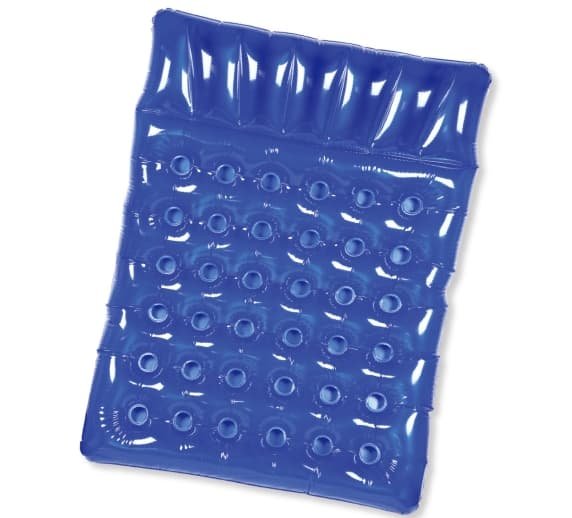
Similar products can enter different compliance frameworks depending on the target market.
Same Product. Different Compliance Route.
| Product Example | United States | Canada |
|---|---|---|
| Pool Float / Ride-On | ASTM F963 and applicable U.S. requirements, depending on classification | Canadian Toys Regulations and other applicable Canadian requirements, depending on classification |
| Recreational Swim Ring | U.S. toy / aquatic-use compliance route as applicable | Canadian water-toy / toy framework as applicable |
| Water Wings / Arm Bands | U.S. toy / aquatic-use compliance route as applicable | Health Canada identifies water wings as water toys; applicable Canadian toy requirements should be assessed |
Do not imply that every product with the same commercial name automatically follows the same test program.
Product classification, intended use, age grading, design and market requirements can affect the final testing route.
Canadian Requirements Are Not Simply U.S. Requirements with a Different Label
Two practical differences are especially relevant to inflatable PVC products.
Canadian Phthalate Requirements
Canada has its own Phthalates Regulations under the CCPSA framework.
For applicable soft-vinyl children’s toys and child-care articles, Canadian phthalate requirements should be assessed according to the Canadian regulations rather than described simply as “CPSIA” or “6P Free.”
Do not present U.S. CPSIA terminology as the Canadian legal basis.
Official Reference: Health Canada — Phthalates
English and French Regulatory Warnings
Where Canada’s Toys Regulations require a written statement or warning, the required information must be provided in both English and French.
This does not mean that every piece of packaging text for every toy is automatically subject to the same bilingual warning requirement.
The applicable labeling requirements depend on the product and the regulatory provisions involved.
Official Reference: Canada — Toys Regulations (SOR/2011-17)
How COMCO Handles U.S. and Canadian Projects
COMCO does not assume that one market’s test route can automatically be copied into another.
A typical project review follows this logic:
COMCO works with third-party laboratories including Intertek (ITS), SGS, TÜV and Bureau Veritas (BV) to support testing required for specific customer and market programs.
The final testing scope depends on the actual product, intended use, age grading, target market and customer requirements.
Key Takeaway
Same product does not mean same regulatory framework.
A pool float or swim ring may be sold in both the United States and Canada, but the compliance basis should be reviewed for each target market.
For U.S. projects, ASTM F963 and applicable U.S. federal requirements may form part of the testing route.
For Canadian projects, the starting point is Canada’s own regulatory framework, including the CCPSA, Toys Regulations and other applicable Canadian requirements. Sourcing teams can also review our European compliance guide and Australian compliance guide for broader international perspective.
Frequently Asked Questions
Are U.S. and Canadian toy testing requirements the same?
No. The two markets have different legal and regulatory frameworks. A testing program used for the U.S. should not automatically be treated as the Canadian compliance route.
Does Canada require ASTM F963 for all inflatable water toys?
ASTM F963 is a central U.S. toy-safety standard. Canadian toys are regulated under Canada’s own legal framework, including the CCPSA and Toys Regulations. A customer or laboratory protocol may reference additional standards or test methods, but that does not make ASTM F963 the Canadian legal framework.
Are water wings and swim rings considered safety equipment in Canada?
Health Canada identifies water wings and rings among water-toy examples and emphasizes that water toys are not safety equipment and do not prevent drowning. The actual compliance route should still be assessed according to the product’s design, intended use, age grading and claims.
Developing an Inflatable Water Product for the U.S. or Canada?
Share your product concept, target market, intended age range and artwork with COMCO. Our team can review the product requirements and coordinate the appropriate development and third-party testing process for the project.
Discuss Your Project →Australian Compliance for Inflatable Water Products: ISO 8124, AS/NZS 1900 & Product Classification
How product classification changes the compliance route for aquatic toys, swimming and flotation aids, and other inflatable water products in Australia.
Inflatable pool floats, swim rings, arm bands, and baby swim seats often share similar PVC materials and inflatable construction methods. In the Australian market, however, physical resemblance does not determine the regulatory pathway. The applicable testing route depends on how the product is designed, configured, and intended to be used.
In Australia, aquatic toys and swimming and flotation aids are governed by separate mandatory safety standards under the Australian Consumer Law, administered by the Australian Competition and Consumer Commission (ACCC). Furthermore, certain familiar water products are explicitly excluded from the aquatic toy mandatory standard altogether.
Why Similar Inflatable Products Can Follow Different Australian Routes
Two inflatable products may both be made from PVC, designed for children, and used around a swimming pool, yet still fall into different regulatory categories.
Material ≠ Classification · Inflatable Construction ≠ Classification · Commercial Product Name ≠ Classification
In practical product development, determining the applicable Australian compliance pathway relies on an integrated evaluation:
Intended Use + Product Design + User / Age + Product Claims → Classification Direction
Establishing classification early in development helps align applicable warning labels, construction details, and third-party laboratory testing routes in production and artwork.
Aquatic Toys: Where ISO 8124 Fits
Australia’s mandatory standard — the Consumer Goods (Aquatic Toys) Safety Standard 2026 — applies to relevant inflatable and non-inflatable products designed or clearly intended for use in shallow water by children under 14 years of age for play.
Official examples recognized under this framework include:
- Inflatable novelty floats and shapes
- Inflatable toy boats intended for shallow water
- Unattached complete or partial recreational rings
For products classified as aquatic toys, specified editions of ISO 8124-1 and AS/NZS ISO 8124.1 form part of the compliance options recognized under the Australian mandatory standard.
Swimming & Flotation Aids: Where AS/NZS 1900 Fits
Swimming and flotation aids are designed to assist children in gaining water confidence and provide buoyancy during water familiarisation or swimming tuition.
Official product examples covered under this framework include:
- Arm bands or arm cuffs
- Attached rings
- Swim seats
- Swimming aid vests
These products are governed by the Consumer Goods (Swimming and Flotation Aids) Safety Standard 2017, which sets mandatory design, construction, performance, testing, and marking requirements based on:
AS/NZS 1900:2014 — Flotation aids for water familiarisation and swimming tuition
The intended function and product configuration are therefore important in determining whether the product is assessed as a swimming and flotation aid, an aquatic toy, or under another applicable product route.
Feature Comparison: Why Two “Swim Rings” Follow Different Routes
Same commercial name. Different intended use. Different compliance route.
A commercial description such as “swim ring” is not enough to determine the Australian testing route. The design configuration and primary intended function guide the assessment.
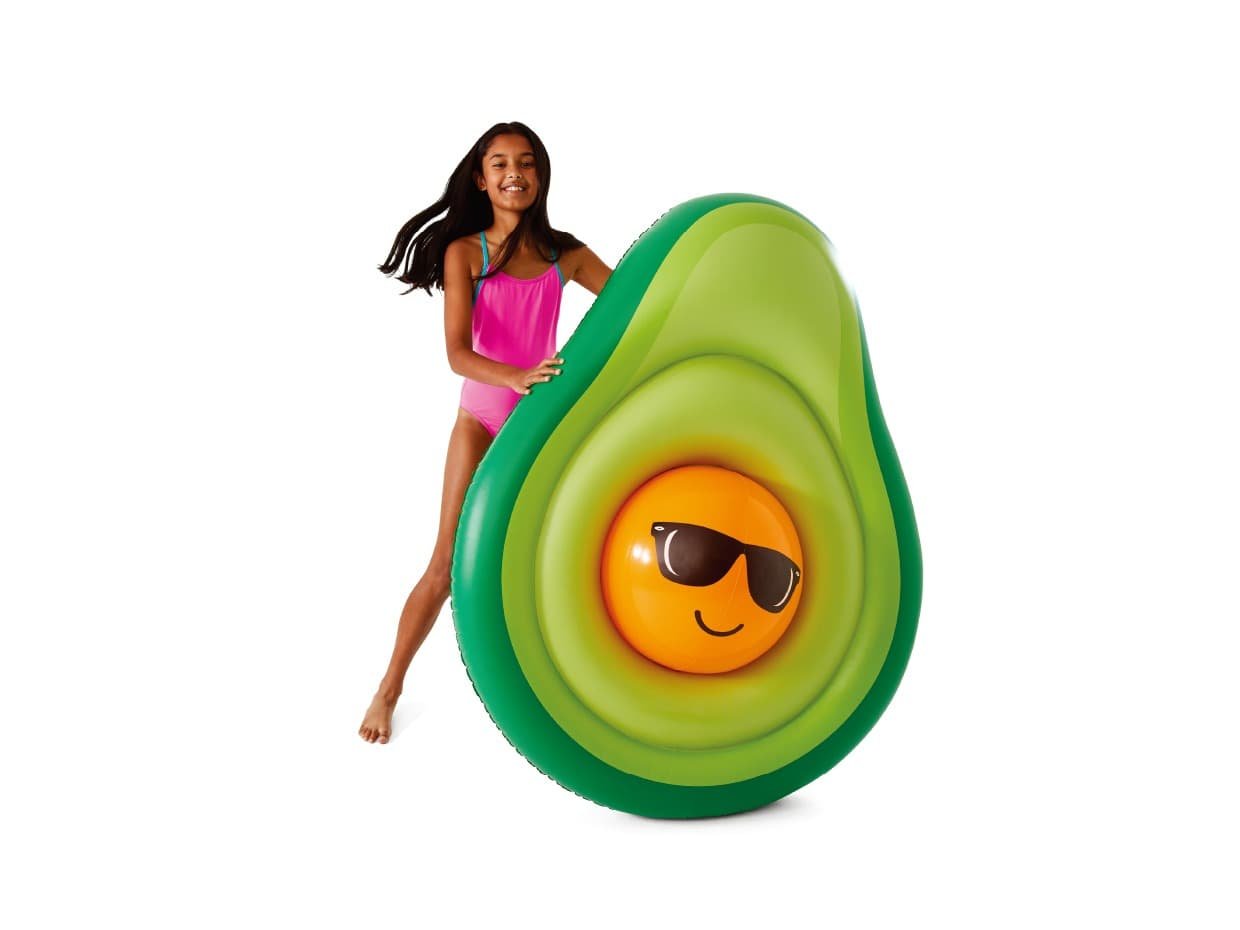
Unattached Recreational Ring
Primary Function: Shallow-water play and recreation
Configuration: Unattached ring design
Attached Swimming-Aid Ring
Primary Function: Water familiarisation, swimming tuition, or flotation assistance
Configuration: Attached / body-worn configuration
Where Do Inflatable Baby Swim Seats Fit?
Inflatable Baby Swim Seat
An inflatable baby swim seat may share similar materials and construction with novelty aquatic toys. However, when configured with body support or leg-holes to provide water familiarisation or swimming assistance, it can fall within Australia’s swimming and flotation aid framework.
Note: Similar swimming-learning products in Europe may be assessed under the EN 13138 framework.
A commercial product name alone does not automatically assign a product to a route without reviewing its specific design, intended function, and claims.
“Used in Water” Does Not Automatically Mean “Aquatic Toy”
Australia’s Aquatic Toys Mandatory Standard explicitly excludes several water-related products:
- Beach balls
- Inflatable air beds
- Bodyboards
- Kickboards
- Surfboards
- Inflatable boats for deep water
Used in Water ≠ Automatically an Aquatic Toy
Beach balls are expressly excluded from Australia’s Aquatic Toys Mandatory Standard. This does not mean a beach ball has no applicable safety requirements; it means the aquatic toy standard should not be applied simply because the item is inflatable and used around water.
- Toys for Children Up to and Including 36 Months: If a beach ball is a toy intended for children up to and including 36 months of age, Australia’s separate mandatory standard for toys for children up to and including 36 months of age may apply (specifying routes including AS/NZS ISO 8124.1, ISO 8124-1, EN 71-1, or ASTM F963-17).
- Other Age Groups & Uses: When intended for older children or promotional use, other applicable product requirements and project-specific protocols guide the testing scope.
Where Do Portable Inflatable Pools Fit?
Portable swimming pools fall under a separate mandatory standard:
Consumer Goods (Portable Swimming Pools) Safety Standard 2013
This standard covers portable pools for personal, domestic, or household use, including inflatable pools of any depth, soft-sided pools of any depth, and certain rigid-sided pools up to 300 mm deep. Requirements focus primarily on safety labelling and drowning hazard warnings on the pool and its packaging.
The 300 mm threshold relates to warning and fencing information; it is not a dividing line between ISO 8124 and AS/NZS 1900.
How the Australian Testing Route Is Determined
The testing pathway is established by reviewing product attributes in sequence rather than relying on product names alone:
Intended Use → Product Design → User / Age → Classification → Australian Requirement → Testing Route
Where applicable, customer or retailer quality protocols form an additional project layer.
Establishing this route early in development helps align technical artwork, mandatory warning texts, and pre-production samples with the appropriate testing protocol.
Compact Classification Reference
| Product Example | Initial Classification Direction | Main Compliance Direction |
|---|---|---|
| Inflatable Novelty Pool Float / Ride-On | Aquatic Toy | Aquatic Toys Mandatory Standard → ISO 8124-1 / AS/NZS ISO 8124.1 route |
| Unattached Recreational Swim Ring | Aquatic Toy | Aquatic Toys Mandatory Standard → ISO 8124-1 / AS/NZS ISO 8124.1 route |
| Arm Bands / Cuffs | Swimming & Flotation Aid | Swimming and Flotation Aids Mandatory Standard → AS/NZS 1900-based route |
| Attached Swimming-Aid Ring | Swimming & Flotation Aid | Swimming and Flotation Aids Mandatory Standard → AS/NZS 1900-based route |
| Swim Seat | Swimming & Flotation Aid Assessment | AS/NZS 1900-based route where classified accordingly |
| Swimming Aid Vest | Swimming & Flotation Aid | Swimming and Flotation Aids Mandatory Standard → AS/NZS 1900-based route |
| Beach Ball | Excluded from Aquatic Toys Mandatory Standard | Assess other applicable toy/product standards (e.g. toys ≤36 months if applicable) and project protocol |
| Inflatable Air Bed | Excluded from Aquatic Toys Mandatory Standard | Separate product-specific / project assessment |
| Portable Inflatable Pool | Portable Pool | Portable Swimming Pools Mandatory Standard 2013; separate route |
Footnote: Product examples provide a general classification framework and are not a substitute for formal product-specific classification or current regulatory review.
COMCO: From Product Classification to Production
COMCO develops and manufactures inflatable water products for international brand and retail programs, including pool floats, swim rings, swimming aids, inflatable pools, and water-play products.
During product development, intended use, product configuration, target market, and applicable project requirements directly affect artwork, safety warnings, construction details, and third-party laboratory testing:
Frequently Asked Questions
Does Australia use ISO 8124 for inflatable water toys?
ISO 8124-1 / AS/NZS ISO 8124.1 is part of the compliance route for products classified as aquatic toys under Australia’s current mandatory standard. It should not be applied automatically to every inflatable product used in water.
What is the difference between an aquatic toy and a swimming/flotation aid?
Aquatic toys are intended for children’s play in shallow water. Swimming and flotation aids are designed for purposes such as water familiarisation, swimming tuition, and buoyancy assistance. They are covered by separate mandatory standards.
Does every swim ring follow ISO 8124 in Australia?
No. Unattached recreational rings are recognized within the aquatic toy framework, while attached rings can fall within the swimming and flotation aid framework. Intended use and product design determine the route.
Is a beach ball an aquatic toy under Australia’s Aquatic Toys Mandatory Standard?
No. Beach balls are expressly excluded. Other applicable requirements, such as Australia’s standard for toys for children up to and including 36 months, may apply depending on the product, age grading, and project.
Do inflatable pools use ISO 8124 or AS/NZS 1900?
Portable inflatable pools have a separate Australian mandatory standard. The route should not be selected solely from the fact that the pool is inflatable.
Developing an Inflatable Water Product for Australia?
Share the product concept, reference design, intended use, and target market. COMCO can review the product development requirements and coordinate the applicable sample and testing process with your team.
Discuss Your Australia Program →EN 71-8, EN 16927 or EN 16582: Which Standard Applies to a Pool?
An inflatable paddling pool, a compact mini-pool and a 120 cm-high folding pool can all be commercially sold as “pools.” That does not mean they follow the same European compliance and testing route.
For European projects, the starting point is not simply whether the pool is inflatable, folding or frame-supported. The first step is understanding how the finished product is classified under European safety frameworks.
Similar Product Category. Different European Classification.
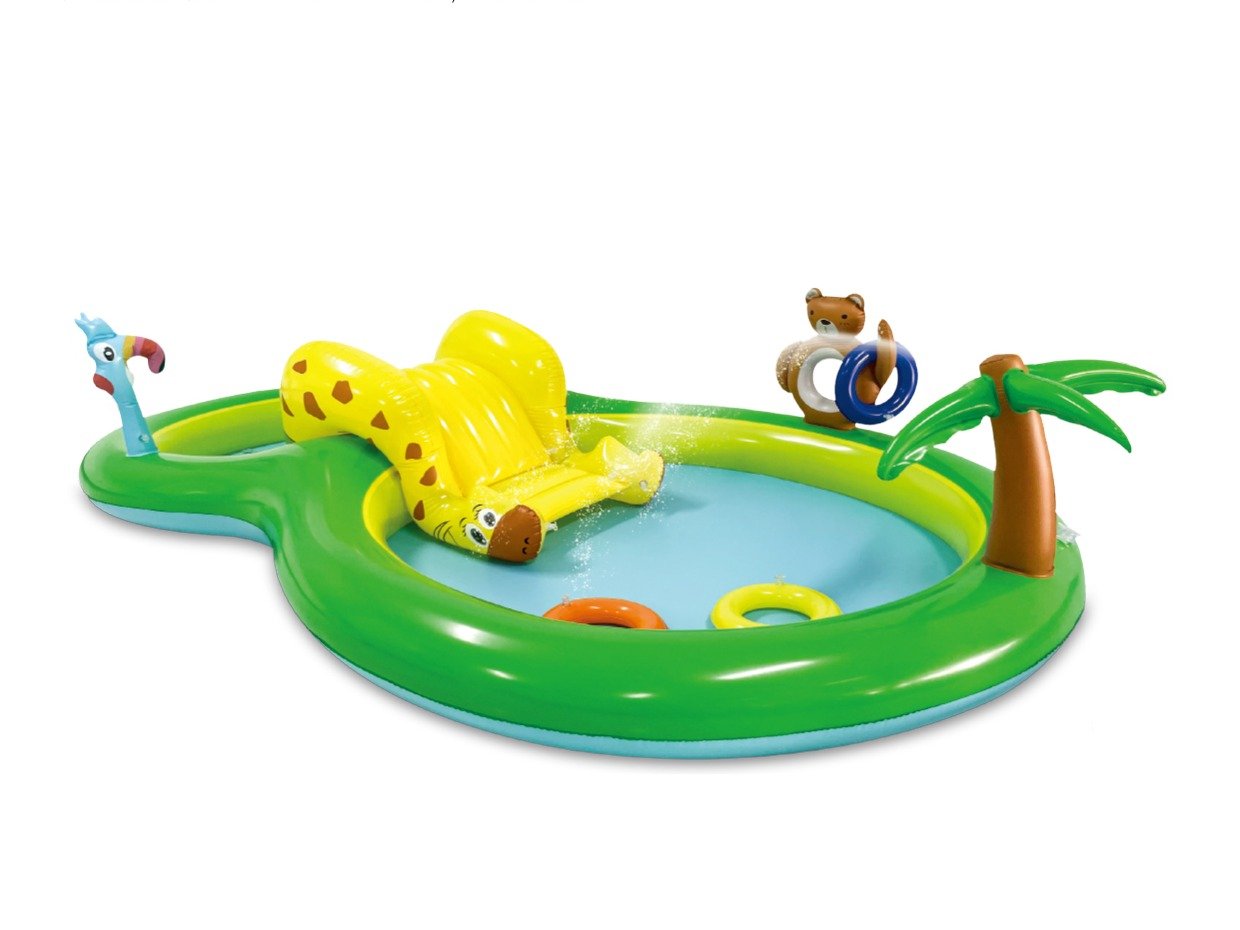
Designed for children’s water play with shallow water depth (≤400 mm).
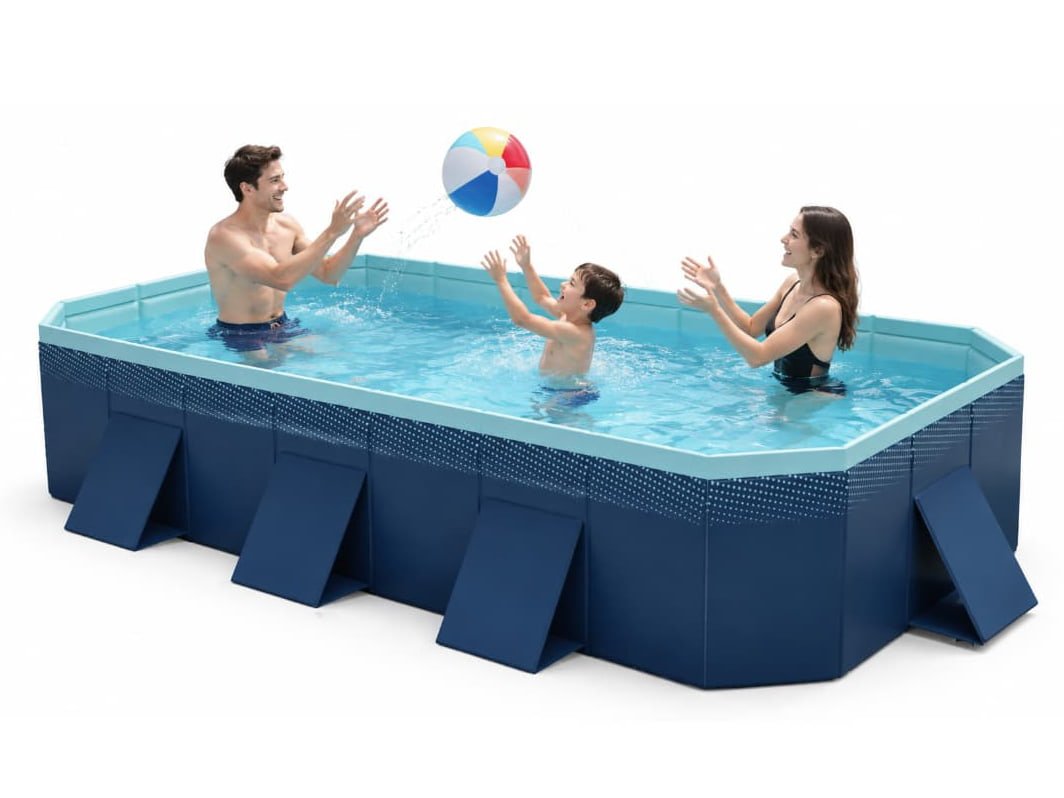
Non-permanent basin meeting combined scope: depth >400 mm, wall <850 mm, volume <6 m³, no filtration needed.
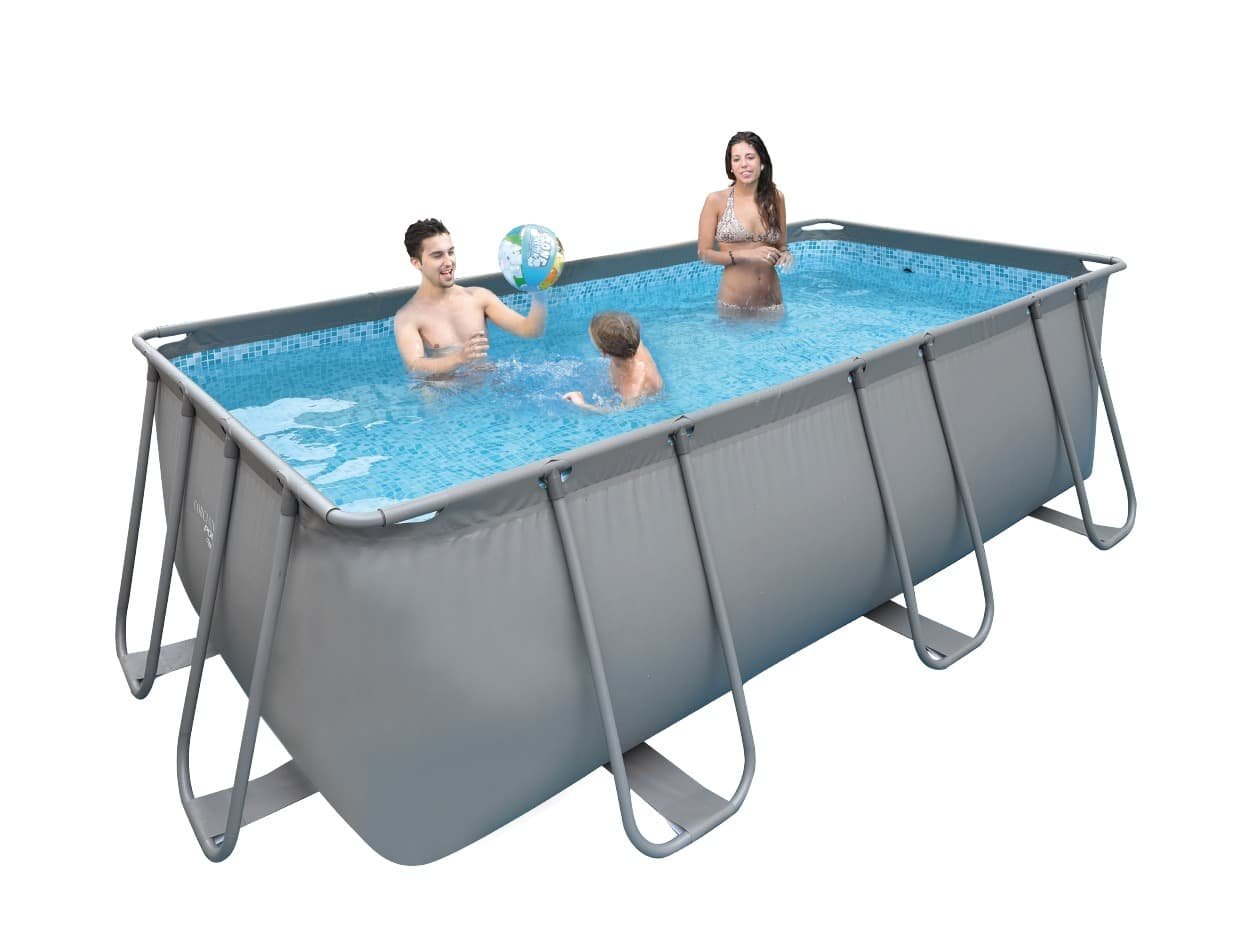
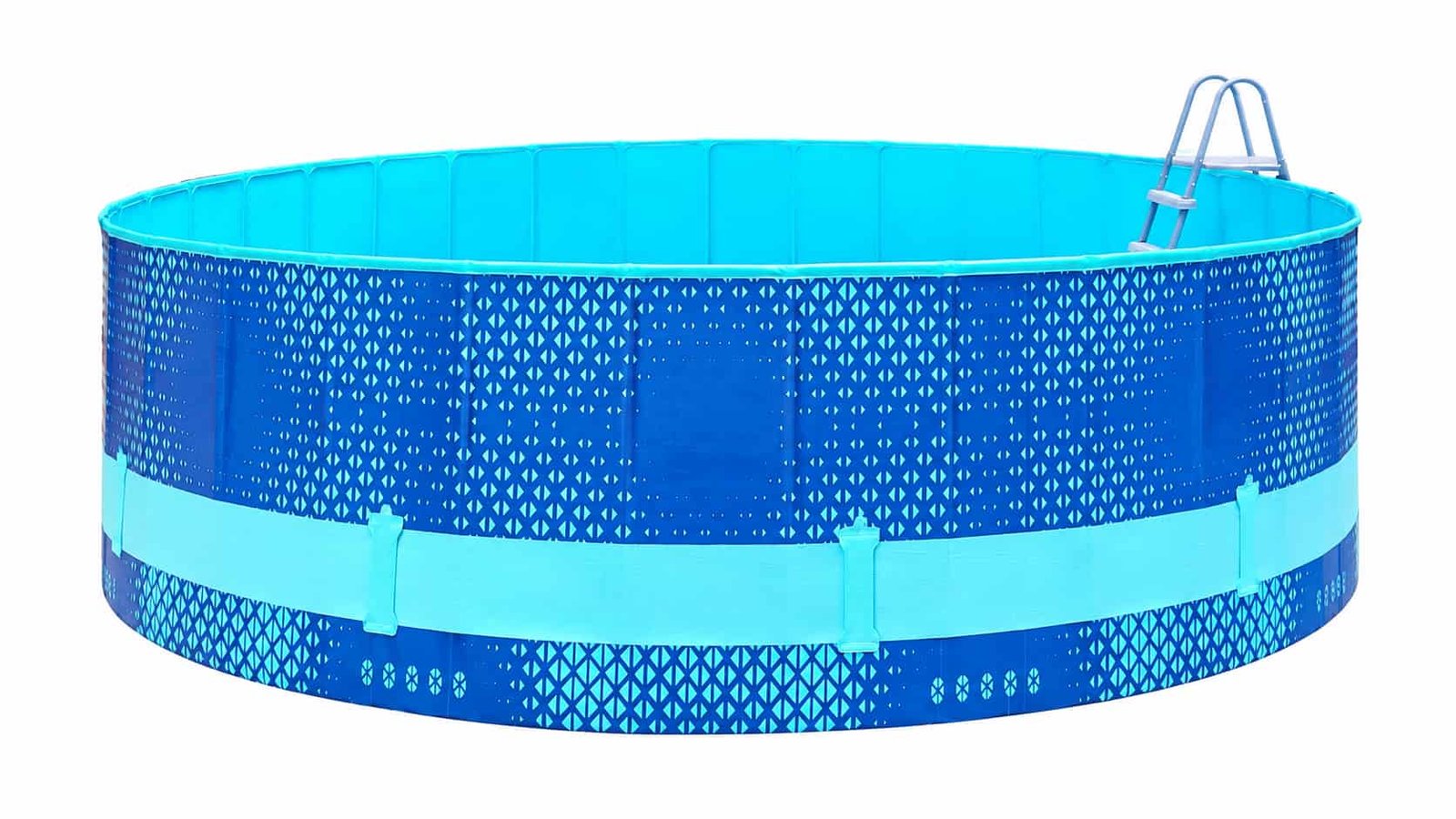
Domestic swimming pool structures with water depth >400 mm evaluated for structural resistance and access safety.
Different product directions lead to distinct safety scopes, structural evaluations and testing regimes.
1. Start With Pool Classification, Not Construction
In factory discussions and sourcing catalogs, commercial terms often describe structural assembly:
- Inflatable Pool: Air-chamber supported structure (inflatable rings or top-ring self-rising design).
- Folding / Non-Inflatable Pool: Semi-rigid panels or foldable side supports requiring zero inflation.
- Integrated-Frame Pool: Pre-connected folding framework combining quick deployment with rigid support.
- Conventional Frame Pool: Modular steel tubes and PVC liner assembled piece by piece.
While these terms are vital for packaging, logistics and manufacturing, construction alone does not determine the European testing route.
Core Principle: Construction is an engineering characteristic—not the regulatory classification itself.
An inflatable pool can be designed as a shallow toy paddling pool, or engineered as an adult-depth family basin. Similarly, a folding pool can be configured for compact splash play or scaled up to a 120 cm deep domestic swimming pool. Classification must begin with intended use and complete product configuration.
2. Paddling & Toy Pools: EN 71-8 Direction
Under European regulations, a paddling pool is not simply “any small inflatable basin.” It represents a specific toy classification regulated under the Toy Safety Directive 2009/48/EC.
In technical terms, the applicable European standard for activity toys for domestic use is EN 71-8. Under the standard scope (including the EN 71-8:2026 definition), a paddling pool is defined as a toy pool intended for water play with a maximum water depth of 400 mm.
Water Depth ≠ Pool Height
A frequent pitfall in pool compliance is confusing the physical wall height with actual water depth.
- External Wall / Structural Height: The total physical dimension from the ground to the top rim.
- Overflow / Intended Fill Level: The designed maximum water retention level before overflow occurs.
- Deepest Internal Point: The lowest contour of the internal pool basin floor.
- Actual Water Depth: Measured strictly between the overflow level and the deepest point within the pool.
A pool with a 450 mm wall height may have an overflow water depth of 380 mm. That measurement is critical during initial classification.
However, dimensional thresholds should not be read in isolation: a water depth at or below 400 mm does not automatically turn every basin into a toy. Intended play function, child design features and marketing presentation must align with toy classification.
3. Mini-Pools: EN 16927 Direction
When a pool moves beyond toy play territory, European standardization provides a dedicated framework for compact above-ground basins: EN 16927 (Mini-pools — Specific requirements including safety and test methods for mini-pools).
Under EN 16927, a mini-pool is an artificial non-permanently installed basin characterized by four interrelated scope criteria:
Scope Principle: These conditions must be evaluated together. A pool cannot be classified under EN 16927 based on water depth alone. EN 16927 specifically excludes paddling pools covered by EN 71-8 and domestic swimming pools covered by the EN 16582 series.
4. Domestic Above-Ground Swimming Pools: EN 16582 Direction
For larger domestic swimming pools installed in private gardens, the governing European framework is the EN 16582 series:
- EN 16582-1: General requirements, including safety and test methods for domestic swimming pools.
- EN 16582-3: Specific requirements, including safety and test methods for above-ground domestic pools.
Crucially, EN 16582-3 applies to domestic above-ground pool structures with a water depth exceeding 400 mm. It evaluates physical stability, wall structure resistance, watertightness, slip resistance, and means of access (such as safety ladders).
Notice the regulatory reality: both EN 16927 and EN 16582-3 operate in water depths greater than 400 mm. Therefore, a water depth of 500 mm or 600 mm does not automatically assign a product to EN 16927 or EN 16582. The overall product design, wall height, water volume, and intended installation must be evaluated against the complete standard scope.
5. What Does 400 mm Actually Mean?
400 mm Is a Water-Depth Threshold—Not a Complete Classification Rule
- It measures water depth: Measured strictly from the internal deepest point to the overflow level, never external wall height.
- It separates toy paddling pools from deeper pools: It sets the upper boundary for EN 71-8 toy paddling pools.
- Above 400 mm, multiple routes exist: Both EN 16927 (mini-pools) and EN 16582 (domestic swimming pools) operate above 400 mm.
- Assessment cannot stop at 400 mm: Sourcing teams and factories must continue evaluating volume, wall structure and filtration configuration.
6. Manufacturing Classification Decision Framework
During OEM/ODM product engineering, COMCO uses a 3-step decision logic to identify the applicable European compliance pathway before tooling and production:
If YES: Assess under EN 71-8 (Toy Safety Directive 2009/48/EC).
If NO / deeper pool: Proceed to Step 2.
Evaluate together: water depth >400 mm, wall height <850 mm, water volume <6 m³, and no filtration/treatment required.
If YES: Assess under EN 16927.
If NO: Proceed to Step 3.
If YES: Assess under EN 16582-1 + EN 16582-3 (covering structural strength, deformation, and access safety).
This is a simplified buyer-oriented framework. Final classification should always be confirmed against the applicable standard scope and the specific product configuration before formal laboratory testing.
7. Real Testing Example: COMCO 366 × 120 cm Folding Pool
To see how this works in practice, consider a real testing project from COMCO’s manufacturing operations.
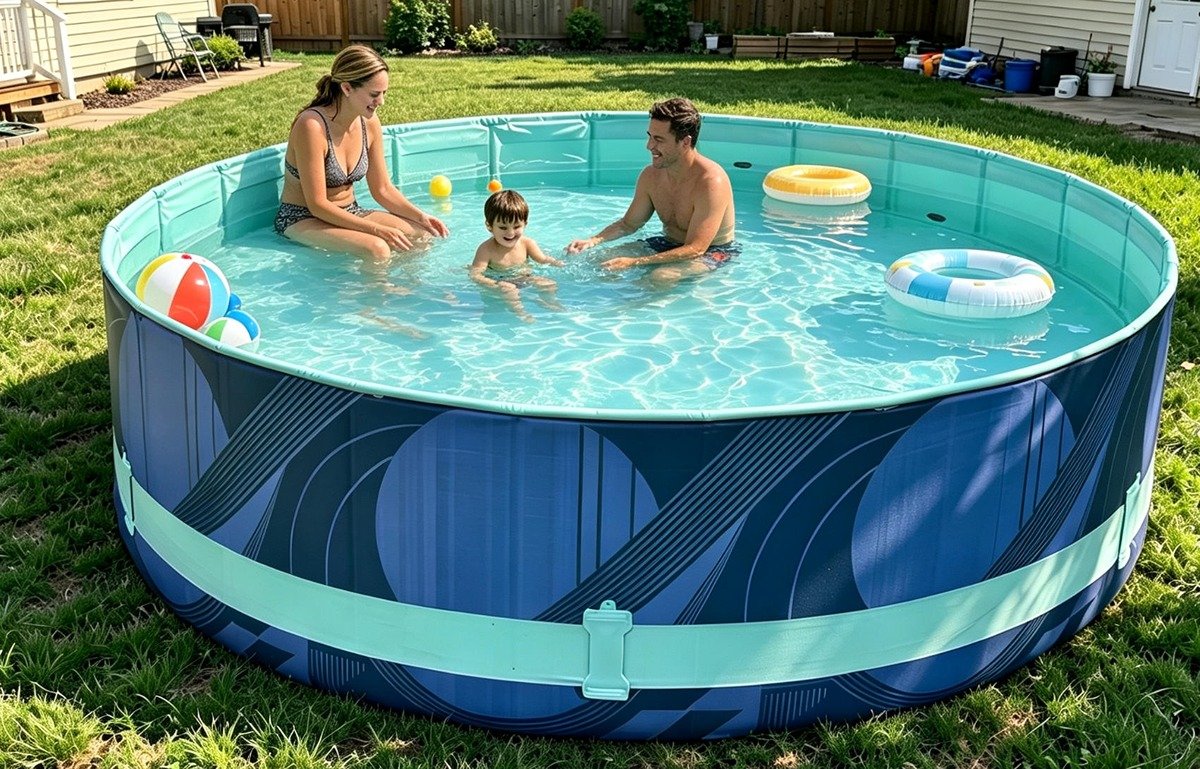
COMCO 366 × 120 cm Folding Pool (Tested Configuration)
TÜV SÜD Test Evidence
- Product: Folding Pool (Main model: 366120LFP)
- Tested Configuration: 366 × 120 cm
- Testing Body: TÜV SÜD Shanghai
- Standards Evaluated: EN 16582-1:2015+A1:2021 (excluding Cl. 6) and EN 16582-3:2015
- Scope Classification: Treated as an above-ground pool with frame-supporting walls
- Outcome: Relevant European EN 16582 items passed for the submitted sample
Full test report details available on request for qualified buyer programs.
A COMCO 366 × 120 cm Folding Pool configuration was tested by TÜV SÜD against EN 16582-1 and EN 16582-3 requirements. Within the EN 16582-3 test route, the tested configuration was assessed as an above-ground pool with frame-supporting walls.
This illustrates an essential classification principle: “Folding Pool” describes the product concept and engineering construction. The applicable European test route is determined by the complete pool configuration and standard scope.
What a Larger Above-Ground Pool Test Route Evaluates
When a product enters the EN 16582 framework, physical testing shifts toward structural integrity and long-term water retention:
- Structural Deformation & Resistance: Evaluating horizontal and vertical deflection under full water loads to ensure the frame cannot buckle.
- Watertightness: Verifying basin seam durability and burst resistance under continuous hydrostatic pressure.
- Applicable Membrane & Weld Performance: Testing wall-to-wall weld tensile and seam tear strength.
- User Safety & Access Requirements: Assessing entrapment hazards, sharp edges and access compatibility.
8. Construction vs Classification
To avoid confusion across merchandising and compliance teams, keep commercial descriptions distinct from standard routes:
| Commercial / Construction Description | Does It Automatically Determine the European Standard? | Regulatory Reality |
|---|---|---|
| Inflatable Pool | No | Can be an EN 71-8 paddling toy, an EN 16927 mini-pool, or an EN 16582 self-stabilizing pool depending on dimensions and design. |
| Folding / Non-Inflatable Pool | No | Ranges from shallow toddler splash pools to deep structural pools (such as the 120 cm tested configuration following EN 16582). |
| Integrated-Frame Pool | No | “Integrated-Frame” is COMCO’s manufacturing terminology; in testing, it is evaluated as an above-ground pool with frame-supporting walls. |
| Conventional Frame Pool | No | Typically domestic swimming pools (EN 16582), but specific dimensions, volume and intended use still dictate the formal test protocol. |
Key Takeaway: The same construction family can contain products with different intended uses, dimensions, volumes and water depths. Classification must therefore be based on the complete product—not the product marketing name alone.
9. How the Testing Route Is Determined
European test laboratories classify pool products based on technical parameters rather than marketing titles. When engineering a pool structure, these seven factors establish which standard framework applies:
- Intended Use: Toy/paddling water play, mini-pool relaxation, or domestic swimming-pool use?
- Maximum Intended Water Depth: Measured internal water depth at overflow level (not external pool wall height).
- Pool Wall / Structural Height: Overall external vertical dimensions.
- Effective Water Volume: Calculated capacity in cubic meters (m³) at maximum fill line.
- Filtration / Water-Treatment Configuration: Are pump inlets, filter connections or chemical dispensers included or planned?
- Installation / Support Configuration: Inflatable ring, folding panel support, integrated frame or modular steel frame?
- Destination Market & Buyer Protocol: Specific European national retailer requirements or laboratory protocols.
10. Standard Editions Note
Technical standards and EU regulatory references evolve on distinct schedules. For example, standards committees periodically publish updated editions (such as EN 71-8:2026). However, a newly published standard edition does not automatically mean every national market surveillance authority or retailer test protocol has transitioned on the exact same date.
Transition Advisory: Standard editions and regulatory references can change on different timelines. The applicable edition is determined by the destination market, retailer protocol requirements, and the customer’s nominated testing laboratory before formal test programs are scheduled.
Frequently Asked Questions
Does every inflatable pool follow EN 71-8?
No. Construction alone does not determine classification. An inflatable pool can require assessment under EN 71-8, EN 16927 or EN 16582 depending on its intended use, user group, water depth and complete configuration.
Does a water depth over 400 mm automatically mean EN 16927?
No. EN 16927 defines mini-pools using multiple scope characteristics (depth, wall height, volume, and filtration) that must be assessed together. Domestic above-ground swimming pools can instead fall within the EN 16582 framework.
Is 400 mm measured from the outside height of the pool?
No. The relevant criterion is internal water depth measured from the deepest point to the overflow level, not the external pool wall or product height.
Can a folding or integrated-frame pool follow EN 16582?
Potentially, yes. Construction terminology does not prevent a product from being assessed as a domestic above-ground swimming pool. COMCO has a verified 366 × 120 cm Folding Pool configuration that successfully completed EN 16582-1 and EN 16582-3 testing by TÜV SÜD.
When should the European test route be considered?
During initial product development and prototype sampling—well before mass production, artwork finalization, and packaging warnings are locked down.
Developing a Pool for the European Market?
Share your target pool size, intended water depth, construction, effective volume, filtration configuration and destination market. COMCO can review the manufacturing requirements during product development and coordinate sample preparation with your nominated testing laboratory.
Discuss Your Pool Program →Explore related guides: European Compliance Guide | EN 71 vs EN ISO 25649 Classification
EN 71 or EN ISO 25649: How Are Inflatable Water Products Classified?
A children’s swim ring, a large animal-shaped ride-on and an adult floating lounger can all be made from flexible PVC film using similar inflation valves and high-frequency welding. Yet that does not mean they automatically follow the same European compliance and testing route.
For inflatable water products entering the European market, the first question is not: “Which standard number should we test to?” It is: “How is this product intended to be used, and who is intended to use it?”
Aquatic toys and floating leisure articles are distinct product classifications governed by different European regulatory frameworks. Intended use, target user, physical configuration and dimensions all contribute to determining the appropriate testing route.
Same Manufacturing, Different Classification
Child play in supervised water → Aquatic Toy Direction (EN 71)
Play styling with large dimensions → Closer Classification Required
Recreational relaxing on water → Floating Leisure Direction (EN ISO 25649)
Same PVC film. Similar welding lines. Different intended use. Potentially different compliance routes.
Aquatic Toy or Floating Leisure Article?
In commercial B2B product development, water inflatables typically align with one of two primary product directions:
1. Aquatic Toy Direction
A product designed or intended primarily as a plaything for children in and around water falls within the European toy-safety framework under the Toy Safety Directive 2009/48/EC. The technical testing scope generally sits within the EN 71 series:
- EN 71-1 — Mechanical and physical properties
- EN 71-2 — Flammability
- EN 71-3 — Migration of certain elements
Typical examples may include certain children’s swim rings, small water-play ride-ons and shallow-water pool games.
2. Floating Leisure Article Direction
Products intended primarily for recreational floating, lounging, sunbathing or general leisure on or in water may fall within the scope of the EN ISO 25649 framework, sitting under the European general product safety rules (Regulation (EU) 2023/988 – GPSR).
Typical examples may include certain floating loungers, multi-person floating islands, giant tubes and water-use air mattresses.
Important Qualification: These examples illustrate typical directions, not automatic classifications. The final route depends on specific product configuration, user group and verified intended use.
Start with Intended Use
Children’s water play → Aquatic Toy Assessment (EN 71 direction)
Buoyant aid / instruction → Swimming Learning Device (EN 13138 direction)
Recreational relaxing → Floating Leisure Article (EN ISO 25649 direction)
Boundary note: Products intended for swimming instruction or body-worn buoyancy (such as arm bands or baby swim seats) follow the EN 13138 framework rather than being treated simply as toys or leisure floats. See our European Compliance Guide for detailed swimming device requirements.
Why Large Inflatable Ride-Ons Need Closer Classification
A large animal-shaped inflatable (such as a giant flamingo or unicorn) is a classic example of a classification grey zone. It can look and function like a children’s plaything while also having dimensions, buoyancy capacity and open-water characteristics associated with floating leisure articles.
European market surveillance discussions (including Toy ADCO proceedings) have specifically addressed large inflatable aquatic ride-on products, particularly those exceeding 1.20 m. Because these products bridge multiple use scenarios, classification cannot be solved by visual appearance alone.
Key Buyer Takeaway: A large physical dimension can trigger additional classification questions. It does not, by itself, rewrite the product’s genuine intended use.
What Does the 1.20 m Dimension Actually Mean?
1.20 m is a real classification criterion in EN ISO 25649, but it is not a universal rule for every inflatable water product.
In technical terms, EN ISO 25649-1 uses the largest uninflated dimension exceeding 1.2 m as one specific classification criterion for applicable Class A products. However, its relevance depends on the product class, intended use and configuration. It does not act as an automatic standalone switch across all water inflatables.
❌ Do Not Use This Shortcut:
≤ 1.20 m = EN 71 | > 1.20 m = EN ISO 25649
✔️ Accurate Classification Logic:
Intended Use + User Age Group + Interaction Mode + Design Configuration + Dimensions → Comprehensive Route Assessment
Depending on the exact product and applicable requirements, the relationship between toy requirements and floating leisure requirements can require closer assessment rather than a simple binary size rule. Product purpose, intended user, design and use scenario remain decisive.
Five Factors to Define Before Testing
To establish clarity early in product development, define these five parameters before ordering test samples:
- Intended Use: Is the product primarily for play, swimming instruction or recreational floating?
- Intended User: Is it intended for children, adults or mixed users?
- Water Environment: Is it intended for supervised shallow-water play or broader leisure use on/in water?
- User Interaction: Does the user ride on it, lie on it, sit partly inside it, get towed, climb on it or travel in it?
- Design & Dimensions: What is the product’s size, shape and overall configuration?
Note: Packaging claims, warnings and instructions should remain consistent with the intended use established during product development.
EN ISO 25649 Uses Different Functional Classes
If an inflatable item follows the floating leisure route, the EN ISO 25649 series classifies products based on user position and function:
| Class | Functional Memory Aid | Typical Product Direction |
|---|---|---|
| Class A | FLOAT / RELAX ON IT | Floating loungers, floating islands, giant tubes, water-use air mattresses |
| Class B | POSITIONED PARTLY IN IT | Certain body-opening / seated floating configurations |
| Class C | TOW IT | Towable recreational inflatables |
| Class D | CLIMB / JUMP / ACTIVE USE | Active floating structures and water platforms |
| Class E | TRAVEL IN IT | Certain boat-like recreational craft |
Short note on Class B: A central opening alone does not automatically make every inflatable ring a Class B product. Exact class assignment depends on the definitions and scope of the applicable standard.
What We See in Real Product Testing
Trade names often obscure technical compliance. In COMCO OEM manufacturing practice, anonymized test records show how function dictates the testing route:
- Floating Water Hammock: A tested European retail configuration followed the EN ISO 25649 Class A route, reflecting its intended use for reclining water relaxation.
- Water-Use Air Mattress: A tested water-leisure configuration followed the EN ISO 25649 Class A route despite the commercial name “air mattress.”
Product name does not determine classification. Intended use matters.
Classification Is a Product-Development Input
Classification can affect product configuration, warnings, user instructions and the formal testing plan. For this reason, intended use and the likely compliance route should be considered before final artwork and test samples are prepared.
- Product Configuration: Structural layouts, valve specifications and handle placements align with the chosen standard’s requirements.
- Warnings & Instructions: Aquatic toy warning graphics differ significantly from the standardized symbols and residual-risk notices required under EN ISO 25649.
- Testing Plan: Coordinating the sample schedule and test protocol with the buyer’s nominated laboratory avoids scope misunderstandings.
Manufacturing Insight: Considering classification during product development and prototype sampling can help reduce rework, artwork changes and unnecessary re-testing later in the program.
Standard Editions Matter
Technical standards and EU regulatory references do not always update on the same timeline. A newer ISO or EN edition does not automatically mean that every EU regulatory reference or buyer protocol has already moved to that edition. The applicable edition should therefore be confirmed for the specific market and test program before formal testing.
For example, EU GPSR reference material in Commission Implementing Decision (EU) 2026/901 cites EN ISO 25649:2017 Parts 1–7, while ISO has also published the ISO 25649:2024 series. The applicable edition should always be verified with the buyer’s nominated testing laboratory.
Start with the Product, Not the Standard Number
Before confirming your testing route, define:
- Who will use the product?
- What is it intended to do?
- Where and how will it be used?
- How does the user interact with it?
- What are the relevant design features and dimensions?
The better starting question is not simply “EN 71 or EN ISO 25649?” It is “How is this product intended to be used?”
Frequently Asked Questions
Does every inflatable pool float require EN ISO 25649?
No. The applicable route depends on product classification. Some products can be aquatic toys, while others can fall within the floating-leisure framework. Intended use, user group, design and other classification criteria should be considered together.
Can a children’s inflatable product over 1.20 m still be a toy?
Potentially, depending on its intended use, design and classification. Large aquatic ride-on products are one area where size alone may not resolve the classification question.
Are baby swim seats covered by EN 71 or EN ISO 25649?
Products classified as swimming learning devices can follow the EN 13138 framework rather than being treated simply as aquatic toys or floating leisure articles. The specific product should be assessed according to its intended function and applicable scope.
Does product artwork affect classification?
Artwork and character graphics alone do not automatically determine classification, but they are considered alongside intended user, age grading and marketing presentation. Decorative graphics on an adult lounger do not turn it into a toy, whereas child-oriented play graphics on a small product support toy classification.
When should the test route be confirmed?
Ideally before final artwork, warnings, packaging and formal test samples are completed. Early classification helps align the product design and test plan and can reduce avoidable redesign or re-testing.
Developing an Inflatable Water Product for Europe?
Share your product concept, intended user, use scenario, target dimensions and destination market with COMCO. Our product-development and manufacturing team can review the technical requirements during development and coordinate test-sample preparation with your nominated laboratory or buyer protocol.
Discuss Your Product →European Compliance Guide for Water Leisure Products & Pools
Similar-looking inflatable water products can follow very different compliance routes in Europe. A children’s swim ring, a baby swim seat, a large pool float and an above-ground pool may all be built from flexible PVC film with HF-welded seams — and still be classified, documented and tested differently.
For a product placed on the European market, the starting point is not the test report and not a list of standard numbers. The starting point is product classification: what the product is, who it is intended for, and how it is meant to be used.
The order that works is: product → intended use → user group → design and configuration → classification → applicable legal and standard route → chemical and material requirements → buyer protocol → factory quality control.
One material. Different compliance routes.
Aquatic toy → EN 71 direction
Swimming learning device → EN 13138 direction
Floating leisure article → EN ISO 25649 direction
Pool classification → EN 71-8 / EN 16927 / EN 16582 direction
The applicable route depends on what the product is intended to do — not simply on whether it is inflatable or made from PVC.
Aquatic Toys: The EN 71 Direction
Products intended primarily as playthings for children in and around water can fall within the toy route. The framework is set by the Toy Safety Directive 2009/48/EC, and the EN 71 series carries the technical requirements a laboratory applies:
- EN 71-1 — mechanical and physical properties
- EN 71-2 — flammability
- EN 71-3 — migration of certain elements
How an aquatic toy behaves in water, how it is inflated, and the warnings and instructions printed on the product and its packaging all feed into the assessment, and age grading decides which parts of the standard are applied to the sample.
Not every inflatable product used in water is an aquatic toy. Intended use, age grading, product design and how the product is presented all matter when the route is decided.
Swimming Learning Devices: The EN 13138 Direction
Products classified as swimming learning devices follow a different safety route from aquatic toys. Depending on design and intended use, body-worn buoyancy aids such as inflatable arm bands sit in the EN 13138-1 direction, while a device the child is fitted into — a baby swim seat — sits in the EN 13138-3 direction.
Product claims matter. Wording such as “swimming aid”, “learn-to-swim device” or “baby swim seat” can bear on classification, so intended use is worth settling during development rather than after the sample is finished.
Floating Leisure Articles: The EN ISO 25649 Series
Larger articles intended for floating leisure use can fall under the EN ISO 25649 series instead of the toy route. The series separates products into classes according to how the user interacts with them, and it sits inside the general product safety framework of Regulation (EU) 2023/988.
| Simplified memory | Typical product direction |
|---|---|
| Class A — float ON it | Lounger, floating island, giant tube, water-use air mattress |
| Class B — positioned partly IN it | Certain seated or body-opening floating articles |
| Class C — TOW it | Towable tube or towable raft |
| Class D — PLAY actively on it | Certain floating climbing, jumping or sliding structures |
| Class E — TRAVEL in it | Certain inflatable boats |
This is a simplified buyer-oriented overview. Final classification depends on the product’s intended use, user group, design and configuration.
Pools: Classification Changes With the Pool
“Inflatable”, “folding” and “frame” describe how a pool is built. They do not by themselves decide the European test route. Pool classification can depend on intended use, maximum intended water depth, wall height, effective water volume, structural configuration and other scope conditions.
- Paddling / Toy Pools → EN 71-8 direction
- Mini-Pools → EN 16927 direction
- Domestic Above-Ground Pools → EN 16582 direction
Construction alone does not determine the route. An inflatable pool, folding pool or frame-supported pool should be evaluated according to its intended use and complete product configuration.
A Tested Comparison: 366 × 120 cm Folding Pool
As a pool grows, testing moves beyond toy-related requirements into structural performance, material performance and access safety. Our non-inflatable folding pools are one example of where this applies.
A COMCO 366 × 120 cm folding pool configuration was tested by TÜV SÜD to EN 16582-1:2015+A1:2021 and EN 16582-3:2015, with PASS conclusions for the requested scope.
Test report 70.300.26.12695.02, dated 28 August 2026. Conclusions apply to the tested sample and configuration; they are not a general evaluation of other products in regular production.
Request the full test report → — the document covers the tested configuration only, so tell us the pool you are developing and we will confirm whether it applies to your program.
Resistance to bursting and permanent structural deformation.
Tear resistance and applicable material performance.
Wall-to-wall weld tensile and breaking strength where applicable.
The same report scope also covers items such as water leakage, corrosion resistance, accessibility and safety signage. Not every item applies identically to every pool construction, but each one reaches back into design: membrane specification, weld parameters, reinforcement, access design, warnings and pre-production verification.
Which Edition of a Standard Applies?
Standard editions and regulatory references do not always move at the same time. On the current EU reference list, Commission Implementing Decision (EU) 2026/901 — the list of European standards supporting Regulation (EU) 2023/988 — cites EN ISO 25649:2017 Parts 1–7. ISO has since published the ISO 25649:2024 series, but that does not automatically replace the EN ISO 25649:2017 parts the EU reference cites, and buyer protocols may follow a different timeline again. The edition should be confirmed for the specific market, product and protocol before a sample is submitted.
Standard, Buyer Protocol and Factory QC Are Different Layers
Two buyers can request different test packages for visually similar products, because a product standard is only one layer of a compliance program:
- European legal framework — statutory requirements, including the chemical restrictions of the REACH framework (Regulation (EC) No 1907/2006).
- Product classification — which route the product actually belongs to.
- Applicable product standards — the EN or EN ISO standard family for that route.
- Chemical and material requirements — applicable substance limits for the materials used.
- Buyer and retailer requirements — nominated laboratory, retailer protocol and project-specific performance items.
- Factory quality control — the manufacturer’s own process controls.
At COMCO, factory QC is its own layer, separate from regulatory compliance and retailer certification. Inflatable products undergo 100% 24-hour air-hold inspection before packing, while applicable non-inflatable and frame-pool bodies and liners undergo 100% light-table inspection to help identify pinholes, punctures and visible material defects. These are COMCO factory processes, not European legal requirements. Why quotes for the same inflatable product can differ follows the same logic.
What Helps Define the Test Route
| Information | Why it matters |
|---|---|
| Target market | Identifies the applicable regulatory framework and market-specific requirements |
| Intended user | Baby, child or adult — the user group drives age-related rules |
| Intended use | Play, swimming instruction, floating leisure or pool |
| Product configuration | Dimensions, user position, chambers, seats, handles, accessories |
| Pool configuration | Maximum intended water depth, wall height, effective volume, filtration |
| Buyer requirements | Nominated laboratory and retailer protocol, where applicable |
Defining these inputs early can reduce reclassification, redesign and repeat testing later in development — and it is why we start every project in product development rather than at the laboratory.
Frequently Asked Questions
Do all inflatable water products in Europe require EN 71?
No. The route depends on product classification and intended use. Aquatic toys can fall within the toy-safety framework, while swimming learning devices, floating leisure articles and larger pools follow different safety routes.
How do I know which European standard applies to my product?
Start with what the product is, who it is intended for and how it is used. Those answers place it in a route — aquatic toy, swimming learning device, floating leisure article or pool — and the route points to the standard family. The applicable edition and the exact test scope are then confirmed for the specific product with the nominated testing laboratory.
Can inflatable, folding and frame pools follow different testing routes?
Yes. Inflatable, folding and frame describe how a pool is built, not what it is classified as. A paddling pool, a mini-pool and a domestic above-ground pool can sit in different standard frameworks even when they look similar, so the route follows the intended use and the complete product configuration.
Why can two retailers request different tests for similar products?
The applicable product standard is only one layer. Target-market requirements, chemical and material requirements, labeling, retailer protocols and project-specific performance requirements can all change the package.
Related reading: our U.S. Compliance Guide for Inflatable Toys, Pool Floats & Inflatable Pools applies the same classification-first logic to the American market.
Developing a Water Product for the European Market?
Share your product concept, reference design, intended user, target dimensions and destination market. COMCO can review the manufacturing requirements with your team and coordinate product development with the applicable testing plan.
Discuss Your Product →U.S. Compliance Guide for Inflatable Toys, Pool Floats & Inflatable Pools
What testing does this product need? When developing inflatable water products for the United States, B2B buyers and importers encounter a simple reality: there is no single U.S. test standard for every inflatable water product.
A children’s swim ring, an inflatable sprinkler mat, and a family-sized inflatable pool may all share similar PVC film formulations and high-frequency (HF) welding processes. Yet each can follow entirely different U.S. compliance pathways. The starting point is never the laboratory test report itself — it is the product classification.
Applicable requirements depend on product type, intended age grading, intended use, physical construction, materials, and, for pools, the intended water depth and configuration.
Product Classification Workflow
Plaything intended for children → Subject to 16 CFR Part 1250 / ASTM F963 & applicable CPSC children’s product rules.
Classified based on age, design & function → May enter aquatic toy framework or adult recreation category.
Evaluated on water capacity & intended water depth → Governed by ASTM F2666 (< 36 in.) or larger on-ground pool standards.
Start With Product Classification
Similar manufacturing processes do not necessarily indicate identical compliance obligations. Below is how the preliminary review begins for custom OEM/ODM programs:
| Product Category | First Compliance Question | Typical Starting Point |
|---|---|---|
| Children’s Inflatable Toy | Is it intended primarily as a plaything for children? | ASTM F963 + applicable children’s product requirements |
| Pool Float / Swim Ring | Is it an aquatic toy, child-care article, or recreational lounger? | Applicable ASTM F963 aquatic toy rules or general consumer product standards |
| Inflatable Pool | Is it a residential portable pool? What is its intended water depth? | ASTM F2666 scope evaluation or broader portable pool frameworks |
Key Principle: Similar manufacturing does not mean similar compliance requirements. A PVC swim ring and a PVC family wading pool may utilize identical radio-frequency welding machinery, but their regulatory definitions diverge significantly.
Inflatable Toys: ASTM F963 Is a Standard, Not a Single Test
For children’s toys distributed in the U.S., ASTM F963 serves as the mandatory federal benchmark, officially incorporated through federal regulation 16 CFR Part 1250 (mandating ASTM F963-23).
It is critical to recognize that ASTM F963 is a comprehensive standard comprising numerous sub-clauses, not a single laboratory test. An accredited testing body applies only the specific sections relevant to a product’s age grading, physical design, and functionality, such as:
- Material cleanliness and chemical safety
- Accessible sharp edges and points
- Thickness of flexible plastic film (to mitigate suffocation hazards)
- Seam tensile strength and small-parts release under mechanical abuse
- Mandatory safety warnings, age grading, and instructional literature
Age distinction note: While ASTM F963 covers toys designed for play by children under 14 years of age, U.S. federal statutory third-party testing and certification rules (under the Consumer Product Safety Improvement Act) generally apply to products designed primarily for children 12 years of age or younger.
Pool Floats and Swim Rings Need More Than a Material Test
Pool floats and swim rings cannot be evaluated solely on raw PVC material data sheets. When items are classified as aquatic toys or children’s products based on sizing, child-appealing graphics, or intended use, multi-layered compliance comes into play:
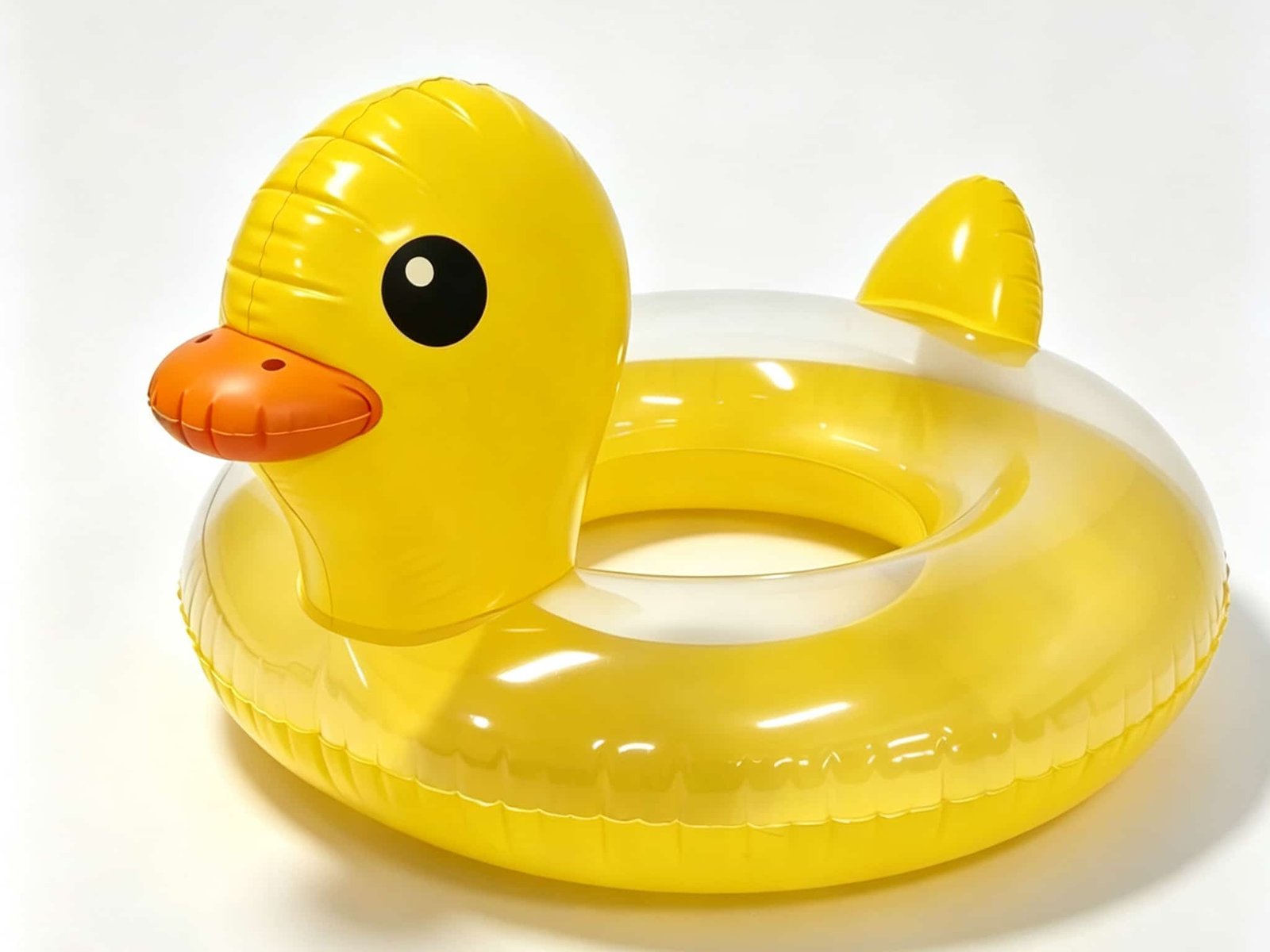
- Toy Safety (ASTM F963): Aquatic toy sections mandate specific structural integrity, valve retention, and deflation safety parameters.
- Total Lead Content: Compliance with statutory limits on total lead in accessible substrates (100 ppm) and surface coatings (90 ppm).
- Regulated Phthalates: Conformity with 16 CFR Part 1307, restricting eight specific ortho-phthalates in accessible plasticized components of children’s toys and child care articles to 0.1% (1,000 ppm).
- Tracking Labels: Permanent distinguishing marks (tracking labels) on both product and packaging, compliant with 15 U.S.C. § 2063(a)(5).
- Safety Warnings: Prominent on-product drowning risk warnings legible during inflation and use.
For children’s inflatable water products, compliance affects physical design, valve tooling, warning artwork, and packaging layout — well beyond a simple chemical lab screening.
Inflatable Pools Follow a Different Logic
An inflatable pool should not automatically be treated as a toy or pool float simply because children play in it. Instead, residential portable pools fall under specialized containment and structural standards.
The primary technical specification is ASTM F2666-16(2024) (Standard Specification for Aboveground Portable Pools for Residential Use).
Crucial Distinction: Pool Height ≠ Intended Water Depth ASTM F2666 covers aboveground portable residential pools with an intended water depth below 36 inches (approximately 91 cm). Water depth is measured at the designated manufacturer fill line. Pools designed for water levels at or exceeding 36 inches fall outside this scope and trigger distinct barrier, safety, and entrapment frameworks.
Learn more about structural variations in our Pool Manufacturing Hub and our comparative guide on Inflatable vs. Frame vs. Non-Inflatable Pools.
Testing Requirements Can Come From More Than One Source
B2B buyers reviewing an accredited laboratory test report (e.g., from BV, SGS, or Intertek) often find dozens of listed checkpoints. These line items typically originate from three distinct levels:
- U.S. Federal & State Regulations: Mandatory baseline statutes (e.g., CPSIA total lead, 16 CFR Part 1307 phthalates, labeling acts, and state-level chemical regulations).
- Product Safety Standards: Recognized consensus standards addressing structural safety and performance, such as ASTM F963 for toys or ASTM F2666 for residential portable pools.
- Retailer & Buyer Protocols: Proprietary quality specifications required by major retailers (e.g., Walmart, Target) that include transit testing, valve torque, accelerated UV conditioning, leak resistance, and packaging drop standards.
Guardrail: Passing U.S. federal regulatory requirements and satisfying a specific retailer’s testing manual are related, but they are not identical. A specialized test clause in a retailer report is not automatically a universal statutory mandate.
Test Report and CPC Are Not the Same Thing
A frequent misconception among new importers is assuming that a third-party laboratory issues legal product certification. In the U.S. children’s product framework, the roles are strictly separated:
CPSC-Accepted Accredited Lab → Issues Test Report → Responsible Importer/Manufacturer → Issues CPC
Under CPSC certification guidance, an accredited testing laboratory provides objective test results. The Children’s Product Certificate (CPC) is an official document issued by the responsible U.S. importer (or domestic manufacturer) certifying that the product complies with all applicable safety rules, based on passing test results from a CPSC-accepted laboratory.
Testing laboratories provide evidentiary reports; the responsible importing entity issues the CPC.
How the Testing Route Is Determined
The compliance and laboratory testing scope is determined by the physical characteristics, intended user, and commercial channel of the finished product. In manufacturing projects, these parameters establish the applicable testing direction:
| Information | Why It Matters |
|---|---|
| Product Type & Function | Determines primary regulatory classification (toy, pool, general sport). |
| Target Age Grading | Dictates whether mandatory children’s product testing and tracking labels apply. |
| Materials & Thickness | Determines applicable chemical testing and physical puncture thresholds. |
| Intended Water Depth (Pools) | Establishes applicability of ASTM F2666 (< 36 in.) vs. larger pool codes. |
| Target Retailer Channels | Identifies custom commercial testing protocols required for vendor compliance. |
| Artwork & Warning Prints | Ensures regulatory warnings and lot tracking are integrated into screen printing. |
How COMCO Approaches U.S. Programs
COMCO operates as an experienced OEM/ODM manufacturer supporting international brands and sourcing teams. We do not act as an accredited certification laboratory or legal counsel. Instead, our engineering and quality assurance teams assist buyers by:
- Reviewing product construction and valve configurations during sampling (OEM Development Process).
- Preparing accurate pilot production test samples aligned with the nominated testing protocol.
- Coordinating sample dispatch with your designated accredited test lab (e.g., BV, SGS, Intertek).
- Verifying that batch tracking formats and required warning copy are properly integrated into high-frequency printing screens.
Factory Quality Control: 100% 24-Hour Air-Hold Testing
Factory quality assurance must not be confused with federal regulatory compliance. Before any product is approved for final packaging at COMCO, it undergoes our standardized in-house air retention protocol:
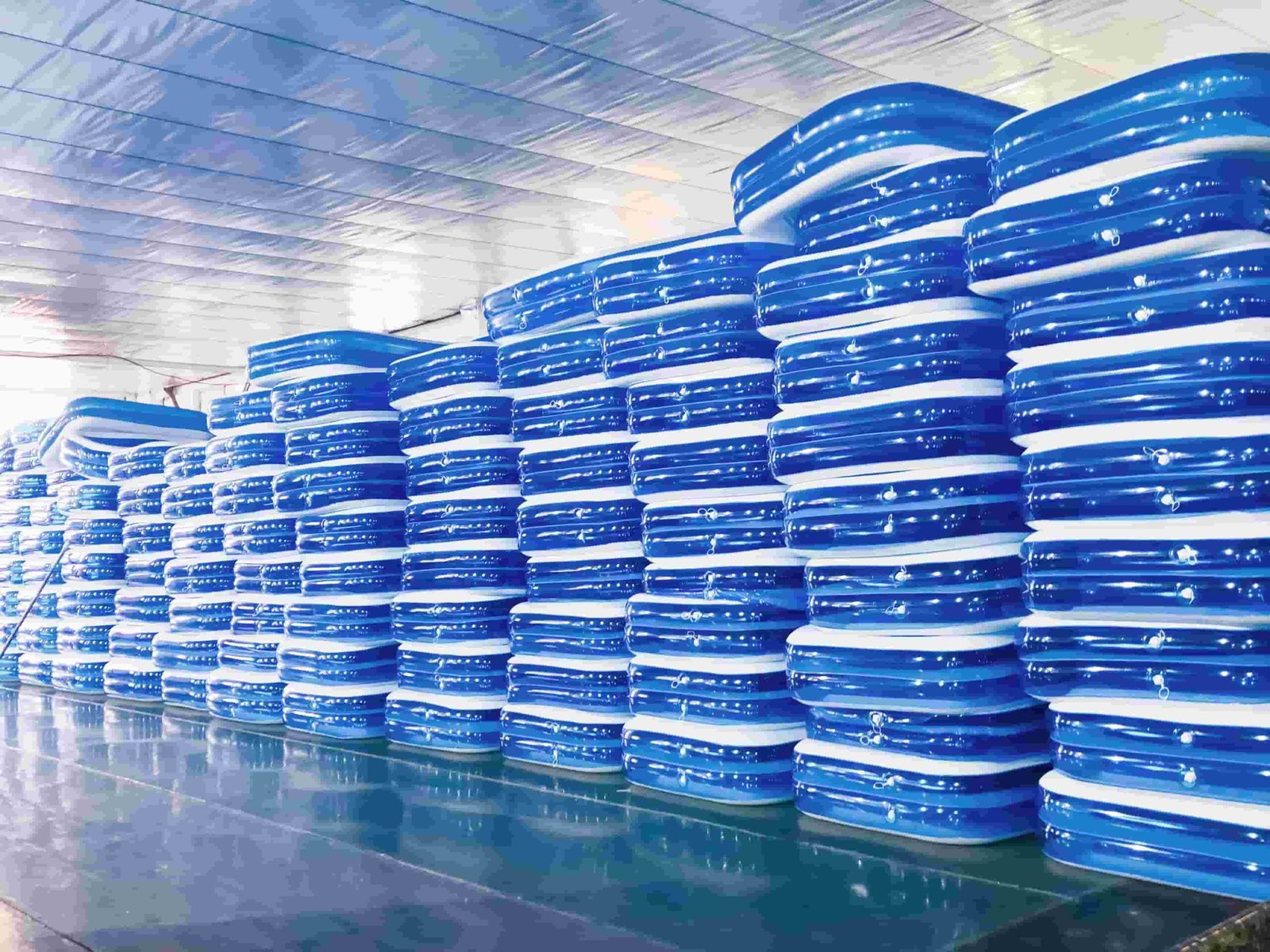
Every inflatable unit is fully inflated and observed for at least 24 hours to verify seam integrity and identify micro-leakage before folding and boxing. Discover more about our validation stages in What Happens Before Mass Production.
Project Classification Comes Before Testing
A reliable compliance program does not start with standard numbers or testing laboratory bookings. It starts with manufacturing and engineering classification:
- What is the precise product type, structure and intended water use?
- Who is the target user group (age grading and physical configuration)?
- Which sales channels and retailer protocols apply?
Product classification comes first. Testing scope follows.
Developing an Inflatable Product for the U.S. Market?
Share your product concept, target age, key dimensions, and retailer requirements with COMCO. Our engineering and manufacturing team can review structural feasibility, valve configurations, and sample preparation considerations with your sourcing team.
Discuss Your U.S. Product Program →Why Can Quotes for the Same Inflatable Product Be So Different?
You send the same product photo to several inflatable manufacturers and receive very different prices. Why?
Sometimes it is simply a difference in manufacturing cost or pricing. But often, the factories are not quoting exactly the same product specification.
For OEM inflatable products, appearance and size are only part of the specification. Target market, intended use, construction, material, printing, packaging and applicable requirements can all change how the product needs to be made.
“Two quotations are only truly comparable when they are based on the same product specification.”
1. A Real Example: Same 122 cm Ring, Different Market
Consider a 122 cm inflatable ring. A buyer may see the U.S. and European versions as the same product: same size, similar shape and similar artwork. From a manufacturing perspective, however, they may be different.
For Europe, a product whose largest uninflated dimension exceeds 1.2 m may fall within the ISO 25649 floating-leisure-article framework depending on its design, intended use and classification.
For a specific product, applicable requirements may result in a different construction. For example, meeting residual-buoyancy requirements may lead to a multi-chamber design rather than a simpler single-chamber construction. That is product engineering work, not a pricing question.
Additional chamber → more PVC components → more cutting → more HF welding → additional valve/component → more labor
Safety information can also differ. Depending on the applicable classification and destination market, more complex safety signs, supplementary information and market-language content can increase printing setup and production complexity.
So two 122 cm rings can look almost identical while having different manufacturing costs.
U.S. Market Version
Potential Baseline- Potentially simpler construction
- Fewer manufacturing operations may apply
- Simpler warning layout may apply
European Market Version
ISO 25649 Scope- Market-specific classification must be considered
- Additional performance requirements may affect construction
- Multi-chamber design may be required for a specific construction
- Safety-information requirements may increase printing complexity
*Exact requirements depend on product classification, intended use, design and applicable standards. This example illustrates a possible manufacturing outcome, not a universal rule for every 122 cm inflatable ring.
“Target market is not just a shipping destination. It can be an engineering input.”
2. What Can Change an Inflatable Product Quote?
Before comparing prices, check whether the quotations are based on the same assumptions.
| Specification | Why It Matters |
|---|---|
| Target market & intended use | Can affect classification, construction, safety information and testing |
| Size & structure | Changes material usage, chambers, welding, valves and labor — see our inflatable product leakage root-cause analysis |
| Material | PVC/TPU and material specification affect cost and manufacturing — see PVC thickness |
| Printing | Area, colors, artwork and safety markings affect setup and production |
| Accessories | Pumps, repair kits, ropes, handles and other components change the BOM |
| Packaging | Polybag, color box, retail and e-commerce packaging have different costs |
| Quantity | Affects material planning, setup efficiency and unit cost |
A lower quotation is not automatically incomplete, and a higher quotation is not automatically better.
The first question is:
“Are both suppliers quoting the same specification?”
3. What Should You Send for a Comparable Quote?
You do not need a complete technical specification before contacting a manufacturer.
For an Initial Estimate
Usually start with:
- product photo, drawing or existing sample
- approximate dimensions
- intended use
- target market
- expected quantity
For a Production-Level Quote
As the project develops, confirm:
- final dimensions and material specification
- construction and printing
- accessories and packaging
- applicable testing requirements (see quality control and testing)
- quantity and trade terms
The clearer these points are, the easier it becomes to compare suppliers on the same basis — and filling them in is a normal part of product development.
4. Compare the Specification Before the Price
If Supplier A quotes $8.20 and Supplier B quotes $8.90, Supplier B appears more expensive.
But if one price is based on a simpler construction while the other includes a different chamber design, safety printing, packaging or testing requirements, the two prices are not directly comparable.
The difference may not be Cheap Factory vs Expensive Factory. It may simply be Specification A vs Specification B.
“Same appearance does not always mean the same specification. Compare the specification first, then compare the price.”
For the wider criteria used when qualifying suppliers, see choosing an inflatable pool manufacturer.
FAQ
Can an inflatable manufacturer quote from only a reference photo?
Yes. A reference photo can often support an initial estimate when approximate dimensions, intended use, target market and quantity are also provided. More details are normally required before a production-level quotation is finalized.
Why does the manufacturer need to know the target market?
Because the target market can affect applicable requirements, safety information, testing and, for some products, the physical construction itself.
Does thicker PVC always mean a better product?
No. PVC thickness is only one part of the specification. Product performance also depends on structure, welding, valves, intended use and manufacturing control.
Why do different inflatable factories quote different prices?
They may be using different assumptions for construction, material, printing, packaging, testing or target-market requirements. Manufacturing efficiency and commercial pricing can also differ.
Have a Product Reference but Not a Complete Specification?
Send COMCO your reference image, drawing or existing sample, together with the approximate size, target market and expected quantity. We can help identify the specifications that need to be confirmed before sampling and quotation.
Discuss Your Product →Why Did This Mature Inflatable Product Keep Leaking?
The product was already mature and in mass production. Its PVC material was relatively thick at 0.60 mm. Yet after consumers used the product for a period of time, repeated air-leakage complaints were occurring.
The customer had heard that COMCO operates an internal physical laboratory, so they sent two cartons of existing products to us for investigation.
The objective was not simply to determine whether a sample leaked. It was to understand why a product that appeared normal after production could become vulnerable after repeated use.
The Problem: A Mature Product with Repeated Leakage Complaints
This was not a new product still in early development. The customer already had an established product and an existing supply source. The concern appeared after the product had been used for some time: consumers were reporting air leakage.
A visual inspection alone could not explain the pattern. As detailed in our engineering guide on Why Inflatable Products Leak: How Factories Control Leakage Before Mass Production, slow leaks and stress-induced failures often originate from deeper structural interactions.
The product therefore needed to be evaluated as an interrelated system of PVC material formulation, high-frequency (HF) welded connections, internal I-beam construction, tooling geometry, welding conditions and load distribution during repeated dynamic use.
COMCO’s physical testing lab and QA engineering team began with repeated-use stress testing and then opened the product for internal destructive inspection.
How We Investigated the Problem
1. Repeated Inflation and Deflation Testing
The samples were subjected to 50 inflation and deflation cycles as part of the initial investigation. The purpose was to introduce repeated inflation-related pressure and mechanical fatigue rather than relying only on a one-time static inflation check.
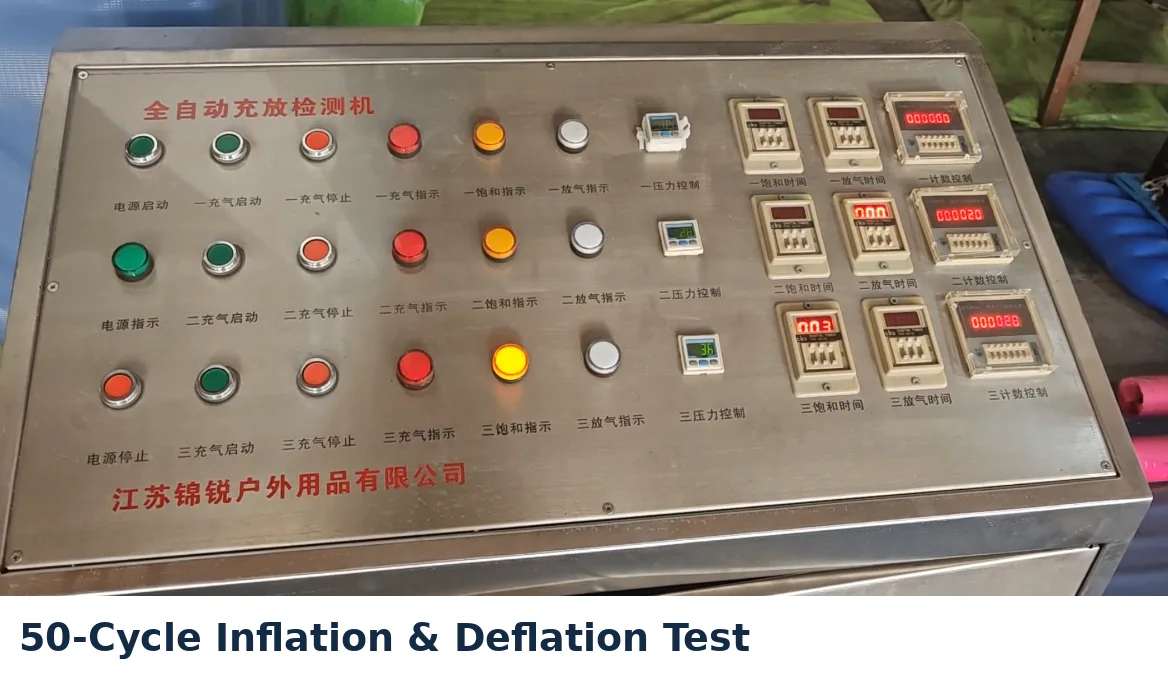
2. Weld and Material Measurement
The team inspected the welded seam areas and measured key dimensional parameters to understand how the PVC material had behaved under the compression, heat and dielectric energy of high-frequency welding.
3. Destructive Inspection
The product was then cut open under controlled laboratory conditions. This allowed the team to directly inspect internal areas that could not be evaluated from the exterior, including the internal I-beam connections, weld seam margins, and the physical condition of the welded PVC layers.
The investigation identified several interconnected risk points.
What We Found
Finding 1 — The Existing Welding Area Was Too Narrow for This Construction
The product used 0.60 mm PVC. Measurement of the existing welded connection showed a welding width of approximately 5 mm.
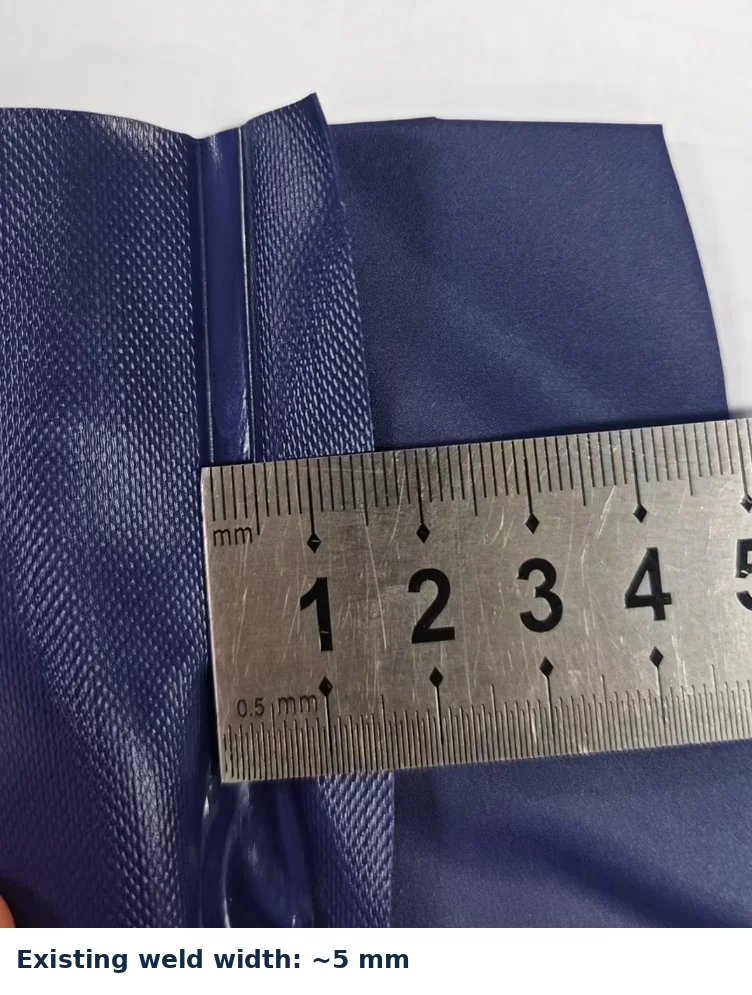
For this specific material gauge and construction, COMCO’s QA team considered the existing welding area insufficient for sustaining repeated internal dynamic loads, and recommended increasing the welding width to approximately 8 mm.
The important point is not that every product using 0.60 mm PVC should use an 8 mm welding width. The required welding area depends on the product structure, material formulation, loading conditions and manufacturing process.
Engineering takeaway: Material thickness and welding design cannot be evaluated independently. As explored in Does Thicker PVC Mean a Better Inflatable Product?, using thicker PVC does not automatically create a more durable product if the welded connection is not designed and processed appropriately for the structure.
Finding 2 — The I-Beam End Needed More Relief Space During HF Welding
The internal I-beam end incorporated relatively thick PVC layers in the welded connection. In the customer’s original construction, there were no relief holes in the I-beam end.
During high-frequency welding, PVC is rapidly heated and compressed under pneumatic pressure. In this case, the team identified a risk that excess softened PVC had insufficient space to redistribute and was being forced outward around the welded area, contributing to local material pinching and micro-damage.
COMCO proposed adding two relief holes to the I-beam end.
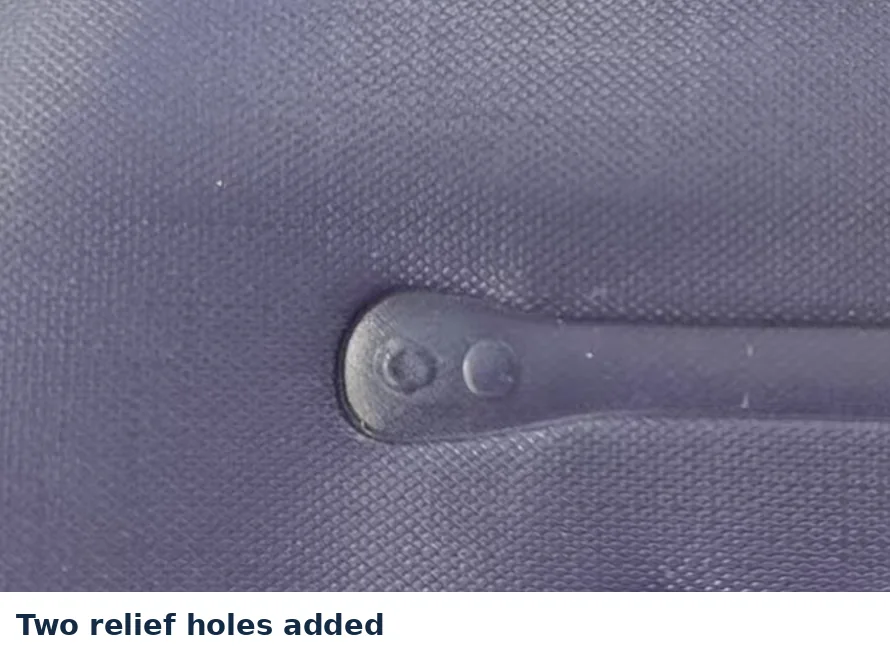
The holes provide dedicated volume for material displacement during the welding cycle rather than allowing softened material to be squeezed against the outer boundary of the joint.
Engineering takeaway: The issue was not simply the PVC thickness. How the material behaves under heat and pressure during the HF welding process is equally critical to long-term reliability.
Finding 3 — The Welded PVC Had Been Excessively Thinned
Another critical finding appeared after closer optical inspection of the welded area. A visible translucent zone indicated that the PVC around the joint had been heavily overheated and over-compressed during welding.
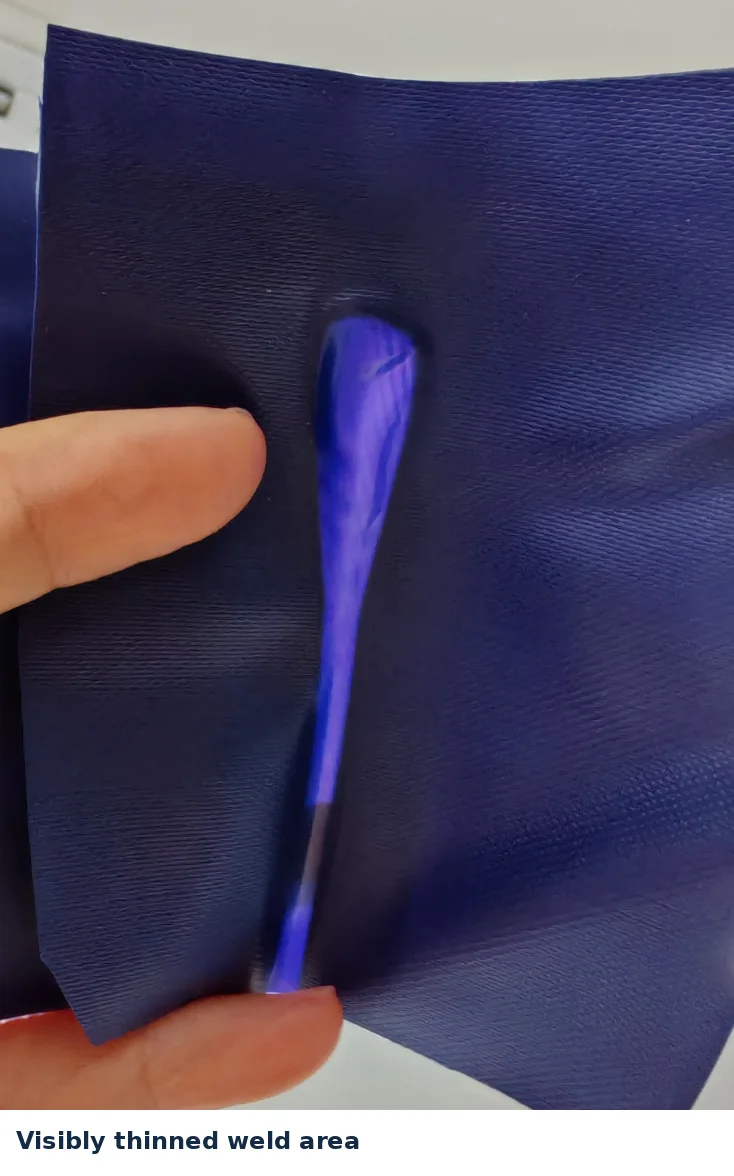
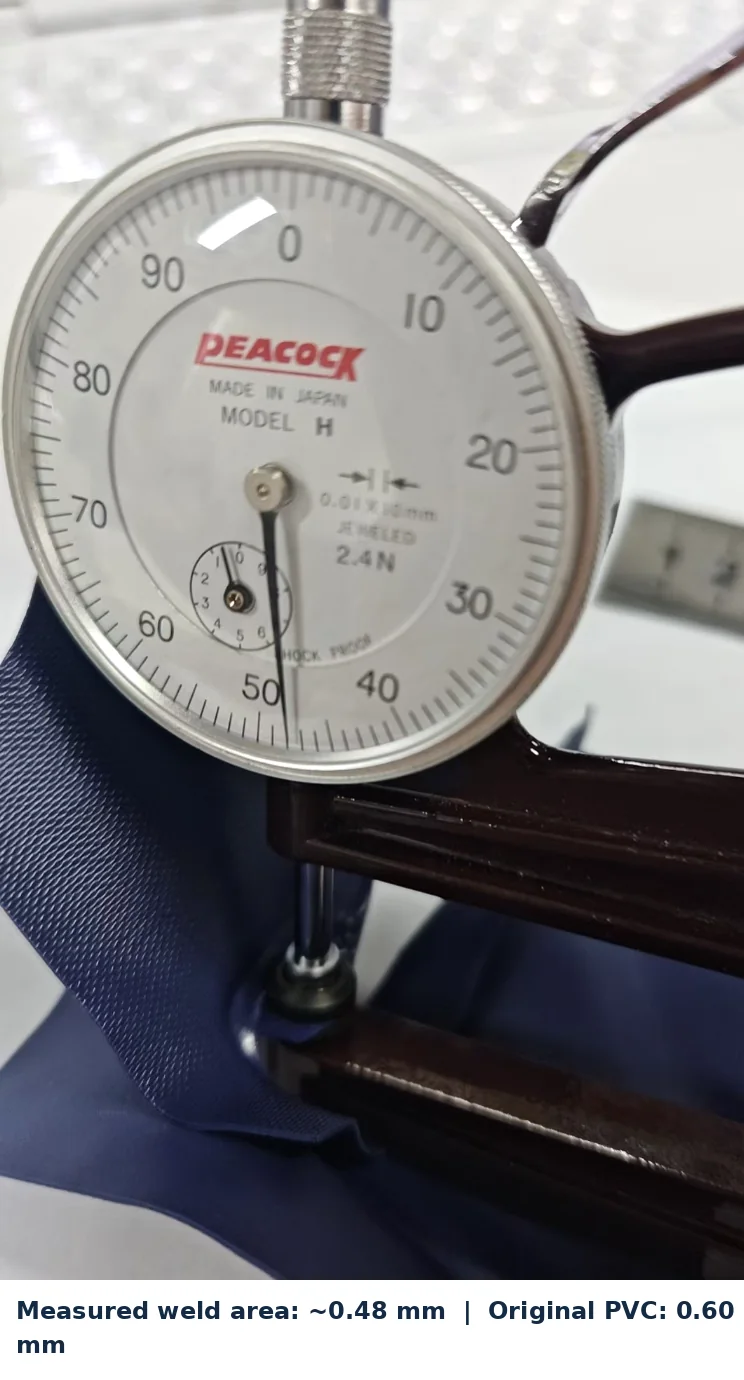
The team then measured the cross-sectional gauge of the welded PVC. The original PVC specification was approximately 0.60 mm, while the inspected welded area measured approximately 0.48 mm.
Together with the visual inspection, this supported COMCO’s concern that the HF welding parameters (energy, electrode pressure or dwell cycle) had been overly aggressive, causing severe local thinning and weakening of the PVC film.
COMCO recommended recalibrating the welding process under controlled electrical and pneumatic parameters so that a solid molecular fusion could be achieved without degrading the material structure.
Engineering takeaway: A welded connection should not be judged solely by whether it holds air immediately off the production station. The physical condition and retained gauge of the material after welding directly dictate how the connection performs under repeated consumer use.
Note on measurements: The approximately 0.48 mm measurement is an empirical observation from this specific investigation. It is not presented as a universal pass/fail threshold for all inflatable products.
Finding 4 — The I-Beam End Geometry Was Creating Excessive Stress
After cutting open the sample, the engineering team directly evaluated the internal I-beam geometry.
The original curved cut at the I-beam ends provided insufficient clearance for the structure to flex and distribute tensile loads smoothly during inflation and user movement. This created sharp stress concentration points directly adjacent to the welded connection under repeated load cycles.
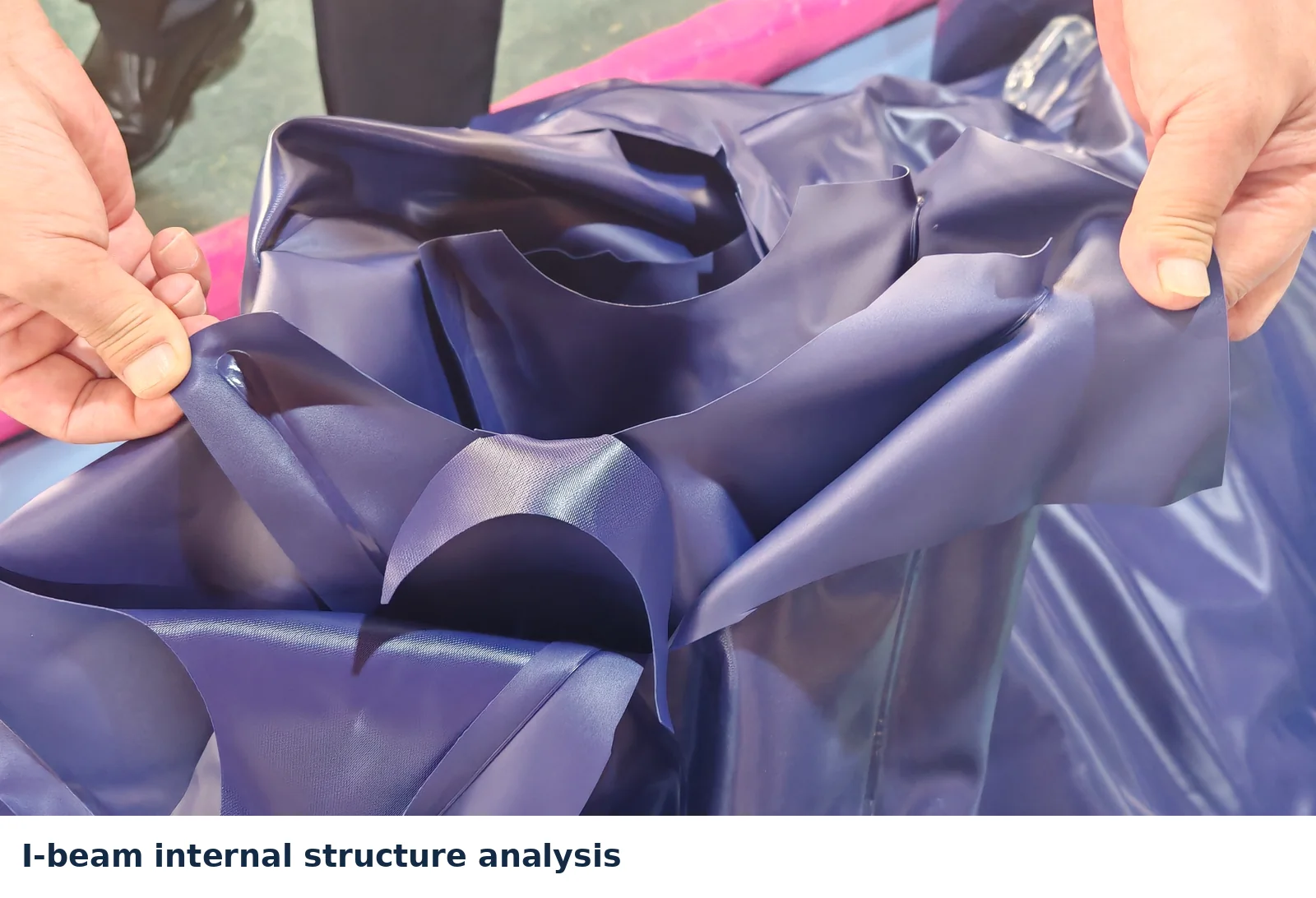
COMCO recommended enlarging the curved cut at the I-beam end to provide greater movement allowance and relieve localized stress around the welded connection.
Engineering takeaway: When repeated failures occur around a joint, the question is not simply “Where did it break?” It is “Why is the mechanical load concentrating here?” Answering that question transforms basic inspection into true root-cause engineering.
From Root Cause to Engineering Improvement
The investigation demonstrated how multiple interacting variables contributed to the customer’s leakage problem:
| Investigation Area | What We Observed | Engineering Direction |
|---|---|---|
| Material & Weld Design | 0.60 mm PVC with an approximately 5 mm existing weld width | Increase welding area to ~8 mm for this specific construction |
| I-Beam End Welding | No relief holes in the original I-beam end, causing material displacement pinch | Add two relief holes to allow material movement during HF welding |
| HF Welding Condition | Welded area visibly thinned and translucent; measured at ~0.48 mm | Recalibrate welding parameters to eliminate excessive local material thinning |
| Internal Structure | I-beam end geometry provided insufficient load-relief allowance | Enlarge the curved end cut to improve dynamic stress distribution |
Root-Cause Workflow: Repeated-Use Test → Measure → Cut Open → Inspect Internal Structure → Identify Root Causes → Modify Tooling / Structure / Process → Build New Sample → Validate
This is why leakage analysis cannot always be reduced to a single question such as: “Is the PVC thick enough?”
The performance of an inflatable product depends on how the material, welded connections, internal structure and manufacturing process work together.
What Happened Next?
COMCO presented the findings and proposed engineering improvements to the customer.
After reviewing the technical analysis internally, the customer placed a sample order based on the proposed changes. Following rigorous prototype validation, the project moved smoothly into a full production order.
The project did not begin with a request for COMCO to quote manufacturing. It began with an open technical challenge:
“Why is our existing product developing leakage problems after use?”
The ability to investigate that question thoroughly created the foundation for the next stage of cooperation.
What This Case Shows
A mature product in mass production can still contain hidden structural and processing weaknesses.
A relatively thick material does not automatically guarantee durability. A product that appears airtight immediately after leaving the welding line can still harbor vulnerabilities that only fail after repeated consumer use.
For inflatable products, reliable long-term performance depends on the deliberate interaction between:
Material + Tooling + HF Welding + Internal Structure + Stress Distribution + Validation
A manufacturer’s physical testing laboratory is therefore useful for far more than determining whether a production sample passes or fails a basic test. When testing is backed by deep manufacturing and tooling experience, it answers the question that matters most:
“Why is the product failing, and what specific engineering adjustments should be made before the next production run?”
Related Resources & Technical Guides
- Why Inflatable Products Leak: How Factories Control Leakage Before Mass Production
- Does Thicker PVC Mean a Better Inflatable Product?
- What Happens Before Mass Production? Pre-Production Quality Validation
- How Inflatable Products Are Made: From PVC Film to Finished Product
- From Sketch to Sample: How an OEM Inflatable Product Is Developed
- How to Choose an Inflatable Pool Manufacturer: A Buyer’s Guide
Related manufacturing capabilities: Product Engineering · Quality Control & Physical Lab · Prototyping & Sampling · Manufacturing
Have an Existing Inflatable Product with a Recurring Quality Problem?
If you already have a mature inflatable product but are experiencing repeated leakage, seam fatigue or structural deformation, the first step is rarely just increasing material thickness. The issue needs to be diagnosed in the context of the product’s internal construction and manufacturing process.
For a technical review, share your product type, existing material specifications, failure descriptions, photo/video evidence or sample availability. COMCO can review the information and determine whether laboratory analysis or development work can resolve the root cause.
Discuss a Product Issue →